Britain is, in the most literal sense, made of its history. You cannot walk through London without crossing ground that was Roman road, medieval marketplace, and Tudor execution site. You cannot drive through the English countryside without passing Norman castles, monastic ruins, and Industrial Revolution mill towns. You cannot spend a day in Edinburgh without the weight of a thousand years of Scottish kingship pressing down from Castle Rock. Understanding even the basics of what happened — who built what, why, and what it meant — transforms a trip to Britain from a pleasant visit into something genuinely illuminating. Here’s the primer you need.
Prehistoric Britain: Before the Romans
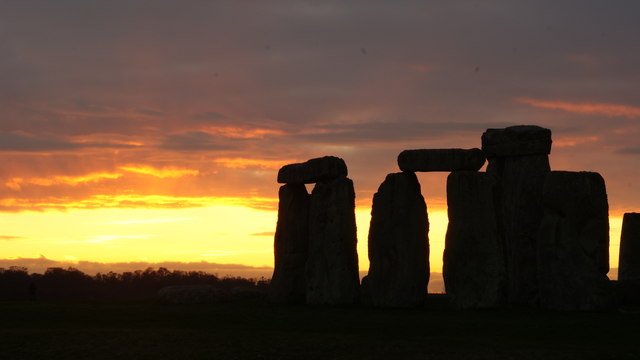
Britain was inhabited by human populations for hundreds of thousands of years before Julius Caesar first arrived on the coast of Kent in 55 BC. The most visible legacy of prehistoric Britain is its extraordinary collection of megalithic monuments: Stonehenge (erected in stages between 3000 and 1500 BC, the stones transported from Wales and precisely aligned with the midsummer sunrise), Avebury (the world’s largest stone circle, surrounding the entire village of Avebury in Wiltshire), Silbury Hill (the tallest prehistoric man-made mound in Europe, built around 2400 BC for reasons still unknown), and the remarkable Neolithic village of Skara Brae in Orkney (preserved for 5,000 years under sand dunes, with stone furniture still in place — older than the Egyptian pyramids and one of the most extraordinary archaeological sites in the world). The landscape of Wiltshire alone — with Stonehenge, Avebury, the West Kennet long barrow, and Silbury Hill all within a few miles of each other — is a Neolithic sacred landscape of extraordinary richness.
Roman Britain: 43–410 AD
The Romans conquered most of what is now England and Wales in 43 AD under Emperor Claudius and governed it for nearly four centuries. Their legacy is extraordinary and still visible everywhere: Hadrian’s Wall (a 73-mile fortification across northern England, built from 122 AD to mark the northern limit of the Empire — the most significant Roman frontier monument in the world); the Roman Baths at Bath (Aquae Sulis — where sacred hot spring waters were channeled into a complex of bathing pools that still function today, surrounded by some of the finest Roman stonework in Britain); the city walls of Chester, York, Lincoln, and Londinium (London); and the straight Roman road network that still underlies many modern roads. The Romans also left behind towns, forums, amphitheatres, villas with underfloor heating, and a cosmopolitan, multi-ethnic society that was in many ways more modern than anything that followed for a thousand years after the legions withdrew in 410 AD.
The Medieval Period: Conquest, Castles, and Cathedrals
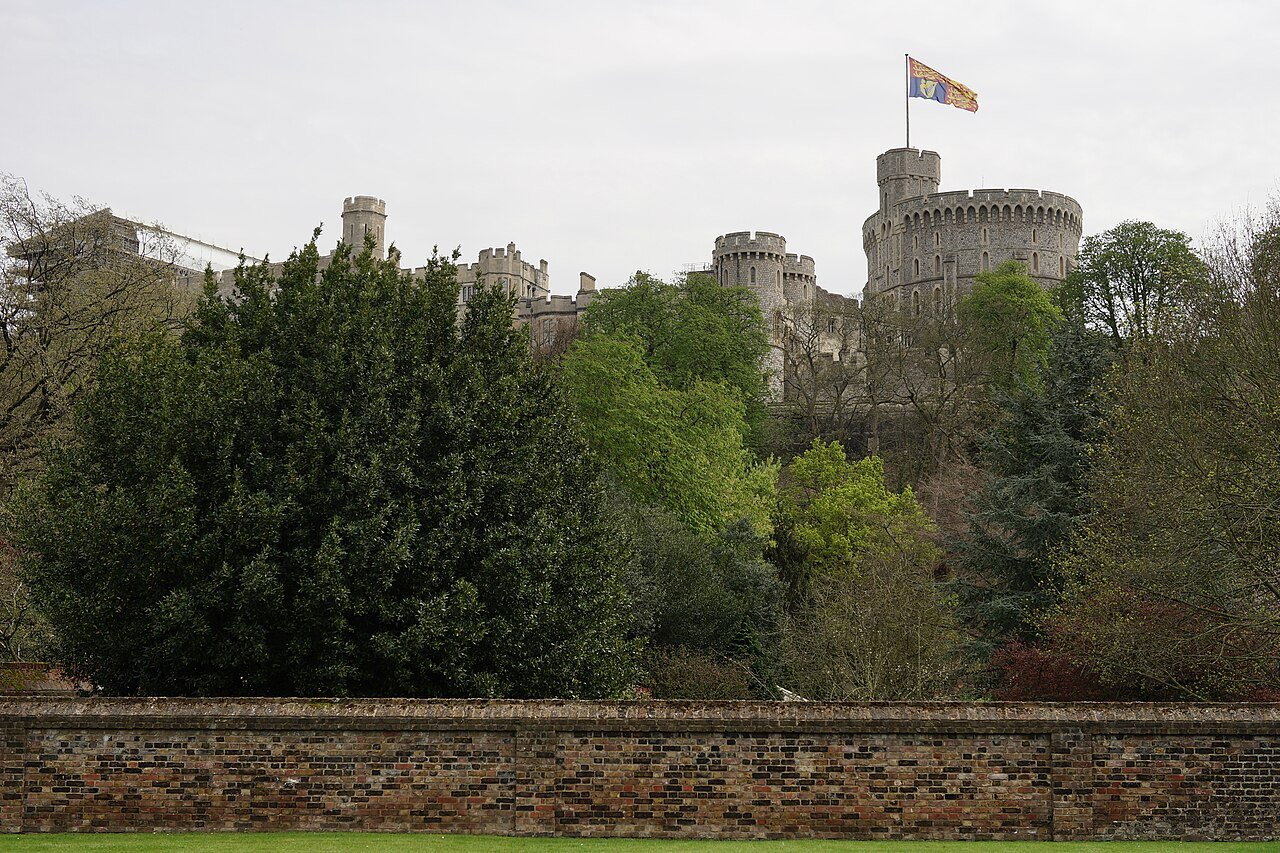
The Norman Conquest of 1066 is the single most pivotal event in English history. William the Conqueror’s victory at the Battle of Hastings ended Anglo-Saxon England and began a complete transformation of the country: the English language (infused with Norman French that gave it its extraordinary dual vocabulary — ask/enquire, buy/purchase, freedom/liberty), the legal system, the church, and the landscape were all remade. Norman castles — the Tower of London, Windsor, Dover, Durham — and Norman cathedrals — Durham, Ely, Winchester, Norwich — remain the dominant architectural features of medieval England. The Magna Carta of 1215, signed by King John under pressure from his barons at Runnymede and now on display at the British Library and at Salisbury Cathedral, established for the first time the principle that the king was subject to law — the foundation stone of constitutional government. The Black Death of 1348–50 killed roughly a third of England’s population in two years, reshaping the social structure and accelerating the end of feudalism.
The Tudor Era: Henry VIII, Elizabeth I, and Shakespeare
The Tudor dynasty (1485–1603) produced the most colorful and consequential period in English history. Henry VIII‘s break with Rome in the 1530s — driven by his desire for a divorce, but with consequences that reshaped England’s relationship with religion, the Crown, and the continent for centuries — dissolved the monasteries (their ruins are now among the most beautiful and atmospheric sites in England: Fountains Abbey in Yorkshire, Rievaulx Abbey in North Yorkshire, Tintern Abbey in Wales), seized church lands, and created the Church of England. His daughter Elizabeth I presided over England’s golden age: the defeat of the Spanish Armada in 1588, the flourishing of exploration and trade, and the extraordinary outpouring of art and literature that produced Christopher Marlowe, Edmund Spenser, and most importantly, William Shakespeare — whose plays, written between 1590 and 1613, remain the greatest body of work in the English language. Stratford-upon-Avon and the rebuilt Globe Theatre on London’s South Bank are the essential Shakespeare pilgrimage sites.
The Industrial Revolution: Britain Changes the World
The Industrial Revolution began in Britain in the mid-18th century and changed human civilization more profoundly than any development since the invention of agriculture. The steam engine (developed by James Watt in Birmingham), the spinning jenny, the mechanized loom, the steam-powered railway (the Liverpool and Manchester Railway opened in 1830, the world’s first intercity steam passenger railway) — all originated in Britain, and all transformed how humanity lived, worked, and moved. The landscape of northern England still bears the marks of this transformation: the mills of Manchester and Bradford, the blast furnaces of Sheffield, the canals and later railways that stitched the country together. The Science and Industry Museum in Manchester (housed in the world’s oldest surviving passenger railway station) and the Ironbridge Gorge in Shropshire (the world’s first iron bridge, built in 1779, and now a UNESCO World Heritage Site and a cluster of industrial museums) are the finest places to understand this revolution.
The 20th Century: Two World Wars and a Welfare State
Britain’s 20th century was defined by two world wars, the dissolution of its global empire, and the creation of institutions — the National Health Service, the BBC, the welfare state — that reshaped what the country was for its own people. The First World War (1914–18) killed 900,000 British soldiers and ended the Edwardian world that had produced them; the memorials in every British town and village — the war memorial in every market square listing local names — are among the most moving public monuments in the country. The Second World War (1939–45) brought the Blitz to British cities, the Dunkirk evacuation, and ultimately Allied victory under Churchill’s wartime leadership. The Imperial War Museum in London tells this history with extraordinary depth and honesty. The D-Day story is best told at the Duxford Imperial War Museum (Europe’s largest aviation museum). Britain’s post-war Labour government created the NHS in 1948 — free healthcare at the point of need — and the welfare state that remains the defining commitment of British public life.
British Culture: Understanding the Modern Country
Modern British culture is a rich mixture of the formal and the irreverent — a country that invented constitutional monarchy and also invented punk rock, that produced the world’s most copied legal system and also the world’s most copied situation comedy. The BBC World Service broadcasts in 42 languages and remains one of the most trusted news sources on earth. The Premier League is the most watched football league in the world. British literature (Shakespeare, Dickens, Austen, Orwell, Woolf, Rowling), music (the Beatles, the Rolling Stones, David Bowie, Adele, Ed Sheeran), and design (the Mini, the London Underground map, James Dyson’s inventions, Norman Foster’s architecture) have shaped global culture in ways that are impossible to fully account for.
The British sense of humor — characterized by understatement, self-deprecation, and irony — can baffle visitors who take things at face value. When a British person says “that’s quite interesting,” they may mean the precise opposite. When they say “it’s fine,” it often isn’t. “Not bad” is genuine praise. Learning to read these signals is part of the pleasure of traveling in Britain, and explains why the country has produced so many great comic writers and comedians. The best way to encounter British culture at its most genuine is in a traditional pub, at a cricket match, on a walking path through the countryside, or in one of the magnificent free museums that London and other cities provide as a matter of course to all visitors.