
Outdoor Activities in Tasmania 2026: Wilderness Walks, Coastline, and the World’s End
Tasmania’s outdoor recreation is the most concentrated in Australia — the Tasmanian Wilderness World Heritage Area (1.58 million hectares, approximately 20% of the island) contains alpine landscapes, ancient rainforests, wild rivers, and coastal wilderness of extraordinary rarity, accessed by a walking track network that ranges from easy two-hour circuit walks to the Overland Track’s 6–8 day wilderness traverse through the island’s dolerite peaks and buttongrass plains. What distinguishes Tasmania’s outdoor experience from the mainland is not just the quality of the landscapes but their density — no other state packs this concentration of UNESCO World Heritage wilderness, world-class surf beaches, marine reserves, and multi-day walking infrastructure into an area that can be driven across in four hours. The practical considerations — cold weather at elevation even in summer, rapid weather change, highly variable river levels, and the requirement for appropriate gear and navigation skills on the backcountry tracks — are genuine, not theatrical.
The Overland Track: Australia’s Greatest Walk
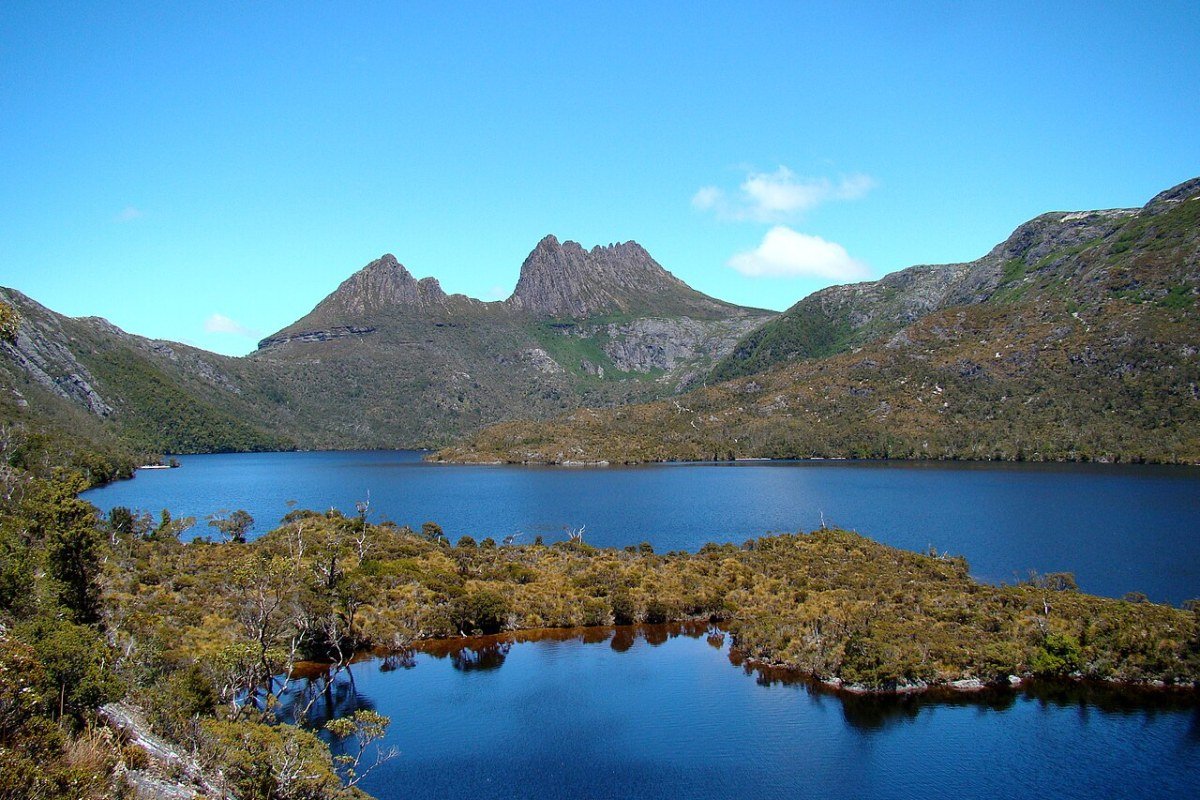
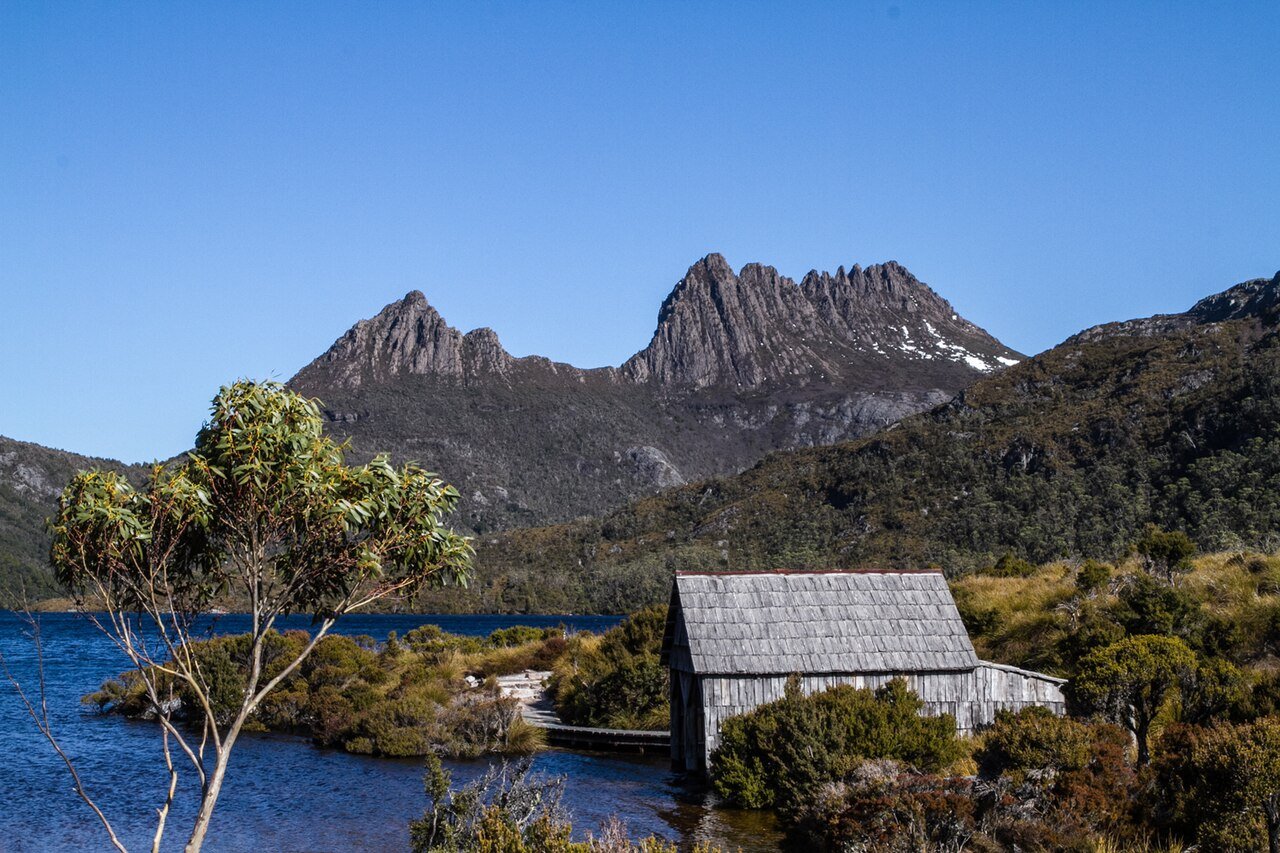
The Overland Track, 65km from Ronny Creek at Cradle Mountain to Narcissus Hut on the northern shore of Lake St Clair, is the most celebrated long-distance walking track in Australia — a 6–8 day traverse through the heart of the Tasmanian Wilderness World Heritage Area that passes beneath the island’s highest peaks, through ancient pencil pine and fagus forests, across alpine tarns and buttongrass plains, with a visual and ecological variety that no other Australian track can match. Practical details:
- Booking system: The track operates a permit and booking system (Tasmania Parks and Wildlife Service) from November to April; permits must be booked in advance; off-season (May–October) walking is possible without permits but huts cannot be relied upon and conditions are severe
- Track direction: The regulated walking direction is north-to-south (Cradle Mountain to Lake St Clair) to spread traffic and wildlife disturbance; lake ferry from Narcissus to Cynthia Bay completes the traverse (book separately with Lake St Clair Ferries)
- Hut system: Nine staffed and self-registration huts provide emergency shelter; sleeping platforms with mattresses provided; private tent camping in designated sites alongside huts; carrying a tent is strongly advised for weather contingency
- Side trips: Mount Ossa (Tasmania’s highest peak, 1,617m, 6km return from the Overland Track junction) and Barn Bluff (1,559m, 8km return) are the major summit diversions; both require good weather and navigation skills
- Day walk alternative: The Cradle Mountain circuit (12.5km, 6 hours) and the Dove Lake circuit (6km, 2 hours) provide the iconic Cradle Mountain landscape without the full track commitment

Three Capes Track: Coastal Wilderness Hiking
The Three Capes Track, 48km from Port Arthur to Cape Hauy via Cape Raoul and Cape Pillar, is Tasmania’s flagship coastal long-distance walk — a 4-day, fully serviced track (purpose-built huts with cooking facilities, flushing toilets, and solar lighting) that traverses the Tasman Peninsula’s dramatic sea cliff system above the Southern Ocean. The dolerite sea cliffs at Cape Pillar (300m, among the highest sea cliffs in the Southern Hemisphere) and the Totem Pole sea stack at Cape Hauy (the most famous rock climbing objective in Australia) provide the visual highlights. The track is serviced by ferry from Port Arthur to the Denmans Cove trailhead, eliminating the return walk.
Freycinet and the East Coast
The Freycinet Peninsula’s walking and paddling landscape is Tasmania’s most popular outdoor destination after Cradle Mountain:
- Wineglass Bay Lookout: The 2.5km return walk to the saddle between the Hazards peaks; the Wineglass Bay view from the saddle is one of Australia’s most photographed landscapes; the further 3km descent to the beach adds 2 hours and a swim in the bay
- Freycinet Peninsula Circuit: 27km, 2–3 days; circumnavigation of the southern peninsula via Wineglass Bay, Hazards Beach, and Cooks Beach; camping at designated sites; the most complete Freycinet experience
- Sea kayaking (Coles Bay): The sheltered waters of Great Oyster Bay and the Freycinet Peninsula provide some of Tasmania’s finest sea kayaking; guided tours from Coles Bay include wildlife encounters with dolphins, seals, and sea eagles
- Bay of Fires Walk: A guided 4-day, 3-night walk north of St Helens along the coast between Swimcart Beach and Mt William National Park; the walk uses a private lodge on the beach for the final two nights; the most luxurious multi-day walk experience in Tasmania
Wild Rivers and Kayaking
Tasmania’s wild rivers — fed by the highest rainfall in continental Australia in the southwest wilderness — provide multi-day rafting and kayaking of international quality:
- Franklin River: The most wild and challenging whitewater river in Australia; the Franklin’s lower gorge is accessible only by raft or kayak (Class IV–V); the Wild Rivers Franklin expedition (10–14 days) is among the world’s great whitewater journeys and requires serious rafting experience and self-sufficiency
- Gordon River: The calm waters of Lake Pedder and the Gordon River below the Strathgordon dam provide a wilderness paddling alternative to the Franklin’s whitewater; the Gordon River cruise from Strahan (World Heritage Cruises) provides accessible access to the rainforest-lined river
- Pieman River: The Tarkine wilderness river; the Pieman River Cruise from Corinna (a tiny settlement on the Pieman estuary) provides the most accessible encounter with Tasmania’s northwestern rainforest wilderness
Cycling and Mountain Biking
Tasmania’s trail network has expanded substantially in the 2020s, with the Blue Derby Mountain Bike Trails near Derby (north-east Tasmania) establishing international recognition as one of Australia’s premier mountain biking destinations:
- Blue Derby Trails: 125km of purpose-built mountain bike trails through the Blue Tier rainforest near Derby; the Detonate trail (expert grade, Australia’s most technical natural-feature trail) and the Flickety Sticks flow trail (intermediate) attract riders from across Australia and internationally
- Rail Trail network: The Derwent Valley Rail Trail and the Lilydale-to-Scottsdale rail trail (partially developed) provide multi-day gravel cycling through Tasmania’s agricultural interior
- Bruny Island cycling: Car-free roads and the island’s gentle topography make Bruny Island one of Tasmania’s most pleasant day-cycling destinations; the Neck, South Bruny’s cape, and the island’s farming character provide a complete half-day circuit
Surfing and Ocean Swimming
Tasmania’s south-facing beaches receive the Southern Ocean’s unobstructed swells — the most powerful and consistent surf in Australia reaches the beaches of the Huon and D’Entrecasteaux Channel, the Bruny Island exposed coast, and the beaches of the south-west wilderness. Clifton Beach (south of Hobart) and Goats Beach (Bruny Island) provide the most accessible quality surf within reach of Hobart. The East Coast’s sheltered bays (Bicheno, Coles Bay, Swansea) provide warmer summer swimming in calmer waters. Ocean temperatures year-round require a wetsuit — Hobart’s summer water temperature peaks at 17–18°C, rising to 19–20°C in a warm year on the East Coast.