
Outdoor Activities in Quebec 2026: Ski the Laurentians, Paddle the Gaspésie, and Kayak the Fjord
Quebec’s outdoor recreation landscape is built on the province’s extraordinary natural assets — the Laurentian Mountains’ ski resorts (the most accessible alpine terrain in Eastern Canada), the Gaspésie Peninsula’s combination of the Chic-Chocs Mountains and the St Lawrence coast, the Saguenay Fjord’s deep-water kayaking, the countless lakes and rivers of the Laurentian Shield, and the southern Quebec cycling culture (the Route Verte — Quebec’s 5,300km cycling network — is the largest cycling trail network in the Americas). Winter dominates the outdoor calendar more than in any other Canadian province — Quebec’s relationship with winter is not reluctant acceptance but active celebration, with the Carnaval de Québec (February), the Igloofest electronic music festival on the Montreal waterfront (January), and the Mont-Tremblant ski village’s party culture making winter Quebec’s most socially intense outdoor season.
Skiing: The Laurentians and Eastern Townships
Quebec’s ski industry is centred on two regions accessible from Montreal within two hours:
- Mont-Tremblant: The centrepiece of the Laurentians ski culture; 102 trails, 2,116m vertical drop, 14 lifts, and the pedestrian resort village at the mountain’s base that extends the ski day into an afternoon of apres-ski, restaurant dining, and spa culture; consistently rated Eastern Canada’s premier ski resort; the summer mountain biking and hiking season mirrors the winter operation
- Mont Saint-Sauveur and the Lower Laurentians: Closer to Montreal (1 hour); smaller vertical than Tremblant but adequate for the day trip market; the concentration of lower Laurentian resorts (Morin-Heights, Mont Avila, and the Saint-Sauveur valley) provides a continuous ski-culture zone 60–90 minutes from Montreal
- Sutton and Bromont (Eastern Townships): Sutton’s 53 trails in a natural Quebec forest setting (the least artificial-feeling ski resort in the province) and Bromont’s night skiing (the largest night skiing operation in Canada) provide the Townships alternative to the Laurentians
- Le Massif de Charlevoix: 4 hours from Montreal; the highest vertical drop in Eastern Canada (770m); the ski-to-the-river experience (the runs descend toward the St Lawrence) provides a visual context unique in North American skiing
Saguenay Fjord: Kayak and Whale Watch
The Saguenay Fjord, 200km north of Quebec City where the Saguenay River joins the St Lawrence, is Quebec’s most dramatic marine environment — a fjord of 275m depth cut through Precambrian Shield rock, where beluga whales, minke whales, fin whales, and humpback whales congregate at the confluence of the cold, nutrient-rich fjord water and the tidal estuary:
- Sea kayaking: The Saguenay Fjord National Park protects 83km of the fjord shoreline; guided sea kayaking from Tadoussac and Baie-Sainte-Catherine provides the most intimate fjord experience; the calm fjord waters and dramatic cliff walls create an unusually intimate kayaking landscape
- Whale watching: Tadoussac is the capital of the St Lawrence whale watching industry; the summer whale season (June–October) brings belugas (the St Lawrence beluga population — approximately 900 animals), minke, fin, humpback, and occasionally blue whales to the confluence; zodiac and large vessel tours operate from both shores
- Fjord hiking: The Sentier des Caps de Charlevoix (50km, 3 days) above the St Lawrence between Saint-Tite-des-Caps and Petite-Rivière-Saint-François delivers cliff-top views over the river; the fjord trails within Saguenay Fjord National Park (the Cap de la Boule lookout, the Anse-Saint-Jean cliff trails) provide day hike access

The Gaspésie: Mountains and Sea
The Gaspésie Peninsula, 900km east of Montreal, combines the Chic-Chocs Mountains with the Gulf of St Lawrence coast in a destination of genuine grandeur:
- Parc national de la Gaspésie (Chic-Chocs): The Chic-Chocs are the southernmost habitat of woodland caribou in Eastern North America; Mount Albert (1,151m, the highest peak in southern Quebec) has an alpine plateau where caribou are reliably seen in summer; the park’s multi-day hiking circuits are the most demanding in the province
- Forillon National Park: The peninsula’s tip; sea cliffs above the Gulf of St Lawrence; whale watching (minke and pilot whales from the headland), seal colonies at Cap-Bon-Ami, and the Appalachian Trail’s Quebec terminus at the northern end; the combination of mountain and sea cliff walking is unique in Quebec
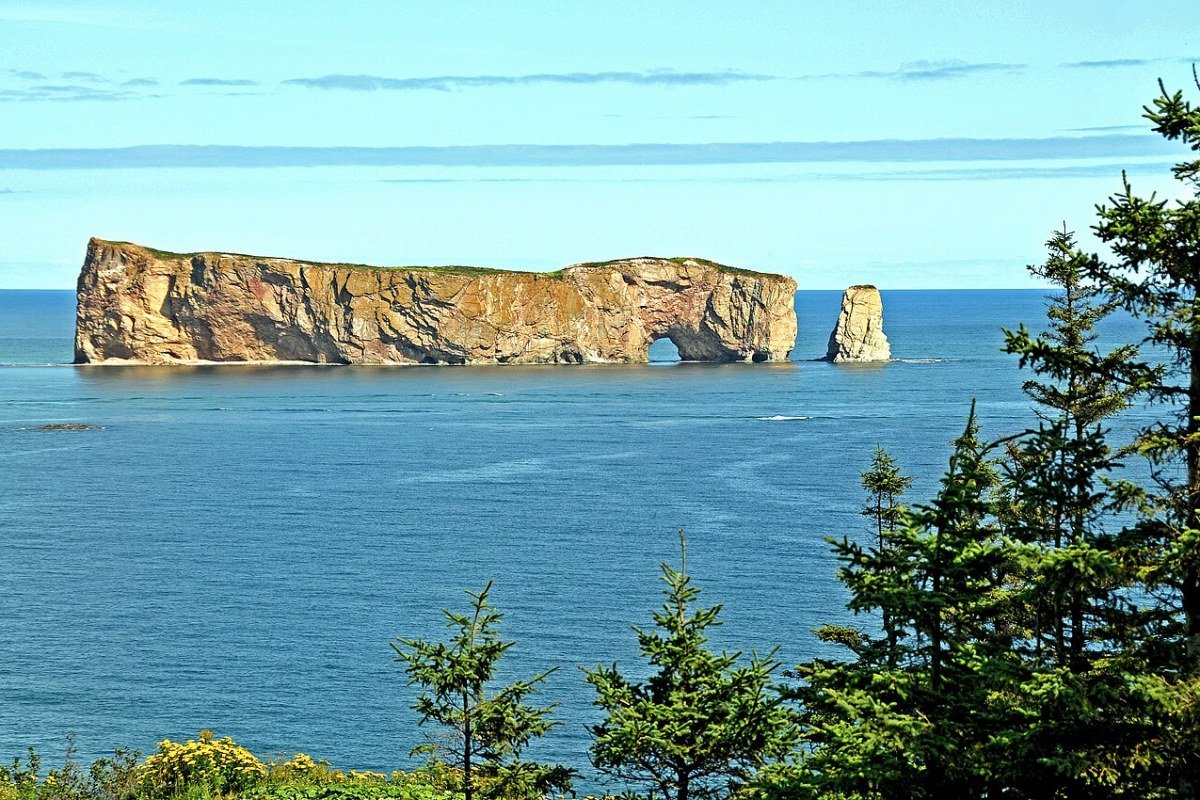
- Percé and Île Bonaventure: The Percé Rock (one of the world’s largest natural arches in a marine setting) and the Île Bonaventure northern gannet colony (120,000 birds, accessible by boat from Percé) are the Gaspésie’s most visited natural attractions; the hiking trails on Île Bonaventure bring visitors within metres of nesting gannets
Route Verte: Quebec’s Cycling Network
La Route Verte — 5,300km of designated cycling routes across Quebec — is the largest dedicated cycling network in the Americas and the foundation of Quebec’s cycling tourism industry. Key routes:
- P’tit Train du Nord (Laurentians): 232km on a former railway converted to a multi-use trail; the most iconic Quebec cycling trail, passing through 15 Laurentian communities from Saint-Jérôme to Mont-Laurier; summer cycling and winter cross-country skiing
- Corridor de l’Estrie (Eastern Townships): 110km from Granby to Bromont and beyond; rolling farmland and lake country cycling; wine stops at Dunham and Cowansville
- Vélo-Route des Bleuets (Saguenay): 256km loop around Lac Saint-Jean; flat, well-marked, and passing through the blueberry-growing heartland of Quebec; a complete cycling holiday in one of Canada’s most distinct regional cultures
- Jacques-Cartier and Portneuf trails: 68km near Quebec City; the descent into the Jacques-Cartier River valley provides one of the most dramatic cycling experiences in southern Quebec
Planning Your Outdoor Adventure
The outdoor experiences described in this guide reward practical preparation. For wilderness and protected areas, check trail conditions, permit requirements, and seasonal access with the relevant land management authority before departure — trail closures, fire restrictions, and entry quotas can change quickly, and many high-demand parks now require advance reservations that were not needed in previous years. Weather in Quebec can change rapidly, particularly in mountain terrain and during shoulder seasons; a layered approach with a waterproof outer shell is advisable for most outdoor pursuits regardless of the season. For water-based activities — paddling, snorkeling, diving, surfing — check current conditions with local outfitters who will have the most accurate and up-to-date information. Leave No Trace principles apply throughout: pack out everything you bring in, stay on established trails, give wildlife space, and leave natural features undisturbed for the next visitor.