
Outdoor Activities in New Mexico 2026: Desert, Mountains, and Ancient Wilderness
New Mexico’s outdoor recreation is defined by the extraordinary variety of landscapes available within a single state — the gypsum desert of White Sands, the alpine peaks of the Sangre de Cristo and Jemez Mountains, the ancient lava fields of El Malpais, the river canyon of the Rio Grande Gorge, the cave systems of the Guadalupe Mountains, and the wilderness of the Gila National Forest collectively provide an outdoor experience as diverse as any state in the American West. The state’s 300+ annual days of sunshine make year-round outdoor activity possible, and the altitude range from the Chihuahuan Desert floor (around 3,500 feet) to the Wheeler Peak summit (13,161 feet, the state’s highest point) creates vertical diversity that rewards both desert hikers and alpine enthusiasts within driving distance of any major New Mexico city.
White Sands: Desert Hiking and Sledding
White Sands National Park’s 275 square miles of gypsum dune field offer hiking experiences available nowhere else in North America. The Alkali Flat Trail (4.6 miles round trip) ventures into the heart of the dune field to the remnant flat of the ancient Lake Otero, passing through the most pristine and remote portion of the park where the surrounding Sacramento and San Andres Mountains form the horizon of a white wilderness that operates by entirely different visual rules than any conventional landscape. Navigation is by wooden posts, as conventional trail markers are quickly buried by the migrating dunes — this post-navigation hiking in the dune field provides a genuine orientation challenge that rewards attention. The Dune Life Nature Trail (1 mile) and the Playa Trail (0.5 miles) provide shorter explorations focused on the ecology of the gypsum environment.
Hiking in White Sands requires preparation for extreme conditions: in summer (May through September), temperatures exceed 100°F regularly, and the white sand reflects and amplifies solar radiation in ways that non-reflective desert surfaces do not. Water carrying requirements are higher than most visitors anticipate — the recommended minimum is one liter per person per hour of activity in summer. The park’s backcountry camping program (permits required, limited sites) allows overnight stays in the dune field for the sunrise and sunset experiences that the dune landscape provides when visitor traffic is absent. The Interdune Boardwalk and the nearby Lake Lucero tour (by reservation) provide access to the selenite crystal lake bed where the gypsum originates, completing the geological story of the park.

The Gila Wilderness and National Forest
The Gila National Forest, 3.3 million acres of mountains, canyons, and wilderness in southwestern New Mexico, contains the Gila Wilderness — the first designated wilderness area in the United States (designated 1924 by Aldo Leopold, who worked as a ranger in the Gila and developed his land ethic philosophy here) — and some of the most remote and ecologically rich terrain in the Southwest. The Gila River’s three forks — the West Fork, Middle Fork, and East Fork — provide canyon hiking through basalt and limestone narrows where the river must be crossed dozens of times on any extended route, and where the canyon walls shelter an extraordinary concentration of wildlife: black bears, mountain lions, Mexican gray wolves (reintroduced since 1998), Gila trout (a federally threatened species found only in a handful of New Mexico streams), and a diversity of desert and riparian bird species that makes the Gila one of the premier birding destinations in the Southwest.
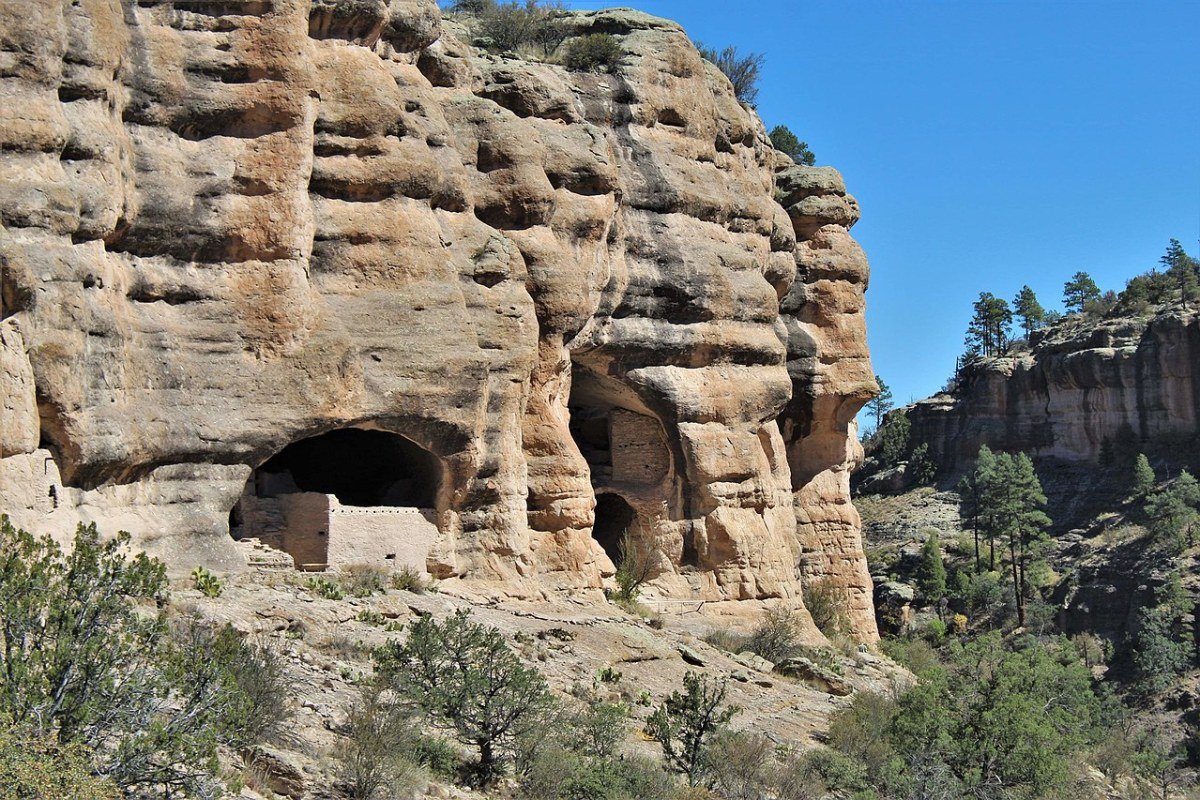
The Gila Cliff Dwellings National Monument, within the national forest, protects cliff dwellings built by the Mogollon people approximately 700 years ago in the natural cave alcoves above the West Fork of the Gila River. The 1-mile trail from the visitor center provides access to the dwellings’ interior — an intimate encounter with the architectural achievement of a people who built 42 rooms into the rock face — that is less visited and more accessible than the more famous cliff dwellings of Mesa Verde. The hot springs along the Middle Fork of the Gila provide natural geothermal soaking pools accessible only by hiking into the wilderness — a multi-mile approach that ensures the springs remain uncrowded even during peak visitor months.
Sangre de Cristo Mountains: Hiking and Skiing
The Sangre de Cristo Mountains, which rise immediately east of Santa Fe and Taos to elevations above 13,000 feet, provide the most accessible alpine hiking and skiing in northern New Mexico. Wheeler Peak (13,161 feet), the highest point in New Mexico, is accessible via two primary routes from Taos Ski Valley — the Wheeler Peak Trail (8 miles round trip, 3,200 feet of gain from the trailhead) and the longer Williams Lake route that passes the tarn beneath Wheeler’s north face. The Santa Fe Ski Basin (Ski Santa Fe) operates at the crest of the Sangre de Cristos above Santa Fe, with runs descending from 12,075 feet to 10,350 feet base elevation — Santa Fe skiing provides a genuinely high-altitude experience, though the resort’s modest size (67 runs, 660 acres) limits the terrain variety available. Taos Ski Valley, the premier ski resort in New Mexico, operates 110 runs across 1,294 acres with a vertical drop of 2,612 feet and terrain rated among the most challenging in the Southwest.
The Pecos Wilderness, in the northern Sangre de Cristos above Pecos and the Santa Fe National Forest, provides 223,000 acres of designated wilderness with 14 peaks above 12,000 feet, alpine lakes, and the headwaters of the Pecos River — one of the finest native trout fisheries in New Mexico. The Truchas Peak circuit (approximately 20 miles, requiring wilderness camping permits) is the most demanding and rewarding multi-day hiking route in northern New Mexico, traversing the high ridgeline between the three Truchas Peaks (the highest at 13,102 feet) with views across the Rio Grande valley to the Jemez Mountains in the west.
Rio Grande and the Jemez Mountains
The Rio Grande Gorge, where the river cuts 800 feet through the Taos Plateau volcanic basalt in a canyon that seems to appear without warning in the flat volcanic plain, provides both whitewater kayaking and rafting (the Taos Box — the 17-mile stretch from the Arroyo Hondo confluence to Pilar — is the finest whitewater run in New Mexico, Class III–IV in normal spring flows) and canyon hiking (the Rio Grande del Norte National Monument protects the gorge and plateau, with hiking trails along the rim and down to the river). The spring snowmelt period (April–May) provides the highest flows and most challenging whitewater conditions; summer monsoon rains can affect river levels and clarity throughout July and August.
The Jemez Mountains west of Los Alamos provide a contrasting landscape — an eroded volcanic caldera (the Valles Caldera National Preserve, a 13-mile-diameter collapsed volcanic crater) surrounded by ponderosa pine and mixed conifer forest, hot springs (Jemez Springs’ natural pools along the Jemez River), and the ancient pueblo of Bandelier National Monument (where the Ancestral Pueblo people carved homes into the soft volcanic tuff cliffs above Frijoles Canyon between 1150 and 1550 CE). The Jemez Mountain Trail Scenic Byway (NM Route 4) connects the Valles Caldera, Bandelier, and the historic Jemez Pueblo in a loop that provides one of the most complete geological, ecological, and cultural tours available in a single day’s drive from Albuquerque or Santa Fe.