Northern Ireland Outdoor Guide 2026: Causeway Coast, Mourne Mountains, and Wild Atlantic Walks
Northern Ireland’s outdoor landscape is one of the UK’s most varied and least crowded — a country of 13,843km² that contains the UK’s largest freshwater lake (Lough Neagh), the world’s most famous basalt geological formation (the Giant’s Causeway), the most dramatic coastal cliffs in the British Isles after Pembrokeshire (the Antrim coast), and a mountain range (the Mournes) that rises directly from the Irish Sea to produce one of Britain’s most dramatic coastal mountain landscapes. The country’s compact size means that the Antrim coast, the Mournes, the Fermanagh lakelands, and the Sperrin Mountains are all accessible from Belfast in under 2 hours, creating an outdoor recreation geography whose variety per unit distance is exceptional. Northern Ireland’s outdoors has been largely overlooked by UK and international visitors who have historically focused on England’s Lake District or Scotland’s Highlands; this relative lack of pressure (the Giant’s Causeway and the Carrick-a-Rede Bridge aside) means that the country’s best walks, beaches, and wild areas can still be experienced in comparative solitude.
The Causeway Coast Way: Northern Ireland’s Signature Walk
The Causeway Coast Way (53km, from Ballycastle to Portstewart, in County Antrim) is Northern Ireland’s most celebrated long-distance walk — a coastal path tracing the cliff-top above the Irish Sea, passing the Giant’s Causeway, the Carrick-a-Rede Rope Bridge, Kinbane Castle, Ballintoy Harbour (a Game of Thrones filming location), and the whitewashed villages of the Antrim coast in a 2–3 day walk of consistent dramatic beauty.
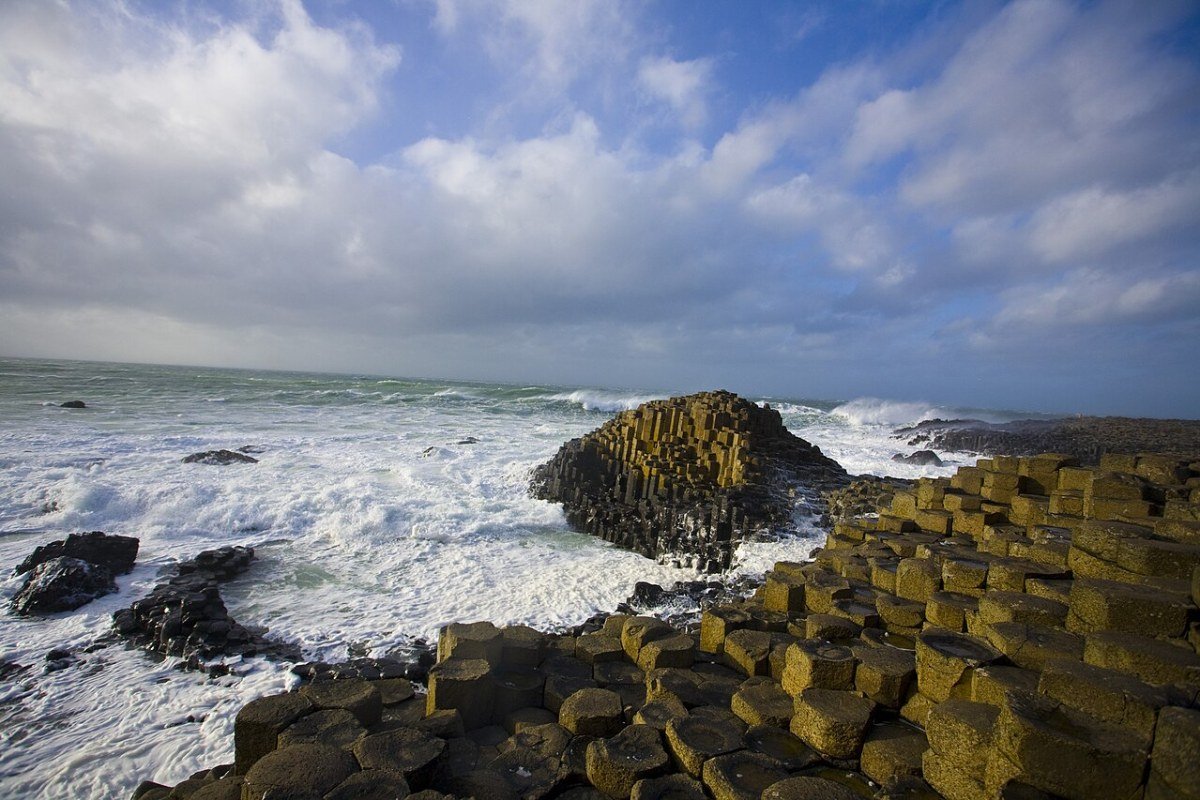
- Giant’s Causeway section: The central section of the path above the Giant’s Causeway — following the cliff-top route rather than the visitor centre path — provides the finest views of the basalt columns from above and the perspective of the formation’s setting in the wider coastal landscape
- Kinbane Castle: The 16th-century MacDonnell clan castle on a chalk headland above the sea (accessed by steps from the cliff top) provides one of the most dramatically situated ruins on the Irish coast, with views across the North Channel to the Scottish islands on clear days
- Rathlin Island: Northern Ireland’s only inhabited offshore island (150 residents), accessible by ferry from Ballycastle (25 minutes), hosts the RSPB Rathlin West Light Seabird Centre where puffins, razorbills, and guillemots nest on the sea stacks beneath the inverted lighthouse. The island’s cliffs hold one of the largest seabird colonies in Ireland (June–July peak for puffin viewing)

The Mourne Mountains: Northern Ireland’s High Ground
The Mourne Mountains in County Down (the compact granite range 50km south of Belfast) are Northern Ireland’s highest ground and its most spectacular mountain landscape — Slieve Donard (852m, Northern Ireland’s highest peak), Slieve Commedagh (767m), Slieve Bearnagh (727m, with the dramatic tor summit rocks), and the surrounding high ground connected by the Mourne Wall create a mountain environment in a country not usually associated with mountain walking.
- Slieve Donard ascent: Northern Ireland’s highest summit is most commonly accessed from Newcastle (County Down) via the Glen River Path — a 5–6 hour return hike ascending 840m through forest to the granite summit, with views on clear days of Scotland’s Galloway Hills, the Isle of Man, the Wicklow Mountains in the Republic, and Snowdonia in Wales. The summit granite cairn and the Mourne Wall’s crossing at the top provide the classic Donard summit experience
- Mourne Wall walk: The 35km circuit following the Mourne Wall (enclosing the nine highest summits, built 1904–1922 to protect the Silent Valley reservoir catchment) is one of Northern Ireland’s great mountain challenges — typically attempted in 1–2 days by experienced hill walkers, crossing all nine enclosed Munro equivalents and providing the finest overview of the Mourne landscape
- Silent Valley: The reservoirs in the heart of the Mournes (accessible from the Silent Valley car park) provide the most accessible valley walking in the range — a gentle flat-bottomed valley walk past the Ben Crom and Silent Valley reservoirs, with the Mourne summit panorama visible from the valley floor
The Fermanagh Lakelands: Water Wilderness
County Fermanagh’s lakelands — Upper and Lower Lough Erne, with 154 islands, and the surrounding drumlin landscape of lakes, rivers, and bogland — are one of the finest inland waterway and kayaking environments in the British Isles. The Erne waterway system (50km from Belleek to Enniskillen, extending through Lower and Upper Lough Erne) is navigable by hire boat from Enniskillen and provides one of Ireland’s most peaceful cruising environments. The islands of Lower Lough Erne (the monastic ruins of Devenish Island, the White Island Christian figurines, the Boa Island Janus figure — one of Ireland’s most enigmatic pagan sculptures) provide a cultural dimension to the water landscape.
- Marble Arch Caves Global Geopark: The UNESCO Geopark in south Fermanagh (straddling the border with the Republic’s County Cavan) contains the Marble Arch Caves — the finest show cave system in Ireland, where boat tours navigate underground rivers through caverns of stalactite and stalagmite formations beneath the Cuilcagh Mountain plateau
- Cuilcagh Mountain Boardwalk: The “Stairway to Heaven” boardwalk on Cuilcagh Mountain (665m, on the border with County Cavan) provides one of Northern Ireland’s most dramatic high-level views — the wooden boardwalk ascending through blanket bog to the summit plateau, with the lakelands of Fermanagh visible to the north and the Republic’s Leitrim and Cavan hills to the south
Wild Swimming, Surfing, and Coastal Adventures
Northern Ireland’s coastline provides wild swimming conditions ranging from the cold waters of the North Channel (the Antrim coast, where the sea temperature rarely exceeds 15°C) to the more sheltered bays of the County Down coast. Portrush and Portstewart on the north coast are Northern Ireland’s primary surf beaches (North Atlantic swells, consistent year-round swell with offshore winds); White Rocks Beach (between Portrush and the Giant’s Causeway) provides the most dramatic sand beach adjacent to the basalt cliff scenery. Murlough National Nature Reserve (County Down) and the Strangford Lough area provide gentler coastal walking and wildlife watching — Strangford Lough (the UK’s largest sea lough) supports enormous populations of wildfowl in winter (light-bellied Brent geese, duck and wader species) and basking sharks in summer.