
Moving to New Mexico in 2026: Complete Relocation Guide
Moving to New Mexico is an adventure in contrasts — the administrative process is straightforward, the climate is extraordinary (the combination of sunshine, clear air, and dramatic sky that the state provides year-round is genuinely difficult to replicate), and the cultural richness of the three-culture (Native American, Hispanic, Anglo) tradition is immediately apparent and rewarding for residents who engage with genuine curiosity. The honest preparation involves understanding the limitations that come with New Mexico’s status as one of the least wealthy states — public school performance challenges, infrastructure deficits in rural areas, a healthcare access landscape that requires research (particularly for specialists), and an employment market thinner than the state’s lifestyle appeal might suggest. For remote workers, retirees, and artists who can bring their income with them, New Mexico often exceeds expectations; for households dependent on the local job market, employment research before moving is essential.
Driver’s License and Vehicle Registration
Driver’s license: New Mexico requires new residents to obtain a New Mexico driver’s license within 90 days of establishing residency — one of the more generous timelines in the country. The Motor Vehicle Division (MVD) handles licensing at offices in Albuquerque, Santa Fe, Las Cruces, and other cities; the Santa Fe MVD office in particular has historically had long waits due to volume relative to office capacity. Required documents: proof of identity (US passport or certified birth certificate with raised seal), proof of Social Security number, and two proofs of New Mexico residency (utility bill, bank statement, lease, or other government document). Vision screening is required; knowledge tests are required for applicants who have never been licensed, but out-of-state transfers in good standing are typically exempted from the written test. New Mexico offers a standard driver’s license and a REAL ID-compliant license (required for domestic air travel and certain federal facilities from 2025); the REAL ID requires the same documentation as the standard license.
Vehicle registration: New Mexico vehicle registration must be completed within 30 days of establishing residency. Registration is handled by the MVD and includes an annual vehicle inspection requirement — New Mexico requires a safety and emissions inspection for most vehicles (emissions testing applies primarily to vehicles registered in Bernalillo County/Albuquerque). The annual registration fee is based on vehicle weight and value. New Mexico’s titling process requires proof of ownership (title from the previous state), proof of insurance (minimum liability coverage required), and completion of the registration application. The state does not have a comprehensive emissions testing requirement statewide — counties outside the Albuquerque metropolitan area generally do not require emissions inspections.
Climate: Sun and Altitude
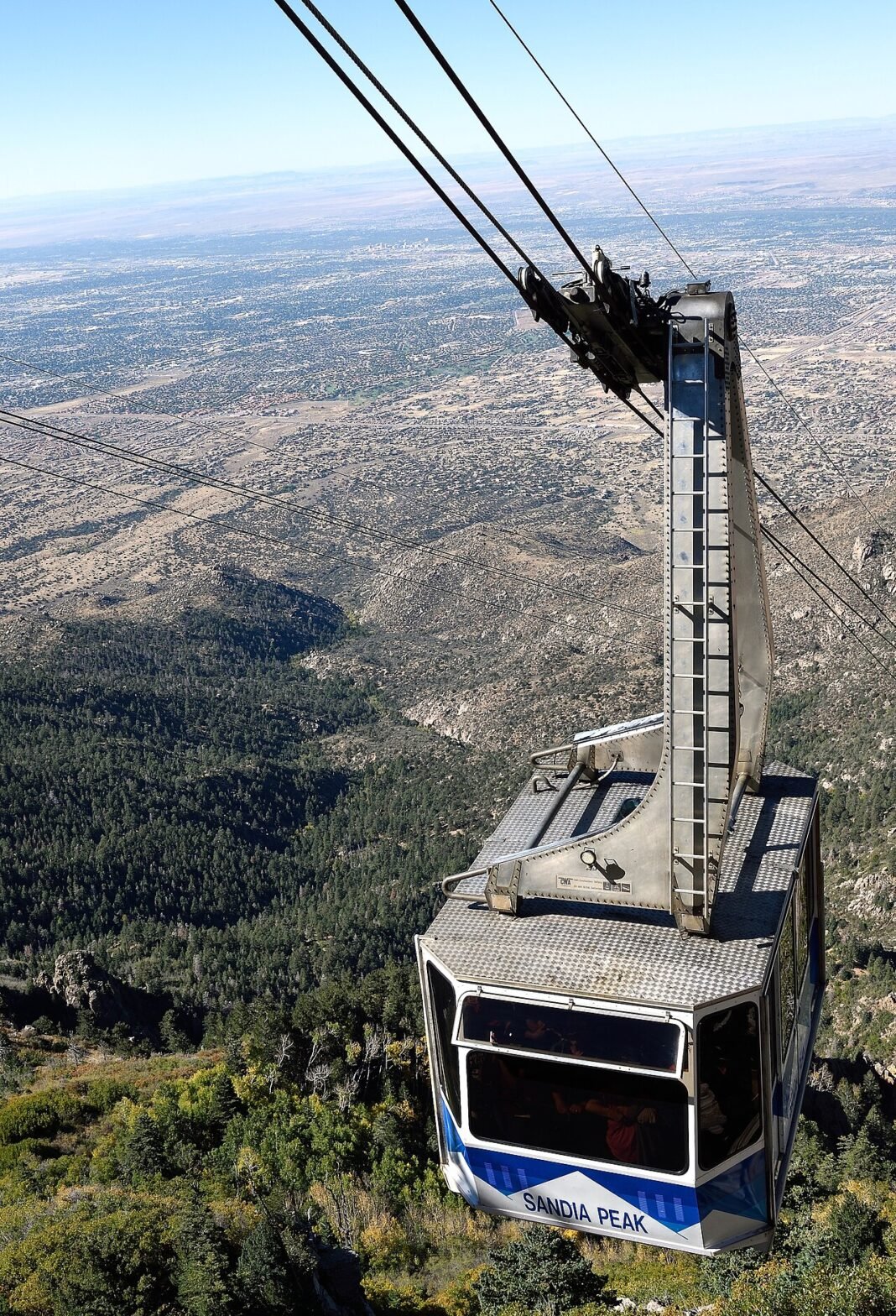
New Mexico’s climate is one of its most compelling assets — and one of its most demanding adjustments for new residents from humid or coastal climates. The state averages more than 300 days of sunshine annually in most locations, with Albuquerque consistently ranking among the sunniest large cities in the United States. The combination of sunshine and high altitude (Albuquerque at 5,312 feet, Santa Fe at 7,000 feet, Taos at 6,969 feet) creates UV radiation levels that require sun protection habits more rigorous than most new residents anticipate — sunscreen, sun hats, and UV-protective clothing are not optional in New Mexico. The altitude itself requires physical adjustment — new residents from sea-level locations typically experience headaches, fatigue, and reduced exercise capacity for the first one to two weeks at Albuquerque elevations, and potentially several weeks at Santa Fe or Taos elevations.
New Mexico’s monsoon season — the July through September pattern of afternoon thunderstorms that provide 50–60% of the state’s annual precipitation — is one of the most dramatic and important weather patterns in the Southwest. The monsoon transforms the landscape, filling desert arroyos with flash flood-prone runoff, restoring the dormant vegetation to vivid green, and providing the dramatic afternoon cloudscapes that New Mexican painters have depicted for a century. Flash flooding is a genuine hazard during monsoon season — arroyos that appear dry can fill within minutes of a storm upstream that is not visible from the arroyo bottom. New residents should understand never to enter or drive through flooded arroyos regardless of apparent water depth, and to plan outdoor activities to conclude before the typical early-to-mid afternoon thunderstorm window during monsoon months.
.jpg?width=1200)
Employment in New Mexico
New Mexico’s employment market is anchored by the federal government — specifically the national laboratories and military installations that make New Mexico one of the most significant states in the country for federal research spending relative to population. Sandia National Laboratories in Albuquerque (operated by Honeywell International for the Department of Energy, employing approximately 14,000 workers in nuclear weapons, energy, and defense research) and Los Alamos National Laboratory in Los Alamos (operated by Triad National Security for the Department of Energy, employing approximately 14,000 workers in nuclear weapons physics, chemistry, and materials science) together represent the largest single employment concentrations in New Mexico’s private and quasi-private sector. Kirtland Air Force Base in Albuquerque and White Sands Missile Range in Doña Ana County provide significant military and contractor employment in their respective regions.
Beyond the federal presence, healthcare is the largest private sector employer in most New Mexico communities — Presbyterian Healthcare Services, Lovelace Health System, and University of New Mexico Health Sciences Center anchor the Albuquerque healthcare market, while Memorial Medical Center and Mountain View Regional Medical Center serve southern New Mexico. The tourism economy — significant in Santa Fe, Taos, White Sands, and the Carlsbad Caverns area — provides employment that is seasonal and service-oriented. New Mexico’s technology sector is modest but growing, driven partly by the national laboratory ecosystem and partly by the state’s economic development incentives for film production (New Mexico’s Resident Tax Credit has made it one of the busiest film production states in the country, with Netflix, Amazon, and major studios filming major productions in Albuquerque and the surrounding landscape).
Public Schools and Education
New Mexico’s public school system performs below national averages on most measured outcomes — a challenge that the state has been working to address through curriculum reform, teacher recruitment incentives, and early childhood education investment. The variation within the state is significant: the Los Alamos school district (which serves the community of national laboratory employees and researchers) consistently ranks among the highest-performing districts in the country, reflecting the unusual concentration of highly educated households in that community. Santa Fe’s school district has improved substantially but remains uneven. Albuquerque Public Schools, the state’s largest district, shows wide performance variation by school and neighborhood.
New Mexico’s private school options are more limited than in wealthier states — Santa Fe has the most robust private school ecosystem (including Santa Fe Preparatory School, New Mexico School for the Arts, and several Montessori programs), while Albuquerque’s options are broader but less prestigious than in comparable-sized cities in Texas or Colorado. The State of New Mexico operates the New Mexico Public Education Department’s School Finder tool for researching specific school performance data. For families relocating with school-age children, researching specific school assignment zones and options (including magnet programs and charter school alternatives) before selecting a neighborhood is essential in a state where district-level averages are less predictive of specific school quality than they are in more uniformly performing states.