
Moving to Massachusetts in 2026: Complete Relocation Guide
Moving to Massachusetts — whether to Greater Boston, the North or South Shore, or the more affordable communities of central and western Massachusetts — requires preparation in areas that are specific to the state’s administrative requirements, its housing market quirks (particularly Boston’s September 1 lease cycle), its traffic realities, and the practical differences between the state’s distinct regions. Massachusetts is generally efficient for administrative tasks, but several aspects of relocation are specific to the state in ways that consistently surprise newcomers.
Driver’s License and Vehicle Registration
Driver’s license: New Massachusetts residents must obtain a Massachusetts driver’s license within 30 days of establishing residency — one of the shorter deadlines among US states. The Registry of Motor Vehicles (RMV) handles licensing at branch locations throughout the state. Required: proof of legal presence (US passport, or birth certificate plus Social Security card), proof of Massachusetts residency (two documents showing a Massachusetts address — utility bill, bank statement, lease agreement, or mortgage statement), and proof of Social Security number. Vision screening is required. A knowledge test is required if your out-of-state license has been expired more than one year; otherwise transfer is by surrender of the existing license. Massachusetts issues Real ID-compliant licenses that require the standard documentation package.
Vehicle registration: Massachusetts requires vehicle registration within 30 days of establishing residency. Registration is handled by the RMV. Massachusetts requires a vehicle safety inspection within 7 days of registration — a strictly enforced requirement with specific rules about what must pass. The inspection covers emissions (Massachusetts is an OBD-II emissions testing state for 1996 and newer vehicles), safety systems, and lighting. Massachusetts assigns license plates to the vehicle rather than the driver, meaning your existing out-of-state plates must be surrendered and new Massachusetts plates issued when you register. The registration fee is based on vehicle value; the excise tax (a local tax collected annually at $25 per $1,000 of value in the first year, declining over time) is a Massachusetts-specific annual cost that surprises newcomers from states without personal property taxes on vehicles.
The September 1 Housing Reality
Boston’s rental market is governed by the academic calendar in ways that have no equivalent in any other major American city. The city’s enormous university population — Harvard, MIT, Boston University, Boston College, Northeastern, Tufts, Emerson, and dozens of other institutions collectively enroll hundreds of thousands of students — creates a situation where the vast majority of rental leases in Boston and Cambridge run from September 1 to August 31. Landlords align their leases to this cycle because it maximizes their ability to rent to the student market; the result is that nearly all available apartments become available simultaneously on September 1.
The practical implications for new residents: if you are moving to Boston between September and May, finding available apartments is genuinely difficult, with limited inventory and landlords who know they can wait for the summer rush. If your move is flexible, targeting a June or July arrival allows you to participate in the peak availability period. If your move is not flexible — if you’re starting a job in January — plan to either sublet (there is a significant sublet market in Boston driven by students leaving mid-year) or pay a premium for one of the apartments available outside the September cycle. Boston’s housing search requires more advance planning than any other major American city — serious apartment searches should begin 60–90 days before your target move date, not 30 days as in most markets.
Traffic: Boston’s Particular Challenge
Greater Boston traffic is among the worst in the United States by commute time — not as severe as Los Angeles or New York at peak hours, but remarkable for a city of its size. The metropolitan road network was largely established in the 19th and early 20th centuries and follows a radial pattern from downtown Boston with no coherent grid and with interchange configurations that reflect decades of incremental addition rather than coordinated planning. The Big Dig (the decade-long project that moved I-93 underground through downtown Boston, completed in the early 2000s) improved downtown circulation but did not resolve the broader metropolitan congestion.
New residents should understand several Boston-specific traffic realities. The Expressway (I-93) through Boston — called the “Southeast Expressway” in both directions — is consistently congested during the morning (7–9 AM) and evening (4–7 PM) rush, with delays that can stretch a 10-mile commute to 45–75 minutes. Route 128/I-95 westbound in the morning and eastbound in the evening is similarly difficult. The Sumner and Ted Williams Tunnels connecting Boston to East Boston and the airport are particularly susceptible to incident-driven backups. Boston drivers are assertive and accustomed to the city’s irregular street pattern — new drivers should expect that the rules of driving in Boston are enforced more by traffic flow than by painted lines, and adjust accordingly.

The MBTA: Assets and Realities
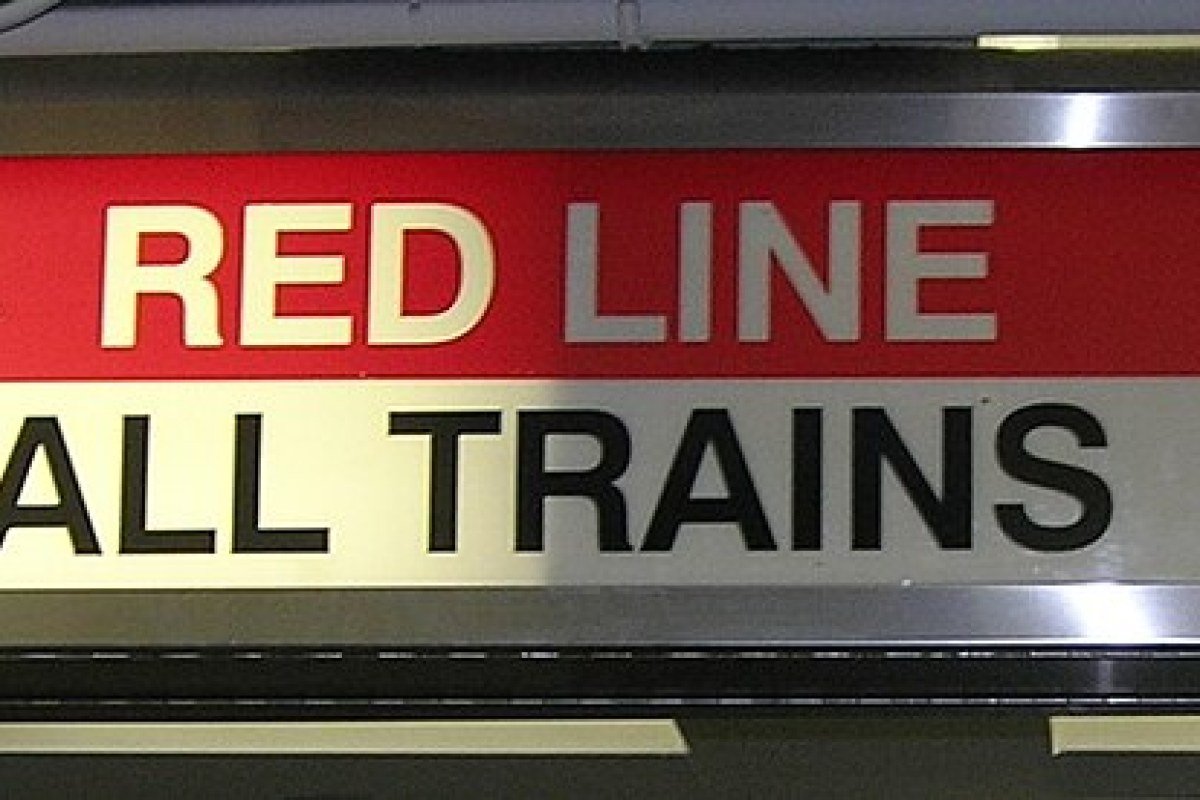
The MBTA (Massachusetts Bay Transportation Authority) operates the oldest subway system in America — the first American subway opened in Boston in 1897 — and the most extensive public transit network in New England. The system includes four subway lines (Red, Orange, Green, and Blue), numerous bus routes, seven commuter rail lines extending throughout eastern Massachusetts and to Providence and Worcester, and the Commuter Boat ferry serving Salem, Hingham, and Hull. A monthly LinkPass at $90 provides unlimited subway and local bus access — the best transit value in the metro.
The MBTA’s age is both its character and its challenge. The system requires ongoing capital investment that has not always materialized — equipment reliability has been a persistent issue, and service disruptions (particularly on the Green Line) are common enough that commuters who depend on the T for time-sensitive commutes should build buffer time into their schedules. The system’s coverage is excellent for the inner neighborhoods (Cambridge, Somerville, Boston proper, Brookline, Newton along the Green Line), good for the inner suburbs with commuter rail, and thin for the outer suburbs and communities without rail access. New residents who choose housing specifically for transit access — within walking distance of a subway station rather than requiring a bus or drive to reach transit — will have substantially better commuting experiences.
Winter Preparation
Massachusetts winters are genuine — not Minnesota-extreme, but serious enough to require material preparation that residents of warmer states may not have experienced. Boston averages approximately 44 inches of snowfall annually, with significant year-to-year variation. The winters of 2015 and 2023 brought exceptional snowfall (Boston received 108 inches in the winter of 2014-15) that tested the city’s infrastructure; the winters of 2016 and 2020 were comparatively mild. New residents should prepare for the full range.
Winter driving in Massachusetts requires winter tires — not legally mandated but practically essential for safe driving in snow and ice conditions. Massachusetts roads are aggressively maintained during and after snowstorms (the state has extensive plowing and salting operations), but the window between storm start and road clearance requires a vehicle equipped for snowy conditions. All-wheel drive is common in the Massachusetts market but does not substitute for winter tires on ice. Snow removal is the responsibility of property owners and tenants — in Boston, failure to clear sidewalks within a specified time after snowfall carries fines, and the “space saver” tradition (residents who have shoveled out a parking space mark it with a lawn chair or cone to reserve it for their vehicle) is a deeply ingrained local custom that generates significant neighborly tension.
Employment in Massachusetts
Massachusetts’s economy is anchored by four interconnected sectors that reinforce each other and create one of the most robust knowledge-economy labor markets in the country. Healthcare and the life sciences represent the largest single employment cluster: Massachusetts General Hospital, Brigham and Women’s, Beth Israel Deaconess, Dana-Farber, and the other teaching hospitals affiliated with Harvard Medical School employ tens of thousands of physicians, nurses, researchers, and administrative staff. The pharmaceutical and biotechnology corridor along Route 128 and in Kendall Square in Cambridge — where Moderna, Biogen, Pfizer’s research operations, Vertex, and hundreds of smaller biotechs have concentrated — has made Massachusetts the most important life sciences cluster in the world.
Technology employment is concentrated in the Cambridge-Boston axis, where the spillover from MIT and Harvard has created a startup ecosystem that generates both high-growth companies and stable employment for engineers, product managers, and technical staff. Finance and professional services — Fidelity Investments is headquartered in Boston; State Street and Liberty Mutual are major employers — provide additional high-income employment. Education itself (the universities employ thousands of faculty, administrators, and staff) and tourism (Massachusetts is among the top ten US states for visitor spending) complete the employment picture. For skilled workers in technology, healthcare, and the life sciences, Massachusetts offers one of the deepest and most competitive labor markets in the country.
Massachusetts-Specific Administrative Notes
Massachusetts has several administrative requirements that differ from most states. The state requires a vehicle safety and emissions inspection within 7 days of registration — a strictly enforced requirement with specific standards. Massachusetts is an at-fault state for auto insurance, with a competitive private insurance market; new residents may find rates higher or lower than their previous state depending on their history and the specific community. The state’s bottle deposit law ($.05 deposit on carbonated beverages, redeemable at any participating retailer) applies to a wide range of containers and requires returning empties to collect the deposit — a minor but ubiquitous administrative reality of Massachusetts life. Massachusetts maintains its own health insurance exchange (Massachusetts Health Connector) and has its own individual mandate requiring Massachusetts residents to maintain qualifying health coverage or face a state tax penalty — making health insurance enrollment a higher administrative priority for new residents than in states without an individual mandate.