
Missouri Travel Guide 2026: St. Louis, Kansas City, and the Ozarks
Missouri sits at the geographic and cultural crossroads of America — the confluence of the Missouri and Mississippi Rivers, the departure point of the Lewis and Clark Expedition, the starting point of the Santa Fe, Oregon, and California Trails, and a state where the border between North and South, East and West, has always been contested and negotiated rather than settled. The Gateway Arch in St. Louis is the most visible symbol of this crossroads character, but Missouri’s actual diversity runs deeper: the cosmopolitan culture of Kansas City (the only major American city to occupy both sides of a state line), the blues and jazz heritage of the same Kansas City, the extraordinary natural beauty of the Ozark Highlands, and the Mark Twain country of northeastern Missouri combine to make the state one of the Midwest’s most genuinely interesting travel destinations.
St. Louis: River City and Art Crossroads
St. Louis’s Gateway Arch, completed in 1965 and designed by Eero Saarinen as part of the Jefferson National Expansion Memorial, is the most architecturally significant monument in America — a stainless steel catenary arch rising 630 feet above the Mississippi River levee, accessible by a system of tram pods inside the arch legs that carry visitors to an observation room at the apex with views extending 30 miles on clear days. The Gateway Arch National Park (redesignated from Jefferson National Expansion Memorial in 2018) includes the Museum of Westward Expansion beneath the Arch, which chronicles the Lewis and Clark Expedition and the trails migration with artifacts and immersive exhibits of genuine historical depth.
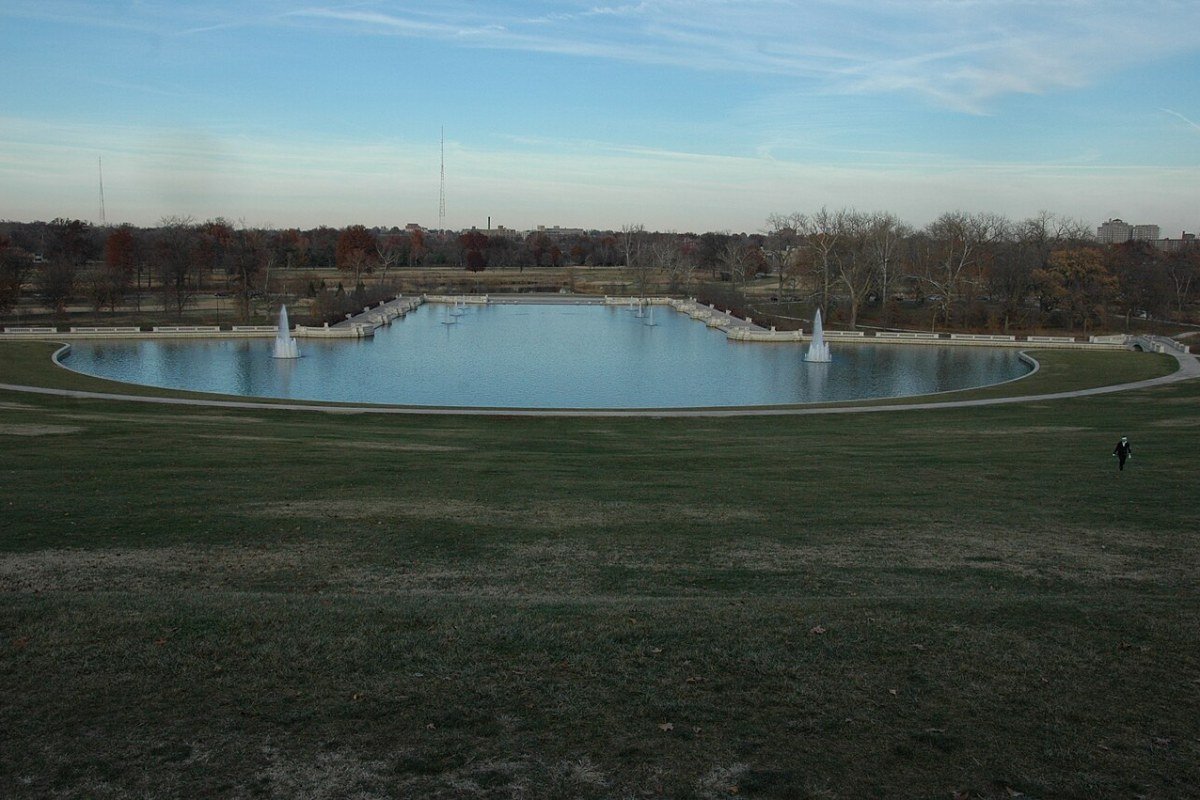
The St. Louis Art Museum (SLAM), in Forest Park, is one of the finest free art museums in America — the only major American art museum to have been established through a popular referendum (funded by a property tax that voters approved in 1907 and that continues to provide free admission to all permanent collection galleries today). The collection spans Egyptian antiquities through contemporary art, with particular strength in pre-Columbian art, German Expressionism, and the African art collection. Forest Park itself — 1,371 acres that hosted the 1904 World’s Fair and is larger than New York’s Central Park — contains the art museum, the Saint Louis Zoo (free admission, consistently ranked among the finest zoos in the country), the Missouri History Museum, the St. Louis Science Center, and the Muny (the nation’s largest outdoor theater). The concentration of major free cultural institutions in a single park is without parallel in any American city.
The Soulard neighborhood — the city’s oldest continuously occupied neighborhood, centered on the Soulard Farmers Market (established 1779, the oldest farmers market west of the Mississippi, operating every day of the week) and surrounded by 19th-century brick row houses — provides the most authentic St. Louis neighborhood experience. The Soulard blues and rock bars (Hammerstone’s, the Broadway Oyster Bar) and the Anheuser-Busch Brewery (offering tours of the historic 142-acre complex, including the famous Budweiser Clydesdales stables) are within walking distance of the market.

Kansas City: Jazz, BBQ, and the 18th and Vine District
Kansas City’s jazz and blues heritage centers on the 18th and Vine Historic District — the neighborhood where Charlie Parker grew up, where Count Basie got his start, and where the particular Kansas City jazz style (characterized by the blues-drenched riffing of the Count Basie Orchestra and the bebop innovations of Parker) was developed during the 1920s and 1930s under the benign neglect of boss Tom Pendergast, whose political machine kept the jazz clubs open and the music flowing. The American Jazz Museum at 18th and Vine is the finest jazz museum in the country, with an extraordinary collection of instruments, photographs, and recorded performances that trace the music from its Kansas City origins through its national flowering. The Blue Room, a jazz club within the museum that books live performances most nights, provides the experience of hearing jazz in a neighborhood that still carries the music’s history.
Kansas City barbecue is the most debated regional American food tradition — the city claims the most distinct BBQ style in the country, distinguished by the thick, sweet, tomato-based sauce (Arthur Bryant’s, Gates Bar-B-Q, Joe’s Kansas City, and Jack Stack are the institutions that define the tradition’s standards), the slow-smoked beef and pork, and the burnt ends (the charred, crispy tips of briskets that Arthur Bryant’s began serving as a free side and that have become one of the most sought-after barbecue items in the country). A Kansas City barbecue tour — cycling through the institutions in a single afternoon — is one of the most enjoyable food experiences in the American Midwest.
The Ozark Highlands
The Ozark Plateau of southern Missouri is a geological and ecological anomaly in the Midwest — an ancient mountain range worn down to a plateau of chert-bedded limestone and dolomite that has been carved by the Current, Jacks Fork, Eleven Point, and other spring-fed rivers into a landscape of clear-water streams, forested hills, and the Big Spring (the largest spring in Missouri, flowing 286 million gallons daily at Big Spring State Park near Van Buren). The Ozark National Scenic Riverways, the first national riverway in the United States (protecting 134 miles of the Current and Jacks Fork Rivers), preserves the clearest, coldest, and most beautiful canoe rivers in the Midwest — spring-fed streams whose temperature remains 58–64°F year-round and whose water is gin-clear over the gravel and bedrock bottom.
Branson, in the southwestern Ozarks, is Missouri’s most visited tourist destination — a concentration of live entertainment theaters, amusement parks, and Table Rock Lake recreation that draws millions of visitors annually to a small town that has essentially been rebuilt around the tourism industry. The Branson experience is specifically American in its combination of country music, Christian entertainment, and family-oriented commercial recreation — it is not for every traveler, but for families with children who want a vacation combining live shows, water recreation, and the particular culture of a Midwest Christian entertainment complex, Branson delivers exactly what it promises.
Mark Twain Country
Hannibal, on the Mississippi River in northeastern Missouri, was the childhood home of Samuel Clemens (Mark Twain) and the model for St. Petersburg, Missouri — the fictional town of Tom Sawyer, Huck Finn, and the other novels that made Twain the defining voice of 19th-century American literature. The Mark Twain Boyhood Home and Museum preserves the white-clapboard house where Clemens grew up, the restored fence that became Tom Sawyer’s fence-painting humiliation, and a collection of Twain manuscripts, first editions, and biographical artifacts that provides the most complete physical context available for understanding the world that produced America’s greatest novelist. Hannibal itself — a river town that has maintained much of its 19th-century character — provides the setting that Twain described with such precision that wandering its streets while reading Tom Sawyer is one of the most complete American literary experiences available.