

Delaware Outdoors: Beaches, Trails, Birding, and Coastal Life
Delaware is the second-smallest state in the country, and its outdoor recreation scene reflects its size — modest in scale, but thoughtfully managed and genuinely rewarding within its ecological niche. The state sits in the heart of the Atlantic Flyway, one of the four major North American bird migration corridors, making it one of the best birding states in the eastern United States relative to its size. Its Atlantic coastline and Delaware Bay shore combine beach recreation, water sports, and coastal wildlife viewing in a compact geography that is among the most accessible in the Mid-Atlantic region. And its state park system, while not expansive, maintains quality standards that have made several Delaware parks genuine regional destinations.
Beach Recreation: Delaware’s Primary Outdoor Draw
Delaware’s Atlantic coast extends approximately 28 miles from Fenwick Island (on the Maryland border) to the mouth of Delaware Bay at Cape Henlopen — a short but rewarding stretch of beach that encompasses several distinct environments and beach town characters.
Rehoboth Beach: The most family-friendly and most visited, with a traditional boardwalk, calm surf (protected somewhat by the offshore bar), and a beach width that accommodates the summer crowds reasonably well. The north end of Rehoboth Beach near North Shores is significantly quieter than the boardwalk area and offers access to the beach with much smaller crowds.
Dewey Beach: Delaware’s nightlife beach — the one-mile-long oceanfront strip south of Rehoboth is famous for its concentration of bars and clubs that attract a younger, louder summer crowd. Dewey’s beach itself is excellent (the bay side offers calmer water for swimming and paddling), but its character is decidedly party-oriented.

Bethany Beach and South Bethany: The “Quiet Resorts” — a collective name for the less commercially developed beaches south of Dewey. Bethany Beach has a small, charming boardwalk without Rehoboth’s commercial intensity; South Bethany is almost entirely residential. These communities are the preferred choice for families who want beach access without the crowds and noise of the main resort areas.
Fenwick Island and Ocean City: Delaware ends at Fenwick Island, which transitions directly into Maryland’s Ocean City — the much larger resort city to the south. Fenwick Island itself is a quiet residential beach community that benefits from Delaware’s no-sales-tax shopping and the presence of the Delaware Seashore State Park immediately to its north.
Cape Henlopen State Park
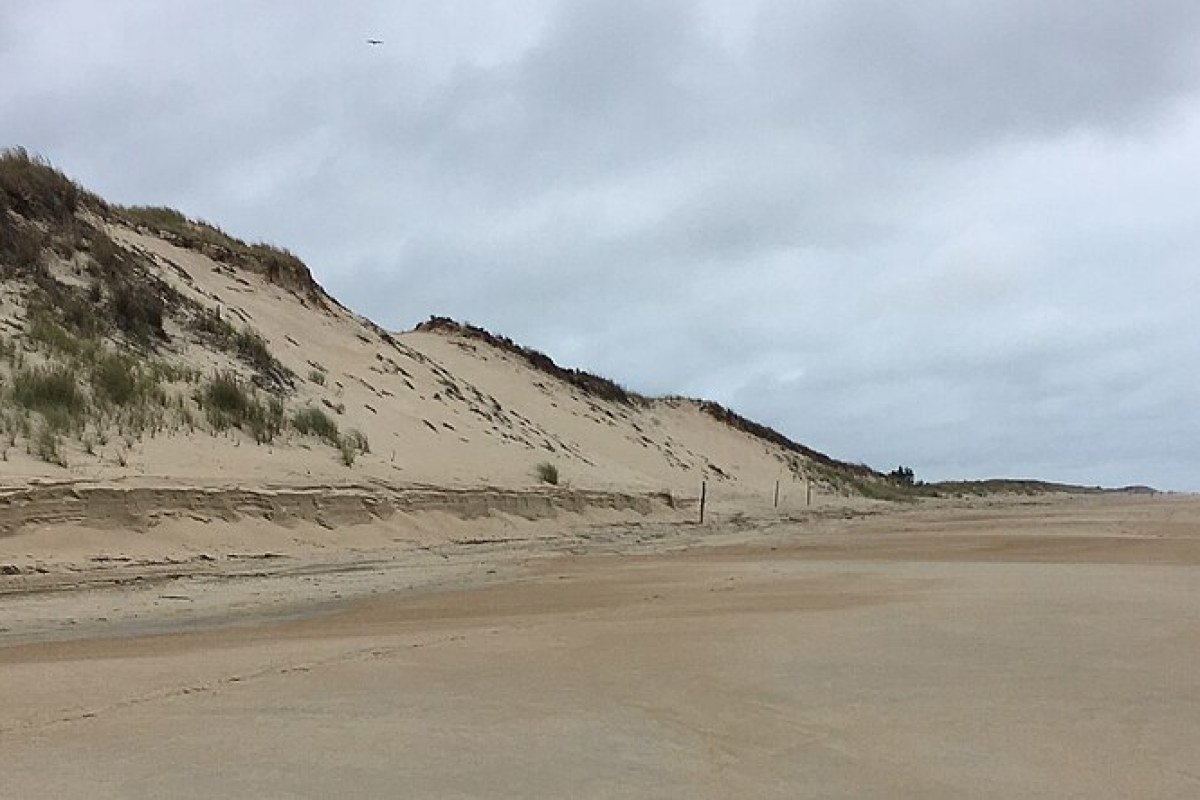
Cape Henlopen is Delaware’s finest outdoor destination — a 5,193-acre park at the mouth of Delaware Bay that encompasses Atlantic beach, dune fields, maritime forest, freshwater ponds, and the historical remnants of World War II Fort Miles. The Great Dune rises 80 feet above the surrounding terrain and provides panoramic views of the ocean and bay. The park’s beach is consistently excellent with fewer crowds than the resort areas to the south, and the combination of swimming, birding, cycling on the park’s 6-mile trail system, and fishing (the park’s fishing pier is one of the most productive on the Delaware coast) makes it a genuinely multi-activity destination.
Fort Miles, the World War II coastal defense installation that occupies part of the park, is preserved with its original gun batteries, observation towers, and fire control stations intact. Guided tours are available that provide context for the installation’s role in protecting Delaware Bay during the war.
Birding: Delaware’s World-Class Asset
Delaware sits at the convergence of Atlantic coast and Delaware Bay migration corridors, and its tidal marshes, coastal wetlands, and forested uplands make it one of the most productive birding states in the eastern United States relative to its area. The Delaware Ornithological Society maintains records of over 430 species observed in the state, and prime birding locations are distributed across the state’s modest geography.
Bombay Hook National Wildlife Refuge: The premier Delaware birding destination, Bombay Hook protects 16,000 acres of tidal salt marsh and freshwater impoundments along the Delaware Bay shore in Kent County. The refuge hosts tens of thousands of snow geese, Canada geese, and duck species during fall migration (October–November), and the impoundments attract shorebirds in extraordinary diversity during late summer (July–September) when water levels are managed to expose mudflats. Bald eagles are year-round residents, and breeding populations of great blue herons, glossy ibis, and various wading bird species use the marsh throughout spring and summer.

Prime Hook National Wildlife Refuge: In southern Delaware, Prime Hook protects an additional 10,000 acres of Delaware Bay marshland, with significant restoration work completed in recent years following storm damage. The refuge’s restored salt marsh and freshwater impoundments now support breeding populations of rare marsh birds including least bittern and rails, and the coastal strand attracts outstanding shorebird diversity during spring and fall migration.
Horseshoe Crab Spawning (Delaware Bay): Each May and June, horseshoe crabs emerge from Delaware Bay in enormous numbers to spawn on the beaches of the bay shore — a phenomenon that has occurred every spring for 300 million years and that attracts over 1 million shorebirds, particularly red knots, semipalmated sandpipers, and ruddy turnstones, to feed on the crab eggs. The Delaware Bay shore during peak spawning is one of the most spectacular wildlife events on the eastern seaboard, with beaches literally covered with crabs and the air filled with shorebirds.
Paddling and Water Sports
Delaware’s inland waterways, tidal creeks, and bay environments provide paddling opportunities that are well-suited to sea kayaking and recreational canoeing. The Nanticoke River in western Sussex County offers one of the most authentic tidal creek paddling experiences in the Delmarva region — slow-moving, dark-water, surrounded by cypress swamp that creates an atmospheric environment reminiscent of the Carolina low country.
The Indian River Bay and Rehoboth Bay, both shallow coastal bays behind the barrier beach, provide excellent conditions for stand-up paddleboarding, kayaking, and windsurfing — the protected waters and consistent afternoon sea breezes make these bays some of the best beginner sailing and paddling environments on the Mid-Atlantic coast. Several outfitters in Lewes, Rehoboth, and Bethany Beach offer rentals and guided tours.
Delaware’s outdoors will not overwhelm anyone seeking the scale of national parks or the drama of the Rockies — it isn’t that kind of state. But for birding, coastal paddling, Atlantic beach culture, and the specific pleasures of a small, well-managed Mid-Atlantic landscape, Delaware delivers consistently and with minimal crowds year-round.