Best Places to Live in Washington State 2026: Seattle Neighborhoods, Eastside, and Beyond the Cascades
Washington State’s residential geography is defined by the Cascade Range — a spine of volcanic peaks that divides the state into the wet, green, tech-dominated western side (Puget Sound, Seattle, the I-5 corridor) and the dry, high-desert eastern side (Spokane, Yakima, Tri-Cities, the wine country) that receives less than 10 inches of annual rainfall in the rain shadow of the mountains. The western side offers the density of opportunity, transit options, and cultural infrastructure that comes with major tech employment; the eastern side offers affordability, sunshine (300+ days in some eastern communities vs Seattle’s 152 sunny days), and a lifestyle built around agriculture, outdoor recreation, and smaller-city community. For remote workers and households with flexibility, the Cascade Range has become an economic gradient to navigate deliberately — the same job paying Seattle tech wages can fund a dramatically different lifestyle in Spokane, Yakima, or Wenatchee.
1. Capitol Hill / Central District, Seattle
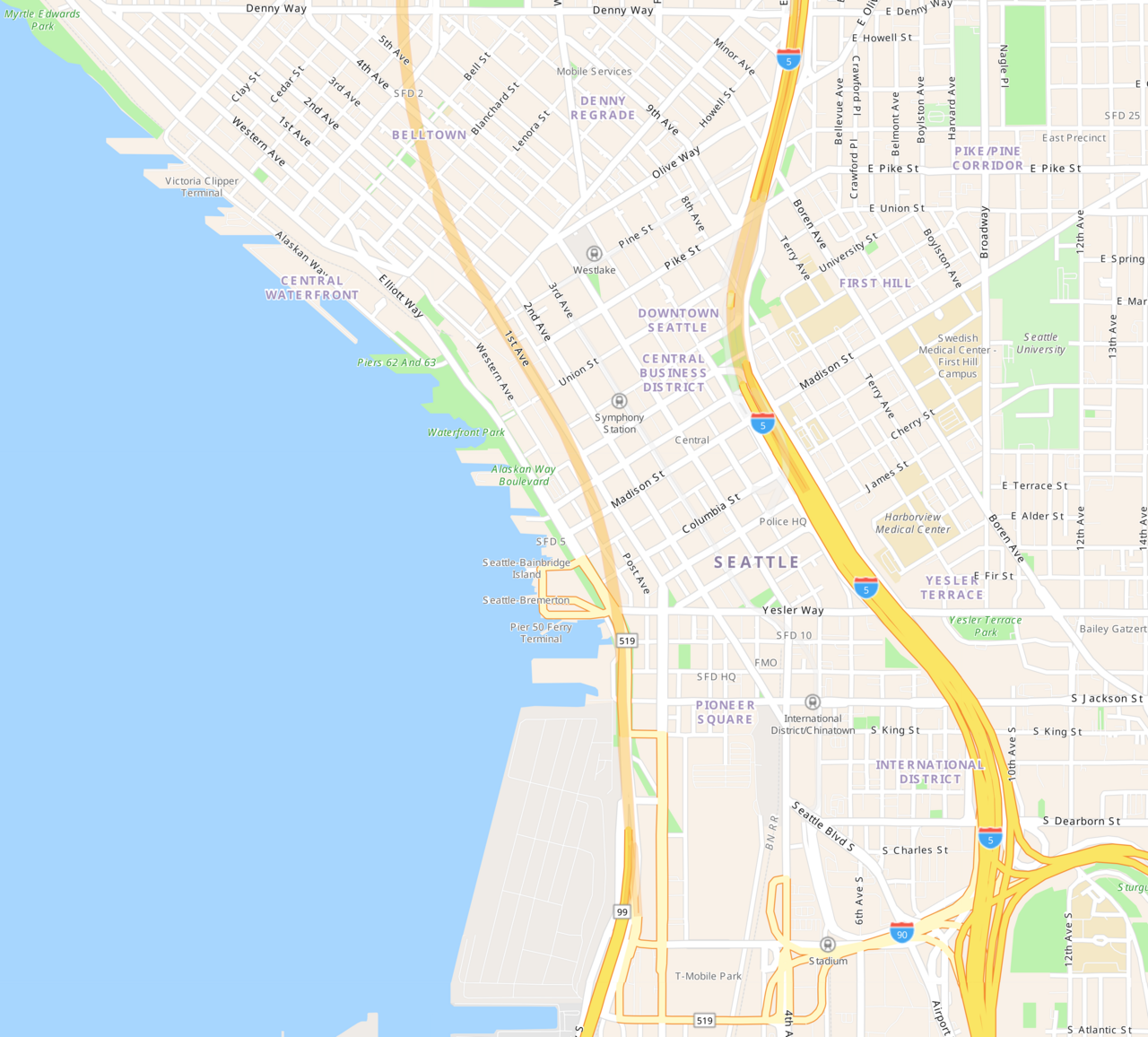
Capitol Hill is Seattle’s most urban neighborhood — dense, walkable, LGBT-centered, and packed with the independent restaurants, coffee shops, and music venues that define Seattle’s creative culture. Broadway is the commercial spine; Cal Anderson Park is the neighborhood green; the Pike/Pine corridor concentrates the highest density of independent bars and restaurants in the city. The neighborhood’s proximity to Amazon’s South Lake Union campus (20-minute walk), the Capitol Hill Light Rail Station, and First Hill’s medical complex makes it the most employment-accessible neighborhood in Seattle. Housing runs $550,000–$800,000 for condominiums; single-family homes (increasingly rare on the Hill) $900,000–$1.3M. The Central District (historically Seattle’s Black neighborhood, rapidly gentrifying) provides entry-level access to the same transit and walkability at $650,000–$850,000.

2. Fremont / Wallingford: The Quirky North
Fremont (self-declared “Center of the Universe”) and Wallingford are Seattle’s most community-oriented residential neighborhoods — craftsman bungalows on tree-lined streets, a farmers market, the Burke-Gilman Trail providing car-free access to the University of Washington and downtown, and commercial districts built around independent businesses rather than chains. The Fremont Troll (a public sculpture under the Aurora Bridge), the Fremont Solstice Parade, and the Sunday Fremont Market define the neighborhood’s character as simultaneously playful and genuinely community-minded. The proximity to Amazon’s South Lake Union campus (via Burke-Gilman Trail or Eastlake Avenue) makes Fremont one of the most convenient neighborhoods for Amazon employees. Home prices $850,000–$1.2M.
3. Bellevue: Eastside Urban Center
Bellevue has evolved from a bedroom suburb of Seattle into Washington’s second-largest urban center — a city of 155,000 with a genuine downtown (Lincoln Square’s luxury retail, the Bravern shopping district, a growing restaurant scene on Main Street and Bellevue Way), Microsoft’s Redmond campus 10 minutes away, and housing that prices at or above Seattle’s for comparable quality. The Eastside’s appeal for tech workers at Microsoft, Google (Kirkland), and the hundreds of smaller companies in the corridor is straightforward: no SR-520 bridge crossing, proximity to employers, excellent Bellevue School District (consistently ranked among the state’s top school systems), and a suburban landscape that works better for families than Capitol Hill’s density. Bellevue’s Crossroads neighborhood provides more accessible price points at $750,000–$900,000; the West Bellevue neighborhoods near the lake command $1.5M–$3M+.
4. Olympia: Capital City Character
Olympia, Washington’s state capital and the southernmost city on Puget Sound, provides the most complete small-city alternative in western Washington — a city of 55,000 with the Evergreen State College creating a liberal arts intellectual energy, a thriving independent music scene (Olympia’s punk and riot grrrl history gave the world Beat Happening, Bikini Kill, and Sleater-Kinney), a farmers market on the waterfront, and housing prices 35–40% below Seattle’s at $420,000–$550,000 median. The proximity to Capitol Forest (60,000 acres of multi-use forest with extensive mountain biking and equestrian trails) and the South Sound’s marine recreation provides outdoor access while maintaining a 1-hour drive connection to Seattle’s employment market.
5. Spokane: Eastern Washington’s Center
Spokane is Washington’s most compelling value proposition for households not reliant on Puget Sound employment — Washington’s second-largest city at 230,000 residents, with a revitalized downtown (the Spokane River’s Riverfront Park, the Flour Mill complex, a growing restaurant scene on South Perry Street), Gonzaga University providing academic energy, and median home prices of $310,000–$380,000 that deliver purchasing power unimaginable in Seattle. The eastern location provides fast access to Idaho’s outdoor recreation (Coeur d’Alene’s lake, the Selkirk Mountains’ ski areas), the Palouse’s rolling wheat fields, and the Columbia River wine country. For remote workers and retirees, Spokane may be Washington’s best-kept residential secret.
6. Wenatchee: The Apple Capital on the Cascades’ East Slope
Wenatchee, at the confluence of the Wenatchee and Columbia Rivers on the eastern slope of the Cascades, has quietly emerged as one of Washington’s most compelling small-city addresses for outdoor enthusiasts — a city of 35,000 that sits in a river canyon with 300 days of sunshine annually (compared to Seattle’s 152), immediate access to Leavenworth’s Icicle Ridge climbing and hiking, Lake Wenatchee’s paddling and fishing, and mountain biking on the Sage Hills and Riverfront Park trail systems. Apple and agricultural processing provide economic stability; a Costco, major hospital (Confluence Health), and the growing technology-driven agricultural sector provide employment diversity. Median home prices of $380,000–$480,000 represent a meaningful premium over Spokane but offer genuine value for households seeking a smaller-city outdoor lifestyle within 2.5 hours of Seattle.
Making Your Decision
Choosing where to live in Washington State comes down to honestly matching your priorities with what each city and community genuinely delivers. Budget, career opportunities, access to outdoor recreation, climate preferences, and community character all weigh differently depending on your life stage and values — and no ranking can substitute for that personal assessment. The cities and towns profiled in this guide represent the strongest overall options, but Washington State has smaller communities that offer compelling alternatives for those willing to trade urban convenience for affordability, quieter living, or closer access to natural landscapes. If possible, spend at least a long weekend in your shortlisted communities before committing — the practical factors matter enormously, but so does the less quantifiable sense of whether a place simply feels right for where you are in life.