

Best Places to Live in Hawaii: An Island-by-Island Guide for 2026
Choosing where to live in Hawaii is choosing between islands as much as between cities, because each major island has its own economic structure, community character, climate, and lifestyle proposition. The “best place to live” in Hawaii depends almost entirely on your income source, your tolerance for cost, your lifestyle priorities, and your connection to the Hawaiian experience you’re seeking. This guide covers the most realistic options for people approaching Hawaii as a long-term home rather than a vacation.
1. Honolulu (Oahu) — The Practical Choice for Career-Driven Residents
Honolulu is the only choice for most people who need access to Hawaii’s job market without a remote income source. The city of 360,000 (metro 1 million) contains the vast majority of Hawaii’s private-sector employment, all major hospital systems, the University of Hawaii flagship campus, state government, and the federal government’s Hawaii presence. If you need a conventional employer, Honolulu is where the employers are.
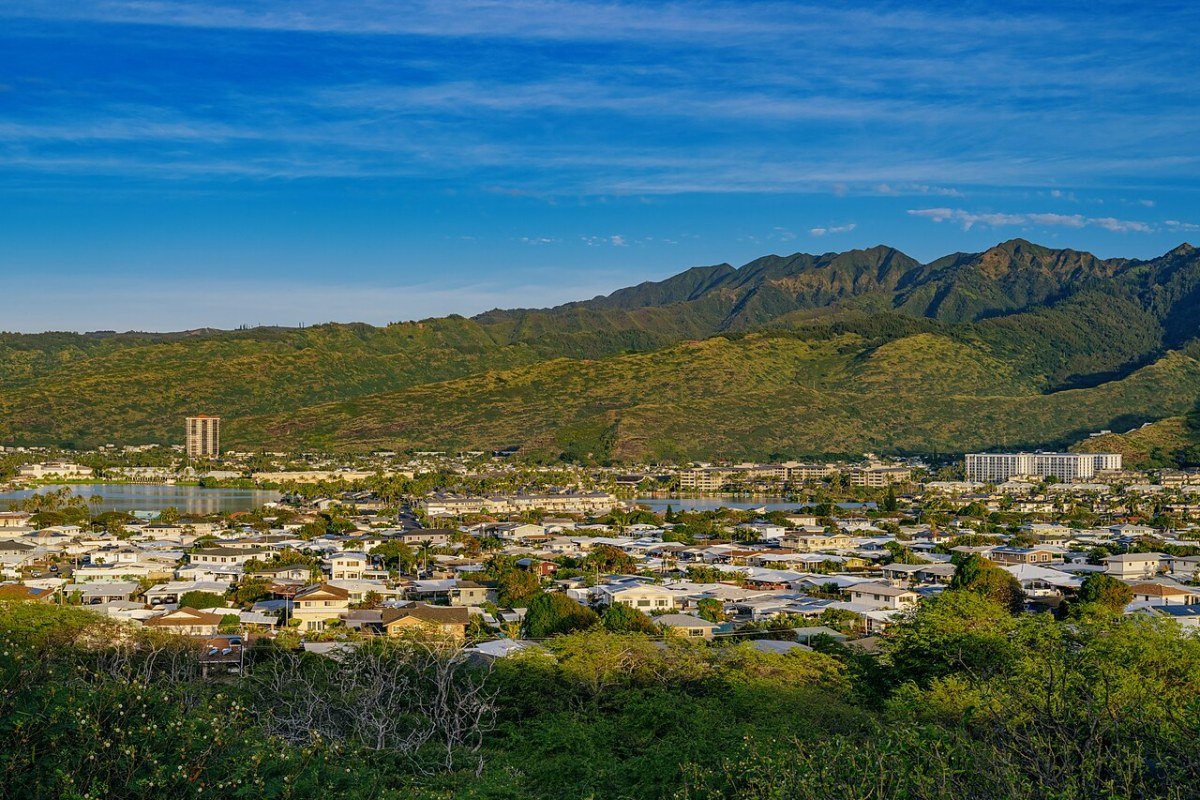
The neighborhoods of Honolulu vary considerably in character and cost. Manoa Valley — a residential neighborhood climbing into the Ko’olau Range above the university — is green, relatively cool, and family-oriented, with housing in the $800,000–$1.1 million range for single-family homes. Kaimuki, on the slopes above Diamond Head, has the most vibrant independent restaurant and coffee shop scene in Honolulu, with housing slightly more accessible than Manoa. Aina Haina and Hawaii Kai, further east, are suburban neighborhoods with good access to beach parks and somewhat newer housing stock.

Military communities represent a significant portion of Oahu’s residential landscape. Joint Base Pearl Harbor-Hickam, Kaneohe Marine Corps Base, Schofield Barracks, and other installations collectively house tens of thousands of military families whose housing allowances and access to on-base amenities (commissary, exchange, healthcare) provide a significantly different cost structure from the civilian experience.
2. Kailua (Oahu) — Windward Side Paradise
Kailua, on Oahu’s windward (east) coast, is routinely described by residents as the most livable community in Hawaii. The combination of Kailua Beach (consistently rated one of the best beaches in the United States, with wide white sand, calm water protected by an offshore reef, and morning views of the Ko’olau Range), a charming small-town downtown with excellent independent restaurants and shops, and a community character that is quieter and less tourist-oriented than Honolulu creates a lifestyle that draws professionals willing to tolerate the 30-minute Pali Highway commute to Honolulu’s jobs.
Housing in Kailua runs premium even by Hawaii standards — median single-family home prices approaching $1.3 million — but the beach access, community quality, and lifestyle rewards make it consistently the most desired address in Hawaii outside of gated resort communities.
3. Hilo (Big Island) — Hawaii’s Affordable City
Hilo is the Big Island’s county seat and its only city of significant size — a community of 45,000 on the island’s rainy eastern coast (Hilo is one of the wettest cities in the United States, averaging over 140 inches of rain annually) with a character that is more genuinely local, less influenced by tourism, and dramatically more affordable than any community on Oahu, Maui, or Kauai. Median home prices in Hilo run $350,000–$480,000 — accessible relative to Hawaii standards — and the city’s bohemian, agricultural, and university-town character (University of Hawaii at Hilo, a four-year research university) creates a community atmosphere unlike anything in tourist-oriented Hawaii.
Hilo’s employment base is limited — government, healthcare, retail, and the university provide the major employment, and private-sector professional opportunities are fewer than on Oahu. Remote workers who can maintain continental-US income while living in Hilo have found it to be one of the most financially rational Hawaii options: continental income, Hawaii lifestyle, accessible housing, and genuine community integration rather than the tourist-bubble experience of the resort communities.
4. Kailua-Kona (Big Island) — Sunny Western Alternative
On the Big Island’s dry, sunny western coast, Kailua-Kona provides a Hawaii living experience that contrasts dramatically with Hilo’s rain: 300+ sunny days, consistent trade winds, excellent snorkeling and diving (Kona is home to the famous manta ray night dive, considered one of the best night dive experiences in the world), and a community that serves both the tourism economy and the island’s agricultural (particularly coffee) economy.
Kona coffee — grown in the volcanic soil of the Kona slopes above the coast — is among the most prized and expensive coffee in the world, and the farm-to-cup culture around Kona’s coffee district creates a community identity that is specific and engaging. The Ironman World Championship triathlon (held annually in Kona) brings global attention and creates a fitness-oriented community culture year-round.
5. Maui: Paia and Kula — Community Over Resort
Maui’s most interesting communities for residents rather than tourists are not the resort zones of Wailea and Ka’anapali but the north shore town of Paia (a former sugar plantation town that evolved into a windsurfing and kitesurfing hub with an eclectic mix of health food stores, art galleries, and yoga studios) and Kula on the slopes of Haleakala (an upcountry agricultural community at 3,000 feet elevation with temperate weather, working farms and ranches, and views stretching to the neighboring islands on clear days).
Maui’s housing market post-Lahaina Fire remains severely constrained and expensive. The 2023 fire’s destruction of over 2,200 structures — many of which housed long-term Maui residents at affordable rents — has created a housing crisis that is reshaping community demographics on the island and making residency increasingly difficult for working-class and middle-class Maui families.
Making Your Decision
Choosing where to live in Hawaii comes down to honestly matching your priorities with what each city and community genuinely delivers. Budget, career opportunities, access to outdoor recreation, climate preferences, and community character all weigh differently depending on your life stage and values — and no ranking can substitute for that personal assessment. The cities and towns profiled in this guide represent the strongest overall options, but Hawaii has smaller communities that offer compelling alternatives for those willing to trade urban convenience for affordability, quieter living, or closer access to natural landscapes. If possible, spend at least a long weekend in your shortlisted communities before committing — the practical factors matter enormously, but so does the less quantifiable sense of whether a place simply feels right for where you are in life.