Best Cities and Towns in Northern Ireland 2026: Belfast, Derry, and the Character of the North
Northern Ireland’s urban landscape is dominated by Belfast to a greater degree than any other UK nation is dominated by its capital — the greater Belfast area contains nearly half of Northern Ireland’s 1.9 million residents, and the cultural, economic, and political significance of the city is disproportionate even to this population share. Outside Belfast, Derry/Londonderry is Northern Ireland’s second city and its most historically and politically complex; the county towns (Armagh, Lisburn, Newry, Bangor) provide the services for the regional populations; and the smaller market towns (Enniskillen, Ballymena, Coleraine, Antrim) maintain their individual characters in a country small enough that no community is more than 90 minutes from Belfast by car. Northern Ireland’s urban character is shaped profoundly by the Troubles legacy — the sectarian geography of Belfast’s neighbourhoods (the peace walls, the mural traditions, the community identities) is a physical reality as well as a historical memory, and understanding it is part of understanding any of Northern Ireland’s cities.
Belfast: The Reinvented City
Belfast (350,000 city; 650,000 greater Belfast area) is Northern Ireland’s capital and its only significant city — a Victorian industrial powerhouse (the world’s largest shipyard, Harland and Wolff, built the Titanic and RMS Olympic here), damaged by the Troubles, and reinvented since the Good Friday Agreement into one of the UK’s most dynamic second cities. The transformation is visible in every part of the city: the Titanic Quarter’s gleaming museums and apartments where the shipyard once operated; the Cathedral Quarter’s live music venues, craft cocktail bars, and creative offices in the former linen and rope warehouses; the Queen’s Quarter’s (south Belfast) restaurants and Victorian terraces; and the waterfront’s new development that is beginning to connect the city physically to Belfast Lough in a way that the industrial use of the river previously prevented.
- Cathedral Quarter: The converted Victorian warehouse district north of City Hall — the St Anne’s Cathedral, the MAC (Metropolitan Arts Centre) gallery and theatre, the Duke of York pub (one of Belfast’s most atmospheric Victorian pubs), the Oh Yeah Music Centre celebrating Belfast’s extraordinary rock and pop music legacy, and the cluster of independent restaurants (Ox, Shu, Deanes) that have made Belfast one of the UK’s best eating cities — is Belfast’s most vibrant urban neighbourhood
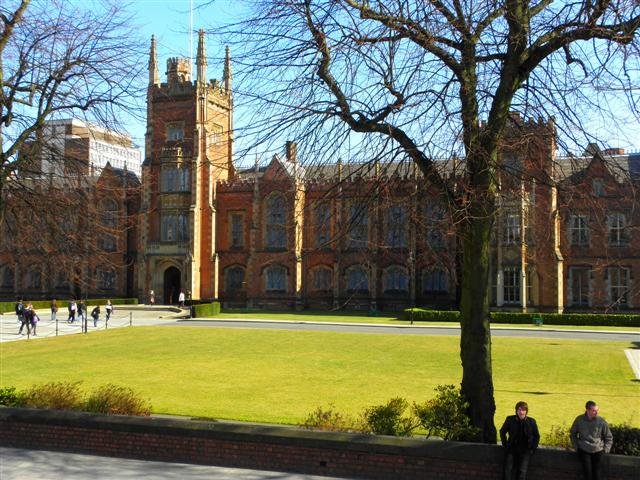
- South Belfast: The Queen’s Quarter (around Queen’s University, Botanic Gardens, and the Ormeau Road) and the Malone Road area provide the most desirable residential neighbourhoods — Victorian and Edwardian brick terraces, the Ulster Museum (free entry), and a restaurant and café scene along Botanic Avenue and the Lisburn Road
- City centre: The Victoria Square shopping mall, City Hall, the Crown Liquor Saloon (the National Trust pub), and the fast-developing waterfront around the Lagan are the commercial and tourist core of central Belfast
- North and west Belfast: The communities of the Falls Road (nationalist) and Shankill Road (loyalist) retain the mural traditions and the physical infrastructure of the Troubles; the peace walls are still present between some communities. Black taxi tours of the murals provide the most contextualised access to these areas for visitors unfamiliar with the community geography

Derry/Londonderry: The Divided City
Derry (110,000 residents) is Northern Ireland’s second city and its most historically loaded — a city that carries two names (Derry to the nationalist community, Londonderry to the unionist community and in official UK usage), a history shaped by the 1613 Plantation of Ulster and the Siege of Derry (1689), the civil rights movement of the 1960s, and Bloody Sunday (1972, when British Army soldiers shot 26 unarmed civil rights marchers, killing 14). The Saville Inquiry’s 2010 conclusion that the killings were “unjustified and unjustifiable” and the subsequent UK Government apology represent a critical step in the peace process; the Museum of Free Derry and the Bogside murals (including the Civil Rights mural and the Bloody Sunday mural) document this history with unflinching directness.
- City walls: The 1.5km circuit of 17th-century walls (the only completely intact walled city in Ireland) provides the finest urban walk in Northern Ireland — the walls are wide enough to walk along their top, providing views of the Bogside and the Catholic communities below on one side and the Fountain Protestant community within the walls on the other
- Peace Bridge: The award-winning pedestrian and cycle bridge (2011) crossing the Foyle connects the city centre to the Ebrington barracks development on the east bank — the physical architecture of reconciliation, connecting communities formerly separated by the river
- Music and culture: Derry’s music scene (the birthplace of the Undertones, one of Northern Ireland’s most celebrated punk bands) and the annual City of Culture festival legacy (Derry was UK City of Culture in 2013) provide a cultural life unusual for a city of its size
Armagh: The Ecclesiastical Capital
Armagh (15,000 residents) is Northern Ireland’s ecclesiastical capital — the seat of both the Church of Ireland Archbishop of Armagh and the Roman Catholic Archbishop of Armagh (Ireland’s two primates have their cathedrals in the same small city, both called St Patrick’s Cathedral). The two cathedrals face each other across the city’s two hills in a physical arrangement unique to any city in the British Isles. The Armagh Planetarium and Observatory, the Palace Demesne (the former Archbishop’s palace), and the Georgian architecture of the Mall (one of Ireland’s finest Georgian promenades, with its cricket ground) give Armagh a cultural richness disproportionate to its size.
Enniskillen and County Fermanagh
Enniskillen (14,000 residents, on an island between Upper and Lower Lough Erne) is the county town of Fermanagh and the gateway to the Fermanagh Lakelands — Northern Ireland’s most distinctive landscape, where the drumlins and limestone landscape is more lake than land. Enniskillen Castle (housing the Inniskillings Regimental Museum and the Fermanagh County Museum), the Devenish Island monastic ruins (accessible by boat from Enniskillen), and the Florence Court and Castle Coole National Trust houses provide the historical infrastructure for a town that serves as the base for the Fermanagh lakelands’ angling, kayaking, and cruising tourism.