Georgia: Peach State, Mountain State, Coast State — All at Once
Georgia‘s geographic and cultural range is among the most underestimated in the American South. The state stretches from the Atlantic barrier islands of the Golden Isles in the southeast to the Appalachian Mountains in the far north, taking in five physiographic regions, three major river systems, the largest city in the Deep South, and a cultural heritage that layers Creek and Cherokee history, African American traditions that shaped American music and the civil rights movement, and the colonial British settlement character still visible in Savannah‘s urban design. This is not a single-note state, and it pays off for travelers who look past its most famous landmarks.
Savannah: America’s Most Beautiful City
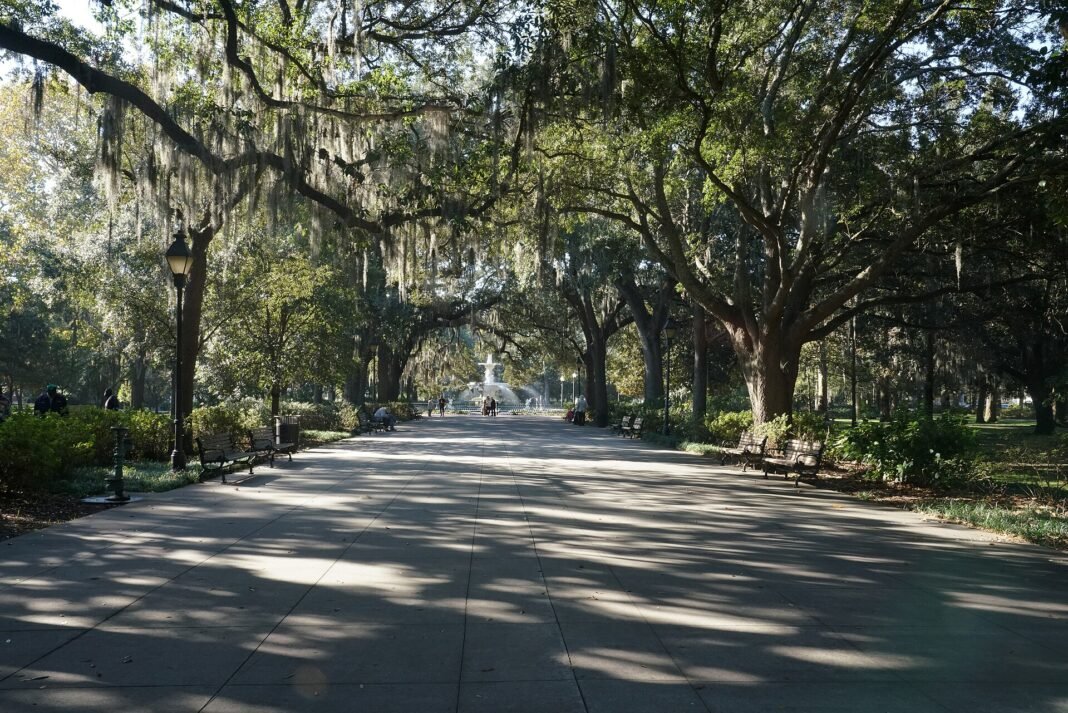
Travel publications and readers’ polls regularly name Savannah the most beautiful city in the United States, and the case holds up. British General James Oglethorpe laid out the city in 1733 on a plan of unusual foresight: a grid of streets organized around 24 park-like squares, each shaded by old live oaks draped in Spanish moss and framed by Federal, Regency, and Italianate architecture preserved with rare integrity. Walking the historic district — named a National Historic Landmark in 1966 — is the finest urban pedestrian experience in the American South and one of the finest anywhere in the country.
Those squares are the organizing genius of the design. Chippewa Square (where a bench scene from “Forrest Gump” was filmed), Forsyth Park (with its 19th-century fountain and the best green space in the city), Colonial Park Cemetery (Savannah’s oldest, with graves dating to 1750), and the riverfront Factors Walk along the Savannah River frame a city that rewards wandering on foot far more than directed touring.

Savannah’s food scene has grown from solid Southern comfort cooking into real national recognition. The restaurant concentration on Broughton Street and along the riverfront runs to accomplished chef-driven kitchens, excellent bakeries, and the Lowcountry cuisine that blends African, European, and Indigenous traditions into dishes like shrimp and grits, she-crab soup, and Savannah red rice.
Atlanta: The South’s World-Class Capital
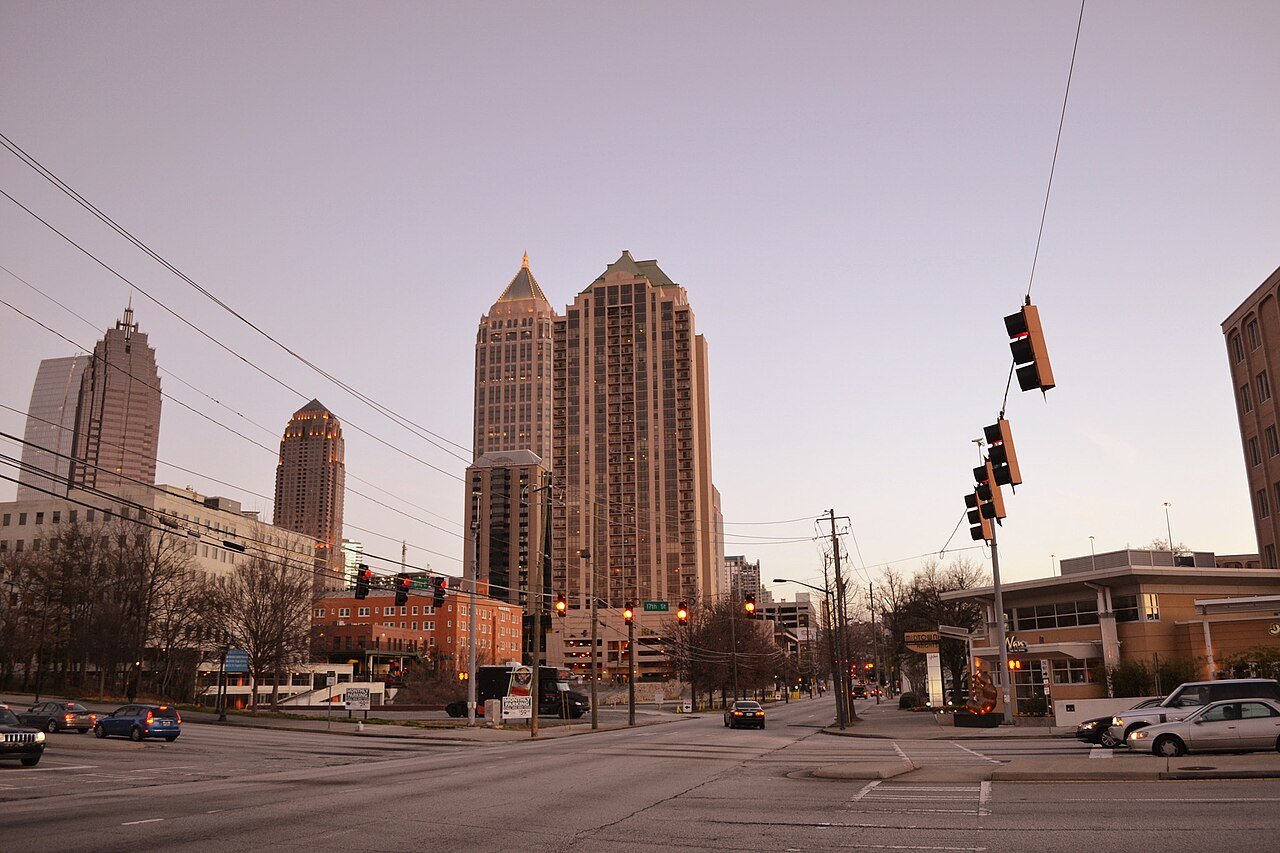
Atlanta is the economic and cultural capital of the American South — a global city of 6 million people (metro) with a concentration of corporate headquarters (Coca-Cola, Delta Air Lines, Home Depot, UPS, CNN, NCR, and dozens of Fortune 500 companies), a thriving film and television production industry (Georgia’s tax incentives have made Atlanta the busiest film production market outside Los Angeles and New York), and a cultural life anchored by the Georgia Aquarium (the largest aquarium in the Western Hemisphere), the Martin Luther King Jr. National Historical Park (the birthplace and church of the civil rights leader), the National Center for Civil and Human Rights, and the Carter Presidential Center and Museum.

Atlanta’s neighborhoods each have distinct characters: the historic African American community of Sweet Auburn, where Dr. King was born and where his church still stands; the restaurants and music venues of Little Five Points and East Atlanta Village; the upscale urbanism of Buckhead; the tech and startup scene of Midtown; and Ponce City Market — a restored 1920s Sears, Roebuck & Co. distribution center that now anchors a mixed-use district on the Atlanta BeltLine trail.
The Golden Isles and Georgia Coast
Georgia’s barrier island coast — less developed and less crowded than the barrier islands of Florida or the Carolinas — holds some of the richest, least-altered landscapes on the eastern seaboard. Cumberland Island National Seashore, Georgia’s largest barrier island, is reachable only by ferry from St. Marys and protects 17 miles of undisturbed Atlantic beach, maritime forest, salt marshes, and the ruins of Carnegie family estates, with feral horses that have roamed the island since the 1700s.

Jekyll Island, a barrier island south of Brunswick, carries a remarkable Gilded Age history: the Jekyll Island Club drew Rockefellers, Vanderbilts, Pulitzers, and J.P. Morgan from 1886 to 1942, making it the private preserve of America’s most powerful business families. It is now a state park, with lodging that ranges from campsites to the restored historic hotel. Ten miles of undeveloped beach, the preserved millionaires’ cottages, and excellent birding make it one of the best stops on the Georgia coast.
North Georgia: Appalachian Mountains
The far north of Georgia rises into the southern Appalachians — forested mountains with waterfalls, gorges, and hiking trails that read as a complete contrast to the coastal lowlands 400 miles to the south. Amicalola Falls State Park protects the 729-foot Amicalola Falls (the tallest cascading waterfall east of the Mississippi) and serves as the approach-trail access to the southern terminus of the Appalachian Trail at Springer Mountain. The Blue Ridge area offers mountain-town character, craft breweries, and the 26-mile Blue Ridge Scenic Railway through mountain terrain. At Tallulah Gorge State Park, a 1,000-foot-deep gorge cut through quartzite delivers the most dramatic canyon scenery in the eastern United States, crossed by suspension bridges over the chasm.

The Martin Luther King Jr. National Historical Park
The Martin Luther King Jr. National Historical Park in Sweet Auburn, Atlanta, is one of the most significant civil rights sites in the United States. It takes in Dr. King’s birthplace (a Victorian house on Auburn Avenue), Ebenezer Baptist Church (where King and his father both served as pastors and where his funeral was held), the King Center (which includes Dr. and Mrs. King’s tombs and an extensive museum), and the surrounding Sweet Auburn neighborhood — the heart of Atlanta’s African American business and cultural community from Reconstruction through the civil rights era. Together with the Sweet Auburn Historic District, the park tells the story of American civil rights history at its most personal and most consequential.
Frequently Asked Questions
What makes Savannah one of the most beautiful cities in the United States?
British General James Oglethorpe laid out Savannah in 1733 on a plan of unusual urban foresight: a grid of streets organized around 24 park-like squares (22 still remain), each shaded by old live oaks draped in Spanish moss and framed by Federal, Regency, and Italianate architecture preserved with rare integrity. The historic district was named a National Historic Landmark in 1966. Walking Savannah is the finest urban pedestrian experience in the American South. Chippewa Square (where a bench scene from “Forrest Gump” was filmed), Forsyth Park with its 19th-century fountain, Colonial Park Cemetery (with graves dating to 1750), and the Factors Walk along the Savannah River define the experience. The Savannah College of Art and Design (SCAD) drives an active arts scene and creative industry, while the city’s Lowcountry cuisine — shrimp and grits, she-crab soup, Savannah red rice — has earned national recognition.
What makes Atlanta the South’s most significant city to visit?
Atlanta is the economic and cultural capital of the American South — a global city of 6 million people in the metro area with deep cultural infrastructure. The Georgia Aquarium is the largest aquarium in the Western Hemisphere, housing whale sharks and beluga whales. The Martin Luther King Jr. National Historical Park preserves Dr. King’s birthplace, Ebenezer Baptist Church (where he and his father both served as pastors), and his tomb at the King Center. The National Center for Civil and Human Rights offers the most comprehensive civil rights museum experience in the South. Ponce City Market — a restored 1920s Sears distribution center — anchors the Atlanta BeltLine’s 22-mile urban trail. The intown neighborhoods (Old Fourth Ward, Virginia-Highland, Little Five Points) are walkable and architecturally interesting, competitive with Chicago or DC at a significantly lower cost.
What is Cumberland Island and how do you visit it?
Cumberland Island National Seashore is Georgia’s largest barrier island — 17 miles of undisturbed Atlantic beach, maritime forest, salt marshes, and the ruins of Carnegie family estates, reachable only by ferry from St. Marys, Georgia. Feral horses have roamed the island since the 1700s and are often seen on the beach. The island has no paved roads, no restaurants, and no commercial development. Camping permits are required, and reservations book out months in advance for popular seasons. The mix of pristine wilderness, historical ruins, and feral horses makes for an experience unlike anywhere else on the East Coast. Adjacent Jekyll Island — a barrier island with a remarkable Gilded Age history (the Jekyll Island Club drew Rockefellers, Vanderbilts, Pulitzers, and J.P. Morgan from 1886 to 1942) — is now a state park with preserved “Millionaires’ Village” cottages and 10 miles of undeveloped beach.
What does North Georgia’s mountain region offer visitors?
North Georgia rises into the southern Appalachians, with hiking, waterfalls, and mountain scenery that surprises visitors expecting a flat Southern state. Amicalola Falls State Park protects the 729-foot Amicalola Falls — the tallest cascading waterfall east of the Mississippi — and serves as the approach-trail access to the Appalachian Trail’s southern terminus at Springer Mountain (8 miles by trail). Tallulah Gorge State Park features a 1,000-foot-deep gorge carved by the Tallulah River through quartzite, known in the 1890s as the “Niagara of the South.” The Blue Ridge area offers mountain-town character, craft breweries, and the 26-mile Blue Ridge Scenic Railway. Heavy rainfall and varied terrain feed hundreds of waterfalls within easy reach of the Atlanta metro.
What historical sites make Georgia especially significant?
Georgia’s historical reach spans multiple eras. The Martin Luther King Jr. National Historical Park in Sweet Auburn, Atlanta — taking in Dr. King’s birth home, Ebenezer Baptist Church (where he and his father served as pastors and where his funeral was held), and his tomb — ranks among the country’s foremost civil rights sites. Savannah’s historic district preserves 18th- and 19th-century urban design and architecture in a National Historic Landmark area of genuine international standing. Ocmulgee Mounds National Historical Park near Macon protects Native American earthen mounds at a site occupied for some 17,000 years. Kennesaw Mountain National Battlefield Park near Atlanta covers the 1864 Atlanta Campaign. St. Simons Island preserves the site of the Battle of Bloody Marsh (1742), where British colonial troops halted the Spanish advance north from Florida.