Best Cities to Live in Arkansas: A Realistic Guide for 2026
Arkansas’s cities are smaller and less nationally recognized than their counterparts in neighboring states, yet they pair affordability with outdoor access and a community feel that keeps drawing newcomers who have run the numbers and decided the lifestyle-to-cost ratio is hard to beat. The trick is knowing what each city actually delivers, rather than what its size or regional reputation might suggest.

1. Fayetteville — The Progressive College Town
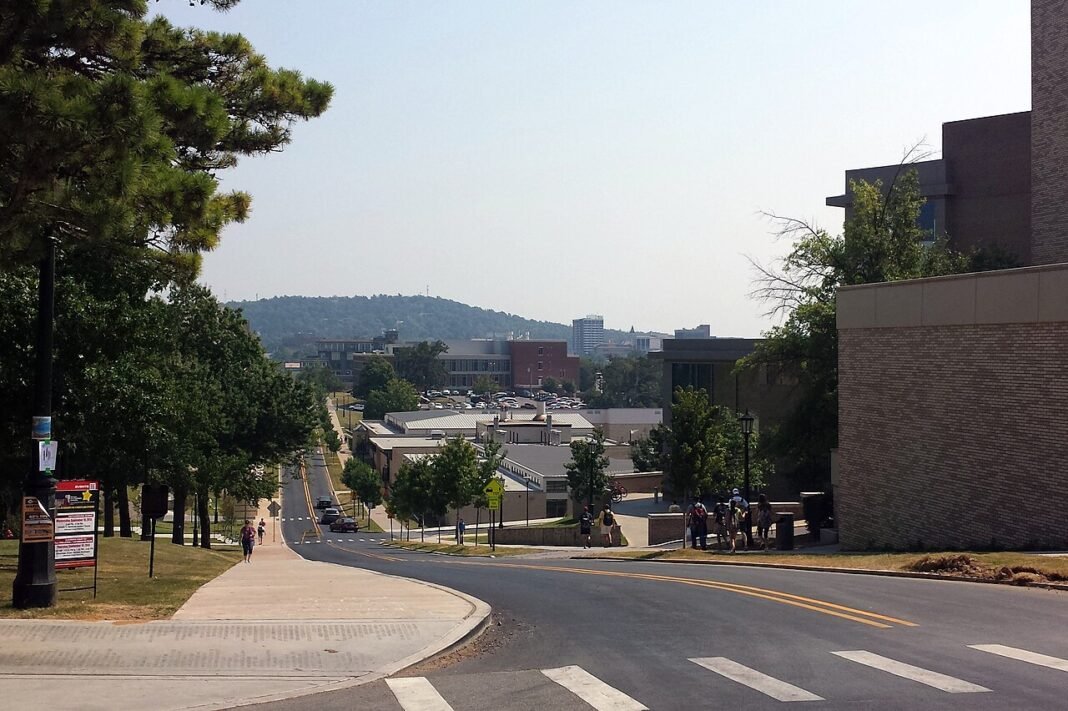
Fayetteville is consistently rated among the best places to live in Arkansas and lands on national quality-of-life rankings for mid-size cities year after year. The University of Arkansas drives the city’s cultural energy, demographic diversity, and economic dynamism, but Fayetteville has grown well beyond a college town — its population has climbed past 100,000 and roughly 70 percent since 2000, and the broader Northwest Arkansas metro now carries enough economic weight to support a restaurant scene, arts infrastructure, and employer diversity that smaller university towns rarely manage.

The Fayetteville Farmers’ Market, the Dickson Street entertainment district, and the University of Arkansas campus deliver the walkable downtown experience that residents cite most often when explaining their choice. The Ozark Natural Science Center, the Crystal Bridges Museum (15 miles north in Bentonville), and immediate proximity to the Ozark National Forest extend the appeal to outdoor enthusiasts and culture seekers alike.

Housing in Fayetteville has appreciated sharply from its 2019 levels — median prices now run $280,000 to $320,000 in desirable neighborhoods — but next to comparable university towns elsewhere, it stays very affordable. Steady rental demand from the student population keeps vacancy low and prices relatively elevated by Arkansas standards.

2. Bentonville — The Walmart Effect Done Well
Bentonville’s shift from a regional retail hub into a nationally significant cultural and cycling destination ranks among the more striking American city stories of the past two decades. The catalyst was Walmart’s corporate headquarters and the wealth it generated; the execution was deliberate. The Walton family and Walmart’s supplier ecosystem have funded cultural infrastructure — Crystal Bridges Museum, the Momentary (a contemporary arts space), the Ledger (a boutique hotel), an extraordinary network of mountain bike trails — that would be ambitious for a much larger city.
The Razorback Regional Greenway, a 40-mile paved trail linking Bentonville to Fayetteville, forms the spine of a trail network that now exceeds 100 miles and has made Northwest Arkansas one of the country’s top mountain biking destinations. Cyclists travel from across the United States specifically for the Slaughter Pen, Back 40, and Coler trail systems. The pairing of world-class outdoor infrastructure with a genuinely excellent art museum has built a destination identity that pulls in both permanent residents and visitors who would never otherwise consider Arkansas.
The economic stability Walmart provides is just as notable: the company’s supplier ecosystem requires hundreds of businesses to keep offices in Bentonville, producing a white-collar job market remarkably concentrated for a city of roughly 65,000. Housing prices sit above the Arkansas average but still well below similar corporate-adjacent communities in Texas or Tennessee.
3. Little Rock — The Capital’s Underrated Appeal
Little Rock is a capital city that gets less credit than it deserves. With a metro population around 775,000, it has the scale to support real cultural infrastructure — the Arkansas Symphony Orchestra, the Arkansas Museum of Fine Arts (reopened in 2023 after a $142 million renovation and expansion), the Clinton Presidential Library (which draws hundreds of thousands of visitors a year and is genuinely excellent as presidential libraries go), and a food scene anchored by the SoMa (South on Main) district that has earned national notice.
The Big Dam Bridge — the longest pedestrian and bicycle bridge in North America built solely for non-motorized use — connects two Arkansas River Trail segments and anchors a 15-mile riverside trail system that ranks among the best urban cycling and walking amenities in the South. Pinnacle Mountain State Park, 15 miles west of downtown, rises about 1,000 feet above the surrounding landscape and delivers a premier day hike 30 minutes from the state’s largest city.
Housing in Little Rock’s desirable neighborhoods (Hillcrest, Heights, Midtown, the River Market District) runs $230,000 to $350,000 — excellent value for a capital city with legitimate urban amenities. Government, healthcare, and legal work supply stable job bases.
4. Conway — Family-Oriented Growth Suburb
Conway, 30 miles north of Little Rock on I-40, has grown steadily for three decades and is now home to roughly 73,000 people. Three colleges — the University of Central Arkansas, Hendrix College, and Central Baptist College — give Conway an educational density unusual for a city its size and feed a community character more diverse and intellectually engaged than the surrounding region.
Conway’s family-friendliness ratings stay consistently high: low crime relative to similar-size cities, above-average school performance, new housing stock in well-planned subdivisions, and access to Little Rock’s job market without Little Rock’s prices. It’s a classic bedroom community, but an exceptionally well-executed one.
5. Fort Smith — The Gateway to the Ouachitas
Fort Smith, on the Oklahoma border in western Arkansas, combines low housing costs (median prices well below $200,000), a diverse and historically rich downtown, and immediate access to the Ouachita National Forest — the choice for people who put outdoor access and affordability above all else. The Fort Smith National Historic Site preserves the federal court of “Hanging Judge” Isaac Parker and the frontier-town history of a place that sat literally on the edge of Indian Territory in the post-Civil War era.
The city’s manufacturing and healthcare economy offers more employment stability than many comparably sized Arkansas cities, and its border-city position means access to a combined Arkansas-Oklahoma regional economy that supports more varied employment than its population alone would suggest.
Frequently Asked Questions
What makes Fayetteville and Bentonville the top Arkansas cities for relocation?
Northwest Arkansas — anchored by Fayetteville and Bentonville — is the most compelling relocation destination in the state. Fayetteville is consistently rated among the best places to live in Arkansas and lands on national quality-of-life rankings for mid-size cities: the University of Arkansas drives cultural energy, the Dickson Street entertainment district provides a walkable downtown experience, and housing in desirable neighborhoods runs $280,000 to $320,000 (very affordable for comparable university towns nationally). Bentonville’s shift from a regional retail hub into a nationally significant cycling and cultural destination is remarkable — driven by Walmart’s corporate headquarters and the Walton family’s investment in Crystal Bridges Museum of American Art, the Momentary contemporary arts space, and over 100 miles of mountain bike trails including Slaughter Pen, Back 40, and Coler. The 40-mile Razorback Regional Greenway paved trail connects Bentonville to Fayetteville. Housing in Bentonville sits above the Arkansas average but still well below comparable corporate-adjacent communities in Texas or Tennessee.
What does Little Rock offer as Arkansas’s capital city?
Little Rock is a capital city that gets less credit than it deserves. With a metro population around 775,000, it supports real cultural infrastructure: the Arkansas Symphony Orchestra, the Clinton Presidential Library (hundreds of thousands of visitors a year), the Arkansas Museum of Fine Arts (reopened in 2023 after a major renovation), the SoMa (South on Main) food and arts district with national recognition, and the Big Dam Bridge — the longest pedestrian and bicycle bridge in North America built solely for non-motorized use — connecting two Arkansas River Trail segments as part of a 15-mile riverside trail system. Pinnacle Mountain State Park (about 1,000 feet above the surrounding landscape, 30 minutes from downtown) provides premier day-hiking access. Housing in Little Rock’s desirable neighborhoods (Hillcrest, Heights, Midtown, River Market District) runs $230,000 to $350,000 — excellent value for a capital city with legitimate urban amenities. Government, healthcare, and legal work provide the stable job base.
How does Fort Smith compare to the Northwest Arkansas cities?
Fort Smith, on the Oklahoma border in western Arkansas, targets a different buyer profile than Northwest Arkansas — people who put outdoor access and affordability above all else. Median home prices well below $200,000 are among the lowest in the state, and immediate access to the Ouachita National Forest provides exceptional outdoor recreation. The Fort Smith National Historic Site preserves the federal court of “Hanging Judge” Isaac Parker and the frontier history of a place literally on the edge of Indian Territory. The city’s manufacturing and healthcare economy offers more employment stability than many comparably sized Arkansas cities, and its border-city position creates access to a combined Arkansas-Oklahoma regional economy supporting more varied employment than its population alone would suggest.
What is Arkansas’s overall affordability and lifestyle appeal for relocators?
Arkansas draws a steady stream of deliberate movers — people who have run the numbers and concluded that its lifestyle-to-cost ratio is hard to beat. The state consistently ranks among the most affordable in the country: median home prices statewide stay well below the national median, property taxes are low, and the state income tax has been progressively reduced, with the top rate cut to 3.7 percent for 2026. The trade-off is real: Arkansas’s cities are smaller and less nationally recognized than counterparts in neighboring states, wages run below the national median in most sectors, and the job market is thinner than in major metros. But the mix of Ozark and Ouachita outdoor access, genuine communities, and housing costs that let median earners buy homes and build financial stability appeals to a distinctive set of lifestyle relocators.
What outdoor and cultural attractions distinguish Arkansas’s top cities?
Outdoor infrastructure is Arkansas’s strongest national draw. Northwest Arkansas’s mountain biking trail network — over 100 miles anchored by Bentonville’s Coler, Slaughter Pen, and Back 40 systems — has made the region one of the top cycling destinations in the United States, attracting visitors and permanent residents specifically for the trail access. The Ozark National Forest (1.2 million acres, reachable from Fayetteville within 30 minutes) offers hiking, backpacking, and paddling. Crystal Bridges Museum of American Art in Bentonville offers free general admission to a world-class collection spanning five centuries of American art — a remarkable cultural resource for a state of Arkansas’s size. The Buffalo National River (the first national river in the United States) provides 153 miles of exceptional paddling and cliff-top hiking in the Ozarks.