Few countries pack as much geographic and cultural range into one set of borders as the United States. The volcanic slopes of Hawaii, the glaciers of Alaska, the skyscrapers of New York City, the red-rock canyons of the Southwest — the distances between them are continental, and so are the differences. If you’re planning a first trip to the USA and wondering where to start, this guide walks through fifteen places worth building an itinerary around, and what sets each one apart.
1. New York City, New York
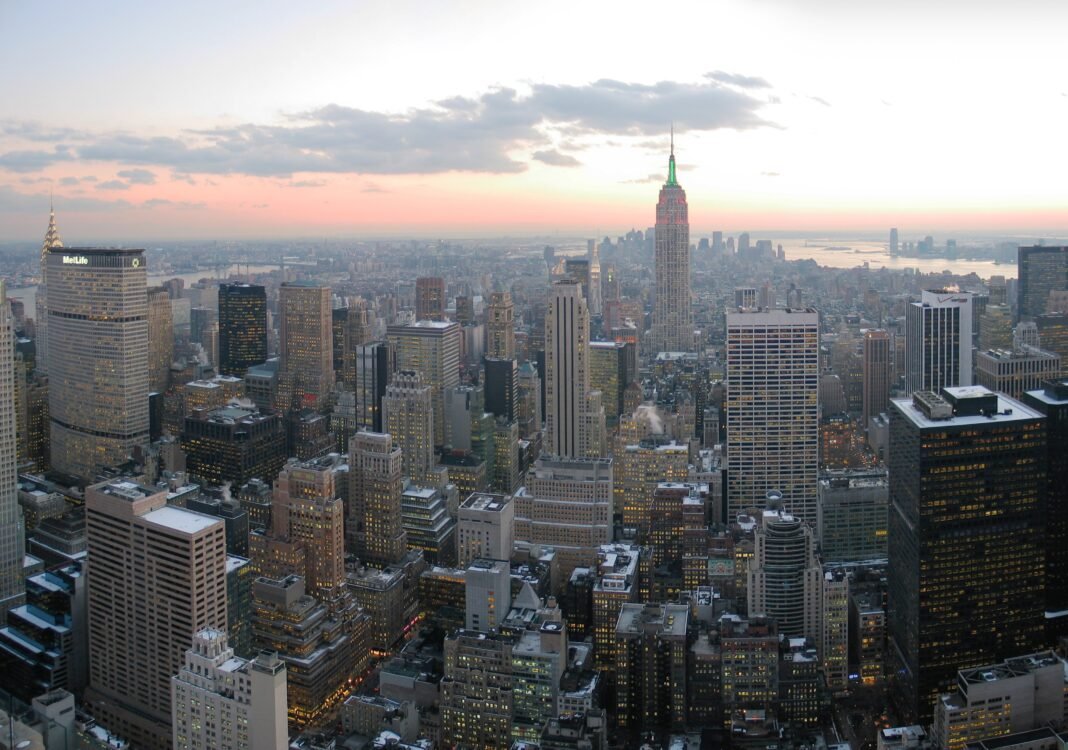
Nowhere else concentrates quite as much as New York City does. The density of world-class museums, restaurants, neighborhoods, and landmarks packed into a relatively compact island is staggering. Walk across the Brooklyn Bridge in the morning, spend an afternoon in Central Park, and watch the sun drop from the High Line. Catch a Broadway show, eat your way through Queens, and lose an afternoon in the Metropolitan Museum of Art. NYC can be overwhelming, in the best possible way, and it pays off for visitors willing to follow their curiosity off the obvious routes.
2. Grand Canyon, Arizona
No photograph does justice to the Grand Canyon. When you stand at the South Rim for the first time and look out at that impossibly vast chasm — 277 miles long, up to 18 miles wide, and over a mile deep — it’s a humbling experience. The canyon’s geology tells a story spanning two billion years, with rock layers that document the planet’s entire history. Hike down the Bright Angel Trail to the Colorado River, catch the sunrise from Desert View, or take a helicopter tour for a perspective the rim simply can’t offer.
3. Yellowstone National Park, Wyoming
Established in 1872, Yellowstone was the world’s first national park, and it still has no real equal. Sitting atop a massive volcanic hotspot, it holds more than 10,000 geothermal features — geysers, hot springs, fumaroles, and bubbling mud pots, more than anywhere else on the planet. Old Faithful draws the crowds, erupting roughly every 90 minutes, but the banded colors of Grand Prismatic Spring are arguably the bigger payoff. Beyond the geology, this is one of the most intact temperate ecosystems left in North America, with wolves, bison, grizzly bears, and elk all roaming the valleys.
4. San Francisco, California
Few American cities have a stronger sense of place than San Francisco. The steep hills, the Victorian painted ladies, the Golden Gate Bridge half-swallowed by morning fog, the sourdough, the Mission burritos, Alcatraz out in the bay — it all adds up to something you won’t mistake for anywhere else. Compact and walkable despite the gradients, the city packs distinct personalities into neighborhoods a short bus ride apart. Haight-Ashbury still carries its 1960s counterculture spirit, the Mission hums with Latin American life, and the Castro remains a landmark for the LGBTQ+ community worldwide.
5. New Orleans, Louisiana
New Orleans might be the most culturally unique city in the United States. Born from the collision of French, Spanish, African, Caribbean, and Native American cultures, the city has developed its own architecture, its own cuisine (Creole and Cajun), its own music (jazz was literally invented here), and its own relationship with celebration and death. The French Quarter is the most famous part of the city, but venture further — into the Garden District with its magnificent antebellum mansions, or across the bridge to Algiers for a different perspective.
6. Hawaii (The Big Island)
Hawaii’s Big Island is unlike anything else in the United States — or the world. It’s the only place in the country where you can go from tropical rainforest to snowy summit to active lava flow within a single day. Hawaii Volcanoes National Park is the anchor, home to Kīlauea and Mauna Loa, two of the most active volcanoes on the planet. The island also has incredible snorkeling at Two Step (Hōnaunau), black sand beaches at Punalu’u, and some of the best stargazing on earth from the summit of Mauna Kea.
7. Zion National Park, Utah
The most dramatic of Utah’s five national parks, Zion is a narrow canyon of soaring red and white sandstone cliffs carved by the Virgin River. The Angel’s Landing hike is one of the most exhilarating in North America, with a final stretch that has you gripping chain handrails along narrow ridges hundreds of feet above the canyon floor (a permit is now required to attempt it). The Narrows — where you hike through the Virgin River itself between walls of slot canyon that block out the sky — is equally unforgettable. Even if you’re not into strenuous hiking, the Canyon Overlook Trail and the Pa’rus Trail offer spectacular views with minimal effort.
8. Chicago, Illinois
For a city of its stature, Chicago gets talked about far less than it should. The food runs from deep-dish pizza and Italian beef sandwiches to some of the best fine dining in the country. The architecture is world-class, from Louis Sullivan’s pioneer skyscrapers to Mies van der Rohe’s modernist towers to the curving steel of Cloud Gate in Millennium Park. The lakefront is lined with beaches, parks, and museums, and the city’s blues and jazz heritage is still very much alive in its clubs.

9. The Florida Keys
The Florida Keys are a 125-mile string of coral islands stretching southwest from Miami into the Gulf of Mexico, connected by the famous Overseas Highway. The Keys have a laid-back, slightly eccentric character that’s entirely their own. Key West, at the southern tip, marks the southernmost point in the continental United States and was once home to Ernest Hemingway; today wild chickens wander the streets and every evening winds up with applause at the sunset gathering on Mallory Square. The snorkeling and diving here is excellent, with the Florida Reef — the third-largest coral barrier reef in the world — right offshore.
10. Glacier National Park, Montana
Glacier National Park feels like the world before humans arrived. The Going-to-the-Sun Road is one of the most scenic drives in North America, crossing the Continental Divide at Logan Pass and offering views of glacially carved valleys, towering peaks, and vivid blue lakes. The park has over 700 miles of trails, including the challenging Highline Trail that contours the Garden Wall with dizzying exposure. Wildlife is abundant — grizzly bears, mountain goats, bighorn sheep, and wolverines all roam the park. Visit soon: climate change has already reduced the number of named glaciers from about 150 around 1850 to just 26 today.
11. Sedona, Arizona
Spend an afternoon in Sedona and you start to understand why people get spiritual about landscapes. The red rock formations — Cathedral Rock, Bell Rock, and the Chapel of the Holy Cross — glow with an almost supernatural intensity in the late-afternoon light. The town has a well-earned reputation for wellness retreats and New Age energy vortexes, but even if that’s not your scene, the scenery alone is worth the trip. Rent a pink Jeep for an off-road adventure, hike the Cathedral Rock Trail, or simply sit somewhere with a glass of local Arizona wine and watch the sunset.
12. Savannah, Georgia
Laid out around 22 leafy squares, Savannah makes a strong case for the most beautiful city in the American South — all antebellum architecture and Spanish moss draped over ancient live oaks. It has much of Charleston’s charm with a grittier, more bohemian edge. Walk down Broughton Street for shopping and dining, tour the historic district, take a ghost tour (Savannah is allegedly one of the most haunted cities in America), and make time for the Forsyth Park Fountain — at its best in the soft light of dusk.
13. Olympic National Park, Washington
Three completely different worlds share a single boundary at Olympic National Park: jagged mountain peaks with active glaciers, one of the few temperate rainforests in North America (the Hoh Rainforest), and a wild Pacific coastline of sea stacks, tidepools, and pounding surf. The range is remarkable — you can hike from subalpine meadows full of wildflowers to beaches littered with enormous driftwood logs in the same day. Hurricane Ridge offers accessible mountain views, while the Quinault and Hoh rainforests feel like another planet entirely.

14. Nashville, Tennessee
Nashville has grown from a regional country music hub into a major American city with real cultural depth. The honky-tonks on Broadway are as loud and rowdy as ever, and the Country Music Hall of Fame is a genuinely excellent museum. But the city today also has one of the fastest-growing food scenes in the country, a thriving gallery district, and a music scene that reaches well past country into rock, blues, and Americana. Hot chicken, the local signature dish, turns up everywhere from cinder-block dives to white-tablecloth restaurants.

15. Acadia National Park, Maine
Acadia National Park sits on Mount Desert Island off the coast of Maine and offers a landscape that’s distinctly New England — rugged granite peaks dropping into the cold Atlantic Ocean, dense spruce-fir forests, and quaint fishing villages. Cadillac Mountain, at 1,530 feet, is the highest point on the Eastern Seaboard and one of the first places in the United States to see the sunrise. The carriage roads, built by John D. Rockefeller Jr., offer miles of scenic cycling. And Bar Harbor, the gateway town, is charming enough to make you want to stay a week longer than planned.
Planning Your USA Trip
The United States is a vast country — larger than the entire European Union — so you’ll need to focus your itinerary rather than trying to see everything at once. The best approach is to pick a region and explore it thoroughly: the American Southwest (Grand Canyon, Zion, Bryce, Monument Valley), the Pacific Coast (California, Oregon, Washington), the Deep South (New Orleans, Savannah, Nashville), or the Northeast (New York, Boston, Acadia).
A rental car gives you the most flexibility once you leave the major cities, while domestic flights are reasonably priced and save serious time on cross-country legs. And remember that every destination here has side streets, neighborhood restaurants, and small surprises that never make the guidebooks — the kind you turn up only by giving yourself time to explore on foot.
Frequently Asked Questions
What are the top natural wonders to visit in the USA?
The American Southwest concentrates the most dramatic natural landscapes: Grand Canyon (277 miles long, over a mile deep, with geology spanning two billion years), Zion National Park (soaring red and white sandstone cliffs carved by the Virgin River — the Narrows and Angel’s Landing are among the most iconic hikes in North America), Yellowstone (the world’s first national park, home to 10,000+ geothermal features and intact temperate ecosystem with wolves, bison, and grizzly bears), and Glacier National Park in Montana (the Going-to-the-Sun Road crosses the Continental Divide past glacially carved valleys and 700+ miles of trails). Hawaii’s Big Island adds the only US destination where tropical rainforest, active lava flow, and some of the best stargazing on Earth coexist within a single day’s drive.
What are the top US cities to visit for culture and urban experiences?
New York City is the definitive American urban experience — the density of world-renowned museums, restaurants, neighborhoods, and landmarks packed into a compact city is unmatched anywhere. Chicago delivers extraordinary architecture (from Sullivan’s pioneer skyscrapers to Mies van der Rohe’s modernist masterpieces), a spectacular lakefront, and deep-dish pizza and blues history. New Orleans is the most culturally unique American city — born from French, Spanish, African, and Caribbean culture, it invented jazz and Creole cuisine and has its own architecture and relationship with celebration. San Francisco offers the Golden Gate Bridge, iconic Victorian neighborhoods, and one of the world’s most creative food scenes. Each city rewards visitors who wander beyond the obvious landmarks.
What national parks are most worth visiting in the USA?
The America the Beautiful Annual Pass ($80) covers entrance fees at all national parks and federal lands — essential for any parks-focused trip. Beyond the famous Southwest parks (Yellowstone, Grand Canyon, Zion, Bryce Canyon), other exceptional options include: Acadia National Park in Maine (the only national park in New England, combining granite summits, rocky coastline, and the best lobster in the country); Great Smoky Mountains (the most visited national park in the US, straddling Tennessee and North Carolina, with 800 miles of trails and remarkable biodiversity); Olympic National Park in Washington (three ecosystems in one park: alpine, temperate rainforest, and Pacific wilderness coast); and Glacier in Montana. Advance reservations are now required at many high-demand parks, particularly in summer.
What are the best US road trip routes?
The American Southwest circuit (Las Vegas → Zion → Bryce Canyon → Monument Valley → Grand Canyon → Sedona → Santa Fe) covers the most concentrated collection of extraordinary landscapes in the country in approximately 1,800 miles. The Pacific Coast Highway (California 1, from San Francisco to Los Angeles) is the most scenic coastal drive in the US — the Big Sur section is world-famous. The Blue Ridge Parkway (469 miles from Virginia to North Carolina, along the Appalachian Ridge) provides the finest fall foliage drive in the eastern US. Route 66 (Chicago to Santa Monica, 2,448 miles, through eight states) is the iconic historical drive through small-town American culture and Southwestern desert landscapes.
What practical tips should first-time visitors to the USA know?
The USA is vast — flying between major destinations is standard, but car rental ($25–$50/day booked in advance) is the best option for any road trip or national parks visit. The America the Beautiful Annual Pass covers national park entrance fees for one year. US tipping culture requires 18–20% at restaurants, 15–20% for taxis. The US healthcare system is extremely expensive without insurance — travel insurance is not optional for foreign visitors. Electrical outlets are 120V/60Hz with Type A/B plugs; most international devices need only an adapter. Domestic flights are abundant and competitively priced; booking 6–8 weeks in advance produces the best fares on most routes.