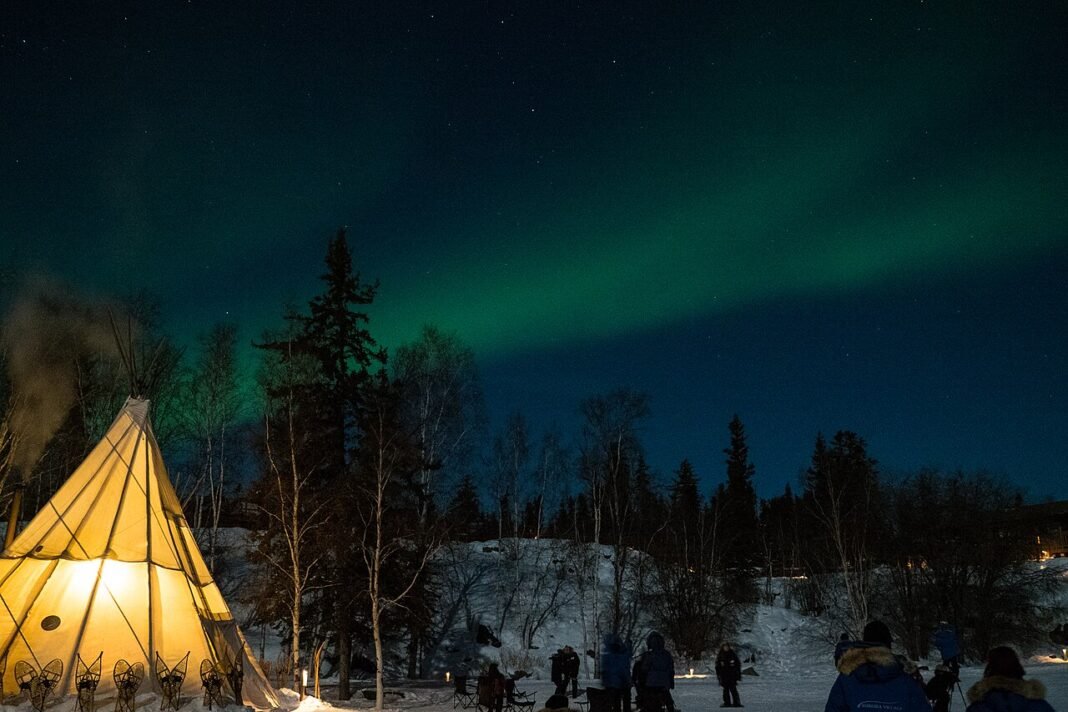
Moving to the Northwest Territories is not a casual decision — it is a commitment to a lifestyle, a climate, and a pace of life that differ from southern Canada in ways no amount of reading can fully prepare you for. The NWT attracts two kinds of newcomer: those who arrive for a defined professional purpose (a government posting, a mining contract, a teaching assignment) with a clear timeline and financial goal, and those who arrive open-ended, drawn by the north’s reputation for wildness, community, and a way of life that feels genuinely different from the urban south. Both find what they came for if they approach the territory with realistic expectations — the cold, the cost, the isolation, and the extraordinary beauty of a landscape with no equivalent elsewhere in the country. The key to a successful NWT relocation is preparation: understanding what the territory demands before you arrive lets you appreciate what it offers from your first week.
The NWT Climate: Preparing for Subarctic Winters
Yellowknife‘s climate is the defining reality of NWT life — continental subarctic, with winters that are long, brutally cold, and, thanks to the clear continental air mass, often cloudless. Reckoning with Yellowknife’s weather is the first step in any relocation plan.
- Winter (November–March): Average temperatures range from -20°C to -30°C; extreme cold events of -40°C to -45°C (with or without wind chill) occur several times each winter, and the coldest January days reach -50°C with wind chill. The cold is at least dry — low humidity makes it more tolerable than equivalent temperatures in a damp maritime climate — and the skies are frequently clear. Daylight, though, is short: in December the sun is up for barely five hours, so the famous “sunniest city in Canada” reputation belongs to Yellowknife’s long, bright spring and summer, not the depths of winter
- Spring (April–May): The turn from winter to summer is abrupt — April is still deeply cold (-10°C to -20°C), but May brings rapid warming, the break-up of Great Slave Lake’s ice (a dramatic event that usually lands in late May or early June), and the start of the midnight sun. The spring break-up closes the winter ice road and opens the shipping season
- Summer (June–August): Summers are warm and almost endlessly bright, with 24-hour daylight from late June (the midnight sun) easing to 18–20 hours through July and August. Average highs of 18–22°C, with the odd day past 30°C, make them genuinely warm. The black fly and mosquito season (late May through July) is fierce; DEET and head nets are standard kit for anything outdoors
- Fall (September–October): September brings the first frosts and the spectacular fall colour of the boreal forest — gold tamarack, orange birch, red bearberry — with the first real snow arriving in October. The aurora season opens once nights are long enough to see the display, typically from late August
.jpg?width=1200)
Essential Equipment for NWT Life
The kit list for the NWT runs longer and more specific than anywhere in southern Canada:
- Vehicle: A reliable all-wheel-drive or four-wheel-drive vehicle with winter tires is essential in Yellowknife. The city has only a limited bus service (YKTransit runs a handful of routes Monday to Saturday), so most residents drive year-round. A block heater (standard on new vehicles sold in the NWT) and a remote starter are practical necessities; battery blankets, oil-pan heaters, and a winter survival kit (sleeping bag, candles, high-energy food, jumper cables) round out the cold-weather setup
- Winter clothing: True Arctic-rated outerwear — not the “Canadian” winter clothing sold in a southern city, but genuine subarctic gear rated to -40°C or colder. A quality parka (Canada Goose, Arc’teryx, or a military-surplus extreme-cold parka), insulated snow pants, a fur-trimmed or windproof hood, wool base layers, and pac boots (Sorel or Baffin, rated to -70°C or colder) are the floor, not the ceiling. Wool or synthetic mid-layers for the swing between heated indoor spaces and the outdoor cold are daily-use items
- Snow removal: If you rent or own a property, a decent snow blower and the discipline to use it regularly come with the territory — Yellowknife gets heavy snowfall, and the short subarctic days mean you will often be clearing it in the dark
- Outdoor recreation gear: Most Yellowknife residents build up a collection suited to the subarctic — cross-country skis, a snowmobile (skidoo) for lake travel and backcountry access, ice-fishing gear, and a canoe or kayak for the summer. It is an investment that earns its keep in quality of life right through the year
Employment and Career Opportunities
The NWT’s job market is concentrated and well-paid, but thin — knowing where the work is before you relocate is critical, because the territory’s small size leaves little room for a speculative move:
- Government of the Northwest Territories (GNWT): The territorial government is the largest employer. The GNWT recruits regularly for health (nurses, physicians, allied health professionals), education (teachers, educational assistants), social services, and public administration. Its online jobs portal is the main recruitment channel; positions in smaller communities carry additional northern allowances and isolated-post benefits
- Federal government: Federal departments (Indigenous and Northern Affairs Canada, the RCMP, the courts, Parks Canada) keep a Yellowknife presence and recruit through the federal public service. RCMP officers posted to the NWT receive sizeable isolated-post allowances
- Diamond mining: Diamonds drove the territorial economy for two decades, but the picture has shifted sharply. Rio Tinto’s Diavik mine delivered its final production in March 2026 and is now in a multi-year closure and reclamation phase, while the owner of the Ekati mine entered creditor protection in May 2026 after a steep fall in rough-diamond prices, leaving its future uncertain. Mining still offers fly-in/fly-out work in skilled trades, engineering, and environmental roles, but anyone counting on it should treat the sector as contracting rather than stable, and confirm current hiring directly with the operators
- Health sector: The NWT faces chronic health-workforce shortages. Nurses (RN, NP, LPN), physicians (especially family doctors willing to work in remote communities), and allied health professionals (physiotherapists, occupational therapists, pharmacists) are actively recruited. Health workers here earn above-average pay, northern allowances, and a scope of practice far broader than in the specialist-heavy systems of the south
- Teaching: The territory’s school authorities (Yellowknife Education District No. 1, Yellowknife Catholic Schools, and the wider NWT public system serving smaller communities) recruit teachers every year. Teaching in a small NWT community — multiple grade levels at once, working with Indigenous students and cultures, anchoring a tight-knit place — offers experience unlike anything in a southern district
Housing: Finding a Place to Live
Lining up housing before you arrive matters, and it is not easy — the Yellowknife rental market is small and moves fast, while many communities outside the capital have no private rental market at all (housing comes from the employer or from Housing NWT).
- Yellowknife rentals: Facebook Marketplace and Kijiji are the main platforms for listings. The territorial government and major employers keep rental contact lists for incoming staff. Short-term furnished options (executive suites, extended-stay hotels such as the Chateau Nova) cover the first weeks while you sort out something longer-term; budget $2,500–$4,000 a month for furnished short-term accommodation
- Employer housing in small communities: Outside Yellowknife, teachers, nurses, and government workers are usually given employer-supplied housing — a unit in a government or school-district block, at a subsidized rent well below market. The saving is real: a teacher in a small NWT community might pay $400–$600 a month for housing that would run $2,000-plus in Yellowknife
- Housing NWT: Housing NWT (formerly the NWT Housing Corporation) manages social housing across the territory. Newcomers from the south are generally not eligible for it; even so, its developments anchor the residential fabric of most communities beyond Yellowknife
Community, Culture, and Social Life
Ask newcomers what surprised them most about the NWT and the answer is almost always the same: the community. A small population builds a kind of social cohesion that is rare in southern cities — neighbours actually know one another, community events draw a real share of the town, and the shared business of getting through a subarctic winter forges bonds between residents that are hard to find anywhere else.
The Indigenous cultural presence in the NWT — Dene, Inuit, and Métis cultures that have shaped the territory’s identity for thousands of years — is not a backdrop but a living, present reality. Newcomers who approach it with curiosity and respect find the territory’s cultural richness every bit as striking as its natural one. Learning a few phrases in Dene or Inuktitut, turning up to community events, and getting a grasp of the land claims and self-government agreements that shape much of the territory deepens the experience considerably.
The advice most long-time residents give anyone weighing the move is plain: come with an open mind, buy your outdoor gear straight away, say yes to every community invitation in the first six months, and give yourself a full year before deciding whether the north is for you. The first winter is always the hardest; by the second, most people have found their rhythm and can no longer picture going back south.
Frequently Asked Questions
What should new NWT residents know about the Yellowknife climate?
Yellowknife’s climate is the defining reality of NWT life — continental subarctic, with winters that are long, brutally cold, and often cloudless. Winter (November–March): average temperatures -20°C to -30°C; extreme cold events of -40°C to -45°C several times each winter; the coldest January days reach -50°C with wind chill. The cold is dry, which helps, but winter daylight is short (barely five hours in December), so Yellowknife’s “sunniest city in Canada” reputation really belongs to its long, bright spring and summer. Summer (June–August): 24-hour daylight in late June (the midnight sun), average highs of 18–22°C with the odd 30°C-plus day. The black fly and mosquito season (late May through July) is fierce; DEET and head nets are standard kit for anything outdoors. Fall brings spectacular boreal colour (gold tamarack, orange birch) and the aurora season opens once nights lengthen, typically from late August.
What essential equipment do NWT residents need?
The kit list for the NWT is more specific and extensive than for anywhere in southern Canada. Vehicle: an AWD or 4WD vehicle with winter tires is essential in Yellowknife — the city has only a limited bus service (YKTransit, Monday to Saturday), so most residents drive. Block heaters (standard on new vehicles sold in the NWT), remote starters, and a winter survival kit (sleeping bag, candles, high-energy food, jumper cables) are practical necessities. Winter clothing: genuine Arctic-rated outerwear rated to -40°C or colder is required — a quality parka (Canada Goose, Arc’teryx, or a military-surplus extreme-cold parka), insulated snow pants, a fur-trimmed windproof hood, wool base layers, and pac boots rated to -70°C or colder (Sorel or Baffin) are the floor. Outdoor recreation: most Yellowknife residents invest in cross-country skis, a snowmobile (skidoo) for lake travel and backcountry access, ice-fishing gear, and a canoe or kayak for summer — gear that earns its keep in quality of life through the year.
What are the main employment opportunities in the Northwest Territories?
The NWT’s job market is concentrated and well-paid but thin. The Government of the Northwest Territories (GNWT) is the largest employer, recruiting regularly for health (nurses, physicians, allied health professionals), education (teachers, educational assistants), social services, and public administration — positions in smaller communities carry northern allowances and isolated-post benefits. Federal departments (Indigenous and Northern Affairs Canada, the RCMP, Parks Canada) keep a Yellowknife presence. Diamond mining has contracted sharply: Rio Tinto’s Diavik mine reached its final production in March 2026 and is in closure, and the owner of the Ekati mine entered creditor protection in May 2026, so the sector should be treated as uncertain rather than a reliable employer. The NWT faces chronic health-workforce shortages: health professionals earn above-average pay, northern allowances, and a broader scope of practice than in the south. Teaching in a small NWT community offers a rare scope — multiple grade levels, Indigenous student populations, and deep community involvement unlike anything in a southern district.
How does housing work in the Northwest Territories?
Lining up housing before you arrive matters but is not easy — the Yellowknife rental market is small and moves fast, while many communities outside the capital have no private rental market at all. In Yellowknife: Facebook Marketplace and Kijiji are the main rental platforms; short-term furnished options (executive suites, the Chateau Nova extended-stay hotel) cover the first weeks at roughly CAD $2,500–$4,000 a month while you secure something longer-term. Outside Yellowknife, teachers, nurses, and government workers are usually given employer-supplied housing — a unit in a government or school-district block at a subsidized rent of $400–$600 a month (versus a true market value of $2,000-plus in Yellowknife), an annual benefit worth roughly $15,000–$20,000 and a real component of total compensation. Housing NWT (formerly the NWT Housing Corporation) manages social housing, but newcomers from the south are generally not eligible.
What should newcomers know about Indigenous culture and community life in the NWT?
The Indigenous cultural presence in the NWT — Dene, Inuit, and Métis cultures that have shaped the territory’s identity for thousands of years — is not a backdrop but a living, present reality. Newcomers who approach it with curiosity and respect find the territory’s cultural richness every bit as striking as its natural one. The community cohesion of NWT life consistently surprises arrivals from the south: neighbours know one another, community events draw a real share of the town, and the shared business of getting through a subarctic winter forges bonds rare in urban environments. Advice from long-time residents: come with an open mind, buy your outdoor gear straight away, say yes to every community invitation in the first six months, and give yourself a full year before deciding. The first winter is always the hardest; by the second, most people have found their rhythm and describe the NWT as unlike anywhere else in Canada.