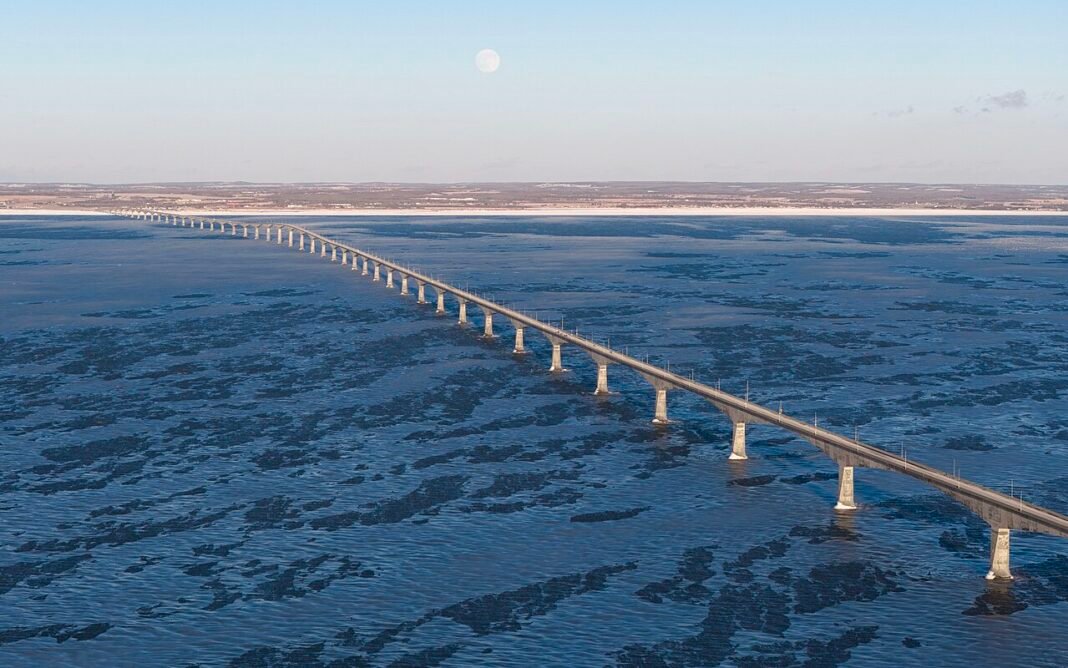
Prince Edward Island’s residential geography is the simplest of any Canadian province — a single island of 5,660km² where the entire population of roughly 182,000 lives within 90 minutes’ drive of anywhere else on the island, and where the choice of where to settle has less to do with urban-rural trade-offs than with the distinct personality of a handful of communities. Charlottetown anchors the island’s housing market as both provincial capital and the economic hub for health, education, and government; Summerside is the cheapest city alternative; and the rural reaches of the three counties (Queens, Kings, and Prince) offer a genuine agricultural island lifestyle within a short commute of both cities. The island’s compact scale means that outdoor recreation — the beaches, the cycling, the Confederation Trail — sits within reach of almost any address, removing one of the major trade-offs that mainland Canadians face when weighing urban convenience against natural surroundings. The link to the mainland also became cheaper in August 2025, when Ottawa cut the Confederation Bridge toll from CAD $50.25 to CAD $20.
1. Downtown Charlottetown and Old Victoria Row
Charlottetown’s heritage downtown — the Victoria Row pedestrian restaurant street, the Confederation Centre of the Arts, the Farmers’ Market, and the Province House National Historic Site — creates a walkable urban core of disproportionate cultural richness for a city of about 40,000: the position as “the Birthplace of Confederation” gives it a heritage density and civic pride that larger Maritime cities might envy. The streets surrounding the downtown — Old Queen Street, Grafton Street, Euston Street — are lined with Victorian heritage homes, converted carriage houses, and period properties that count among Charlottetown’s most sought-after addresses. Everything is within walking distance: Victoria Row’s restaurant patios, the Saturday Farmers’ Market, the Confederation Court Mall, and the Peake’s Wharf waterfront. Restored period homes here run CAD $420,000–$600,000.
.jpg?width=1200)
2. Parkdale: Charlottetown’s Family Neighbourhood
Parkdale — the established neighbourhood west of downtown along Fitzroy and West Streets — is Charlottetown’s most complete family district: Queen Charlotte Intermediate School, the West Royalty Elementary school catchment, and a mix of 1960s–1980s bungalows and newer infill make a setting where families can walk to school and cycle to downtown in 15 minutes. The Charlottetown Event Grounds and the CARI (Charlottetown Area Recreation Inc.) arena complex sit 5 minutes away by bike, and the West Royalty business park keeps local jobs close. Detached homes run CAD $340,000–$470,000; the established tree canopy and the range of housing styles give Parkdale a warmth that newer suburban developments lack.
3. Stratford: The Growing Suburb
Stratford (about 12,000), on the eastern bank of the Hillsborough River directly across from downtown Charlottetown, is PEI’s fastest-growing town — a master-planned suburb that has matured from a bedroom community into a place with its own commercial and recreational infrastructure over the past decade. The Hillsborough Bridge links Stratford to downtown Charlottetown in 5 minutes by car; the Stratford Trail System (30km of paved multi-use trails), the MacKinnon Drive commercial district, and the strong school infrastructure (Cornwall Village School, Stratford Elementary) make it the island’s most complete suburban family destination. New detached homes run CAD $380,000–$520,000 — the island’s most family-oriented build-out, with purpose-built amenities baked in from the start.
4. Summerside: The Affordable Alternative
Summerside (about 19,000), PEI’s second city on the western shore of Bedeque Bay, offers the island’s most affordable urban lifestyle with an identity and history distinct from Charlottetown’s capital-city pull: the Summerside Lobster Carnival (July, one of North America’s oldest lobster festivals), the College of Piping and Celtic Performing Arts of Canada (a rare institution devoted to Highland pipes and step dancing), the Eptek Art and Culture Centre, and the Summerside Harness Raceway fill out a cultural calendar with a distinctly western-PEI flavour. The heritage streets near the waterfront (Central Street, Water Street) hold Victorian homes at CAD $250,000–$370,000 — the cheapest heritage housing on the island. The 50km Trans-Canada drive to Charlottetown is the main commuting cost for Summerside residents working in the capital.
5. Hunter River and Cornwall: Rural Central PEI
The farming hamlets of central PEI — Hunter River, New Glasgow, Clyde River, and the western approach to Charlottetown through Cornwall — offer the island’s most authentic agricultural setting within easy reach of both cities. The New Glasgow Lobster Suppers (the most famous of PEI’s traditional community lobster dinners), the New Glasgow Highlands golf course, and the surrounding farmland make for genuinely countryside living that still sits 20 minutes from Charlottetown’s services. Detached homes with agricultural land start at CAD $240,000–$380,000; this is the island’s most popular pick for remote workers who want rural quiet without losing city access.
6. Georgetown and Kings County: Eastern PEI
Georgetown (about 650), the seat of Kings County on the island’s eastern end, is PEI’s quietest small town — a Victorian courthouse town on the Kings Byway Scenic Drive, with heritage homes from CAD $150,000–$270,000 and the Georgetown Kings Playhouse summer theatre keeping the eastern county supplied with culture. Nearby Montague (the Kings County service centre), Brudenell, and Panmure Island Provincial Park cover the outdoor recreation and everyday services for the eastern island’s farming and aquaculture villages. For remote workers and retirees after maximum rural authenticity and minimum cost in a genuinely beautiful Maritime landscape, the eastern county is the island’s most affordable and most secluded option. Georgetown’s waterfront and the nearby Basin Head Provincial Park (the “singing sands” beach, where the quartz sand squeaks underfoot) round out the eastern island’s distinctive personality.
Making Your Decision
Choosing where to live in Prince Edward Island comes down to honestly matching your priorities with what each city and community genuinely delivers. Budget, career opportunities, access to outdoor recreation, climate preferences, and community character all weigh differently depending on your life stage and values — and no ranking can substitute for that personal assessment. The cities and towns profiled in this guide represent the strongest overall options, but Prince Edward Island has smaller communities that offer compelling alternatives for those willing to trade urban convenience for affordability, quieter living, or closer access to natural landscapes. If possible, spend at least a long weekend in your shortlisted communities before committing — the practical factors matter enormously, but so does the less quantifiable sense of whether a place simply feels right for where you are in life.
Frequently Asked Questions
What makes Charlottetown the best place to live on Prince Edward Island?
Charlottetown — PEI’s capital and largest city, with roughly 80,000 in its metropolitan area (more than 40% of the province’s ~182,000 total population) — is one of the most complete small capital cities in Canada: a walkable downtown of Victorian architecture, a harbour front busy with tourism and dining, and an identity rooted in the province’s role as the “Cradle of Confederation” (the Charlottetown Conference of 1864, where the Fathers of Confederation first negotiated the terms of Canada’s creation, was held in Province House). Province House National Historic Site (1847, Italianate sandstone, the smallest provincial legislature building in Canada and one of the most architecturally significant public buildings in Atlantic Canada) is the city’s defining landmark. Victoria Row (Richmond Street, immediately west of Province House) is the liveliest evening street in town — restaurants, live-music venues, and summer festivals turning the block over to pedestrians. The UPEI campus (University of Prince Edward Island, about 5,300 students) anchors education and research. Charlottetown’s summer numbers swell with tourism: the province draws roughly 1.7 million visitors a year against its ~182,000 residents, the highest visitor-to-resident ratio of any Canadian province.
What do Charlottetown’s neighbourhoods offer for residents?
Charlottetown’s residential geography is compact and walkable — a city where a bicycle or short car trip reaches anywhere in the urban area. The Old Town (the original 1764 street grid around Province House and Victoria Park) preserves the densest concentration of Victorian and Georgian architecture in Atlantic Canada: heritage houses on streets like Fitzroy, Euston, and Kent range from CAD $400,000–$700,000 for restored properties. Parkdale (west of the Old Town, the most complete post-war residential neighbourhood in Charlottetown) provides the city’s most accessible family housing at CAD $320,000–$450,000. Stratford (across the harbour estuary on the opposite shore, a separate municipality of about 12,000 that has grown rapidly as Charlottetown’s most affordable suburb) offers newer housing at CAD $380,000–$500,000 with strong schools. Cornwall (10km west on the Trans-Canada) has grown to roughly 6,000 residents and pairs agricultural land access with an easy Charlottetown commute. The Charlottetown Farmers’ Market (on Belvedere Avenue, year-round) is the province’s most important local food showcase and the densest gathering of PEI food producers in the province.
What does the rest of Prince Edward Island offer for living?
PEI’s extraordinary smallness — 224km long and 6–64km wide, with no point more than 16km from the sea — means that “the rest of the island” is in reality only 30–90 minutes from Charlottetown. The North Shore (from Cavendish to the east, facing the Gulf of St Lawrence) provides the province’s most famous beach landscape: the red sand beaches of Prince Edward Island National Park, Green Gables (the site of the Lucy Maud Montgomery farmhouse that inspired Anne of Green Gables, now a National Historic Site, attracting 350,000+ visitors annually), and the warmest ocean water north of Virginia. Summerside (PEI’s second city, about 19,000, on Bedeque Bay, 70km west of Charlottetown) holds the Island’s most affordable urban housing (median detached CAD $250,000–$330,000) and an identity centred on the Lobster Carnival (late June/early July) and harness racing at the Summerside Raceway. The Kings County (eastern PEI, the least-visited third of the island) provides the province’s most agricultural and traditional character, with the Wood Islands ferry terminal (providing the crossing to Pictou, Nova Scotia) at the eastern tip and the Basin Head Fisheries Museum near Souris.
What are housing costs across Prince Edward Island?
PEI’s housing market underwent the most dramatic price change of any Atlantic Canadian province during the 2020–2024 pandemic and post-pandemic period, driven by an influx of newcomers from Ontario, BC, and Alberta seeking affordability and quality of life, plus strong international immigration — the province’s population climbed by roughly 27,000 in six years (about 17%) to reach ~182,000 by early 2026, among the fastest provincial growth rates in Canada. Charlottetown’s median detached house price rose from approximately CAD $220,000 in 2019 to CAD $380,000–$500,000 in 2026. Stratford and Cornwall (Charlottetown suburbs) range from CAD $380,000–$520,000. Summerside median prices are CAD $260,000–$340,000. Rural PEI (farmhouses on the red soil, often with substantial land) is available from CAD $200,000–$320,000. The province’s Non-Resident Land Ownership legislation (restricting foreign and non-resident purchases of more than 5 acres of PEI land without provincial approval) provides some protection against pure investment speculation, but the immigration-driven demand has still produced significant price appreciation that challenges local incomes (PEI wages are among the lowest in Canada).
What is Prince Edward Island’s cultural identity and what drives it?
PEI’s cultural identity is shaped by three elements: its agricultural character (the island is predominantly farmland, and the red soil of PEI’s potato fields is the province’s most distinctive visual element — PEI produces 25% of Canada’s potatoes and is among the world’s highest-yield potato regions per acre), its literary heritage (Lucy Maud Montgomery’s Anne of Green Gables has made PEI the most recognized Canadian province internationally, particularly in Japan, where the Green Gables literary pilgrimage is the most significant Canadian cultural tourism draw from any single Asian market), and its Acadian and Mi’kmaq roots (Acadian communities persist in the Évangéline region west of Summerside; the Mi’kmaw people have been present on PEI — Epekwitk in Mi’kmaq — for at least 10,000 years). The Charlottetown Festival (the Victoria Playhouse and the Confederation Centre of the Arts, which produces the longest-running musical in Canadian history — the Anne of Green Gables musical, running since 1965) and the PEI International Shellfish Festival (September, Charlottetown, the world’s largest seafood festival by some measures) represent PEI’s cultural calendar anchors.