Washington State packs an extraordinary ecological range into its 71,000 square miles — the heavily glaciated North Cascades, the Olympic Peninsula’s temperate rainforests (140+ inches of annual rainfall and old-growth on a scale found almost nowhere else on Earth), the San Juan Islands’ orca-patrolled channels, and the high desert canyons of the Columbia Plateau east of the Cascades. With more than 3,000 miles of maintained trails across its national forests and parks, ski areas at Crystal Mountain, Stevens Pass, and Snoqualmie Pass, and 3,000 miles of tidal shoreline along Puget Sound, the state opens outdoor recreation across every category — something most Pacific Northwest households treat as the central organizing principle of daily life rather than a weekend add-on.
North Cascades: Alpine Wilderness
The North Cascades Highway (State Route 20, closed November–April by snow) threads through some of the most dramatic mountain scenery you can reach by car in the contiguous United States — glaciated peaks above 8,000 feet, turquoise alpine lakes, and the Diablo and Ross Lake reservoirs that set the foreground for backdrops often compared to the Swiss Alps. North Cascades National Park (about 505,000 acres, and home to more glaciers than any national park in the lower 48) protects the range’s core; with the adjoining Ross Lake and Lake Chelan National Recreation Areas, the wider complex covers roughly 684,000 acres. The Maple Pass Loop (7 miles round trip) near Rainy Pass is widely rated the state’s finest day hike — a high-altitude circuit past two turquoise lakes with 360-degree Cascades views.
Key North Cascades Hikes
- Maple Pass Loop (7 miles, 2,100 ft gain): High-alpine lakes and panoramic Cascades views; peak season August–October
- Chain Lakes Loop (6.5 miles, 1,400 ft gain): Circles Mount Shuksan above the Picture Lake reflection, one of the most photographed mountain scenes in the state
- Enchantments (18–21 miles point-to-point): The most coveted permit backpacking destination in Washington; alpine lakes, mountain goats, larches in fall; permit lottery required
- Colchuck Lake (8.8 miles, 2,300 ft gain): The classic Leavenworth-area day hike, reached off Icicle Creek Road from US-2; a granite-rimmed turquoise lake at the gateway to the Enchantments

Mount Rainier: Volcano Hiking and Skiing
Mount Rainier’s Paradise area splits into two distinct outdoor experiences depending on the season:
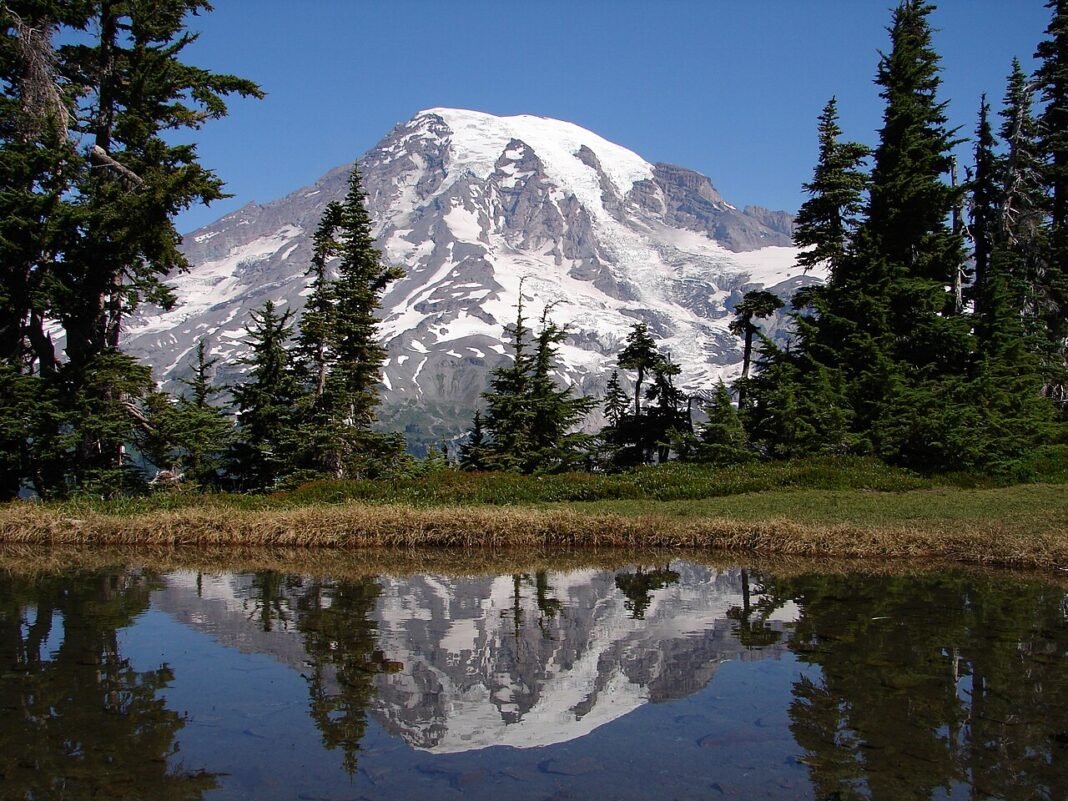
- Summer hiking: The Skyline Trail (5.5 miles loop, 1,700 ft gain) circumnavigates the Paradise area’s subalpine meadows with continuous close-range glacier views; the Panorama Point extension (add 2 miles) reaches the snowfield above treeline
- Summit climbing: Mount Rainier’s summit (14,411 feet) is the most attempted glaciated summit in the western hemisphere — approximately 10,000 attempts annually; the standard Disappointment Cleaver route requires a guided climb or demonstrated crevasse rescue skills, plus a climbing pass; the main season runs late May through September
- Winter snowshoeing: Paradise once held the world record for measured snowfall in a single season (1,122 inches in the winter of 1971–72) and averages roughly 640 inches a year; snowshoe rentals available at the Paradise Visitor Center
- Crystal Mountain Ski Resort: Adjacent to the park’s northeast boundary; the largest ski resort in Washington; 2,600+ acres and a 3,100-foot vertical drop; a gondola carries non-skiers to 6,872-foot views of Rainier and the 7,012-foot Silver King summit
San Juan Islands: Paddling and Whale Watching
The San Juan Islands anchor the state’s distinctive water-based recreation:
- Orca watching from Lime Kiln Point: On San Juan Island’s west shore, often called the best land-based orca viewing anywhere; the resident J, K, and L pods pass through San Juan Channel regularly May–October
- Sea kayaking: The protected channels between the San Juan Islands make for beginner-friendly paddling with wildlife encounters (harbor seals, bald eagles, porpoises) and dramatic scenery; guided tours launch from Friday Harbor, Orcas Island, and Lopez Island
- Moran State Park (Orcas Island): 5,424 acres on the largest San Juan Island; Mount Constitution’s summit (2,409 feet) reached by road or trail; 38 miles of hiking trails; lake swimming at Cascade Lake
Columbia River Gorge and Eastern Washington
East of the Cascades, Washington’s outdoor recreation character shifts from maritime wilderness to high desert adventure:
- Columbia River Gorge kiteboarding and windsurfing: The Gorge at Hood River (shared with Oregon) is the premier windsurfing and kiteboarding destination in North America; consistent afternoon winds funnel through the Gorge at 20–35 mph during summer months
- Palouse Falls State Park: A 198-foot waterfall dropping into a basalt canyon in eastern Washington’s wheat country; one of the most striking geological landscapes in the Pacific Northwest
- Lake Chelan: A 50.5-mile glacially carved lake in north-central Washington — the deepest in the state; clear water, desert shoreline, and the isolated town of Stehekin (reachable only by ferry or floatplane) at its northern end
- Spokane area trails: Riverside State Park (about 9,200 acres along the Spokane River), the Spokane River Centennial Trail (37 miles from Nine Mile Falls east to the Idaho state line, where it links to the North Idaho Centennial Trail toward Coeur d’Alene), and the Bowl and Pitcher basalt formations put serious trail access within reach of the city
Puget Sound Fishing and Marine Recreation
Puget Sound’s 2,500 square miles of tidal water hold a marine resource few inland states can match. Salmon fishing — Chinook, coho, chum, and pink at different points in the season — is both a sporting tradition and a piece of cultural identity for Pacific Northwest residents. Bottomfish such as rockfish, halibut, and lingcod come within reach of charter boats out of Westport, La Push, and Ilwaco on the Pacific Coast. Crabbing for Dungeness crab takes only a license and a crab pot, and the Sound’s resident population makes a successful outing realistic even for newcomers. Washington State Ferries — the largest ferry system in the United States — doubles as a scenic cruise, carrying foot and vehicle passengers affordably to Bainbridge Island, Vashon Island, the Olympic Peninsula, and the San Juan Islands from Seattle’s Colman Dock.
Frequently Asked Questions
What are the best hikes in the North Cascades and what makes them exceptional?
The North Cascades contain Washington’s most dramatic alpine hiking. The Maple Pass Loop (7 miles, 2,100 ft gain) near Rainy Pass is widely considered the finest day hike in Washington — a high-altitude circuit past two turquoise lakes with 360-degree North Cascades panoramas. The Chain Lakes Loop (6.5 miles) circles Mount Shuksan above Picture Lake, the most photographed mountain scene in Washington. The Enchantments (18–21 miles point-to-point) require a permit lottery for what is the most coveted backpacking destination in Washington: alpine lakes, mountain goats, and larch trees turning gold in fall. North Cascades National Park covers about 505,000 acres (684,000 across the full complex with its two adjoining recreation areas) and contains more glaciers than any other national park in the contiguous United States outside Alaska.
What outdoor recreation does Mount Rainier offer in all seasons?
Mount Rainier rewards visitors year-round. In summer, the Skyline Trail (5.5-mile loop, 1,700 ft gain) at Paradise circumnavigates the subalpine meadows with continuous close-range glacier views; Mount Rainier’s summit (14,411 feet) is the most attempted glaciated summit in the western hemisphere, with approximately 10,000 annual attempts via the standard Disappointment Cleaver route. In winter, Paradise once held the world record for measured snowfall in a single season (1,122 inches in the winter of 1971–72) and averages about 640 inches a year; snowshoe rentals are available at the Paradise Visitor Center. Crystal Mountain Ski Resort, adjacent to the park’s northeast boundary, is Washington’s largest ski resort with 2,600+ acres and a 3,100-foot vertical drop.
What wildlife and water recreation do the San Juan Islands offer?
The San Juan Islands anchor the state’s distinctive water-based recreation. Lime Kiln Point on San Juan Island is often called the best land-based orca viewing anywhere — the resident J, K, and L pods pass through San Juan Channel regularly from May through October. Sea kayaking the protected channels between the islands offers beginner-friendly paddling with harbor seal, bald eagle, and porpoise encounters; guided tours launch from Friday Harbor, Orcas Island, and Lopez Island. Moran State Park on Orcas Island (5,424 acres) features Mount Constitution’s summit (2,409 feet) accessible by road or trail and 38 miles of hiking trails. Washington State Ferries (the largest ferry system in the United States) provides affordable access to the islands from Seattle.
What recreation does the Olympic Peninsula’s rainforest and coast offer?
Olympic National Park protects three distinct ecosystems within 922,000 acres: the Hoh Rain Forest (up to 140 inches of annual rainfall, one of the largest temperate rainforests in the lower 48, where bigleaf maple and Sitka spruce hang heavy with club moss), the Olympic Mountains’ glaciated peaks (Mount Olympus at 7,980 feet), and 73 miles of wilderness Pacific Coast. The Hurricane Ridge area offers the park’s most accessible alpine views, with about 17 miles of hiking trails above the treeline. The Olympic Coast’s sea stacks, tide pools, and wilderness camping at Second Beach and Rialto Beach rank among the wildest stretches of shoreline on the Pacific.
What does the Columbia River Gorge and eastern Washington offer for outdoor recreation?
The Columbia River Gorge at Hood River is the premier windsurfing and kiteboarding destination in North America — consistent afternoon winds funnel through the Gorge at 20–35 mph during summer, supporting a world-class wind sports culture. Palouse Falls State Park features a 198-foot waterfall dropping into a basalt canyon in eastern Washington’s wheat country — one of the most striking geological landscapes in the Pacific Northwest. Lake Chelan, a 50.5-mile glacially carved lake in north-central Washington (the deepest in the state), offers clear water and the isolated town of Stehekin, reachable only by ferry or floatplane. Near Spokane, Riverside State Park (about 9,200 acres along the Spokane River) and the 37-mile Spokane River Centennial Trail put serious trail access close to the city.