
New Mexico’s cost of living runs on a paradox. By most aggregate measures it is one of the cheapest states in the western US, especially for housing outside Santa Fe, yet it carries some of the highest poverty rates in the country and public services that reflect thin state revenue. Households leaving California, Colorado, or the Northeast tend to find what New Mexico offers compelling on its own terms: real housing affordability paired with outdoor recreation, a deep arts scene, and Spanish colonial and Native American heritage that few other western states can match at the price. The caveats are not small. The job market is weaker than most of its western neighbors, the public schools struggle on national rankings, and infrastructure in rural towns and smaller cities can fall well short of what residents from wealthier states are used to. The savings are real, but they arrive with trade-offs worth weighing carefully.
Housing: The Two New Mexicos
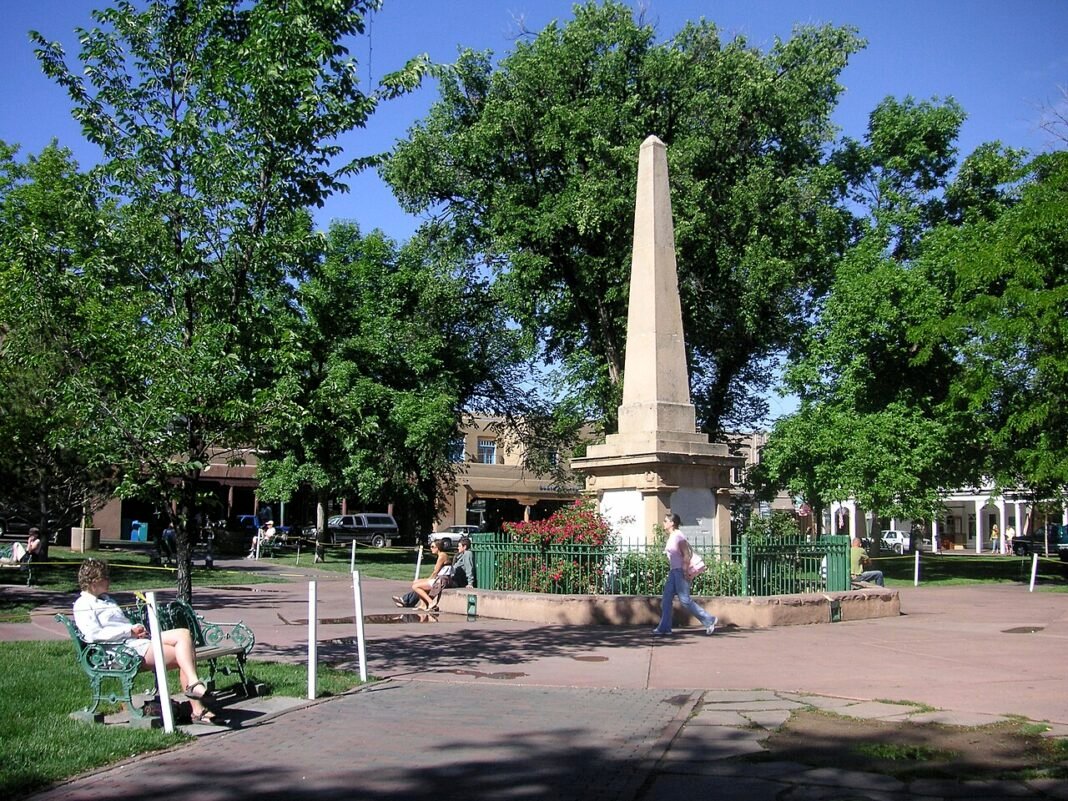
New Mexico’s housing market splits cleanly between Santa Fe (and, to a lesser degree, Taos) and everywhere else. Decades of second-home and retirement demand from California, Texas, and the Northeast have shaped Santa Fe, where buyers chasing the mix of adobe character, arts infrastructure, and high-desert air arrive flush with coastal equity that pushes prices past anything local wages would sustain. Single-family homes in desirable Santa Fe neighborhoods generally land between $450,000 and $700,000; in the historic districts east of the Plaza, the Eastside and the Museum Hill area, adobe compounds with mature gardens reach $700,000 to $1.5 million. For households that want Santa Fe proximity without the Santa Fe price, the surrounding communities of Eldorado (a large planned subdivision to the southeast), Tesuque, and the Pojoaque Valley open the door around $350,000 to $550,000.
Albuquerque, the state’s largest city, tells a different story. Across its established neighborhoods, single-family medians sit in the $260,000 to $380,000 range, and the East Mountains communities of Tijeras, Edgewood, and Moriarty drop lower still for anyone willing to commute. The most sought-after addresses, in the Northeast Heights neighborhoods of Sandia Heights, Four Hills, and the Academy and Tramway corridors, run $350,000 to $550,000. Farther south, Las Cruces, the state’s second-largest city in the Mesilla Valley near the Texas border, delivers the cheapest big-city housing in New Mexico at roughly $200,000 to $300,000, anchored by New Mexico State University employment and the pull of nearby El Paso. Smaller cities such as Roswell, Clovis, and Gallup post medians of $150,000 to $250,000, among the most affordable markets anywhere in the Southwest.
.jpg?width=1200)
State Income Tax
New Mexico’s income tax is graduated, running from 1.5% on the lowest bracket up to 5.9% on income above $210,000 for single filers ($315,000 for married couples filing jointly). That puts it in moderate territory by western standards, below California’s top rates but above the zero owed in Nevada. Retirees fare unusually well here: most pay no state tax on Social Security at all, since benefits are fully exempt for single filers with adjusted gross income up to $100,000 and married couples up to $150,000, which covers the large majority of New Mexico seniors. The state also runs a Working Families Tax Credit worth 25% of the federal earned income tax credit, a meaningful boost for lower-income households. A 2024 restructuring (the first major bracket overhaul in nearly two decades) lowered the bottom rate and widened the brackets, easing the burden on lower and middle earners while keeping the system progressive.
In place of a conventional sales tax, New Mexico levies a gross receipts tax on the sale of goods and services, with a combined state and local rate that lands somewhere between roughly 5.0% and 9.0% depending on where you are (about 7.875% in Albuquerque, about 8.3125% in Santa Fe). Technically it falls on businesses, which owe tax on their gross receipts rather than on the consumer at the register, but in practice they fold it into prices, so the effect on a shopper is much the same. What sets it apart from most state sales taxes is its reach: because it covers services as well as goods, professional work such as legal, medical, and accounting bills gets taxed in ways it would not in most other states.
Property Taxes
Property taxes are where New Mexico genuinely shines, with effective rates among the lowest in the western US, a real cushion for homeowners even if it helps explain the thin public services. Statewide, effective rates average somewhere around 0.5% to 0.8% of assessed value, comfortably under the national norm of roughly 1.0% to 1.1%. On a $300,000 home in Albuquerque, that works out to something like $1,500 to $2,400 a year, a modest bill next to comparable houses in Texas, Colorado, or the Northeast. A valuation cap on owner-occupied primary residences holds annual assessment increases to 3%, shielding longtime owners from sharp jumps when values climb.
Those low rates trace back partly to the state’s affordability mandate and partly to home values that simply sit below coastal markets. Because each property generates less revenue in absolute dollars, the same rates leave schools and local services chronically underfunded, a recurring strain in New Mexico communities. Rates vary by county and municipality, so buyers should check the specific numbers for any town they are considering, but the overall property tax burden lands reliably below national and regional averages.
Everyday Costs in Albuquerque and Santa Fe
Day-to-day spending in Albuquerque tends to undercut the national average. Groceries run roughly 3% to 5% cheaper, restaurant meals stay reasonable against southwestern peers, and utilities (the main swing factor being summer air conditioning, real but tamer than Phoenix or Las Vegas) sit at or just below national levels. As the only major city in the state, Albuquerque also draws competitive retail, with Costco, Target, Walmart, and several grocery chains keeping prices clear of the markups that isolated or resort towns tack on. Gas, helped by proximity to Texas refineries, has long sold below the national average across New Mexico.
Santa Fe spends like the resort and second-home town it is. Restaurant tabs come in 15% to 25% above Albuquerque, and plenty of goods and services carry a premium tuned to an affluent visitor and resident base. Careful shoppers still have options, with Whole Foods, Sprouts, and the local La Montañita Co-op sitting alongside conventional stores. Utilities are the catch: at 7,000 feet, Santa Fe gets genuinely cold winters that lean hard on natural gas heating, though the summer monsoon takes the edge off the cooling bills that pile up in lower desert cities.
Frequently Asked Questions
Is New Mexico affordable to live in?
Yes – outside of Santa Fe, New Mexico is one of the most affordable states in the West. Albuquerque median home prices run $260,000 to $380,000; Las Cruces $200,000 to $300,000. Smaller cities like Roswell, Clovis, and Gallup show medians of $150,000 to $250,000. Property tax rates are among the lowest in the western US at 0.5% to 0.8% effective. Santa Fe is the exception – driven by second-home and retiree demand, medians run $450,000 to $700,000.
What is New Mexico’s income tax rate?
New Mexico has a graduated income tax from 1.5% to 5.9% (the top rate starts above $210,000 for single filers, $315,000 for married couples filing jointly) – moderate by western standards, below California but above Nevada. A 2024 restructuring lowered the bottom rate and widened the brackets. Most retirees pay no state tax on Social Security, which is fully exempt up to $100,000 in income for single filers and $150,000 for married couples, and a Working Families Tax Credit worth 25% of the federal EITC helps lower-income households.
Does New Mexico have a sales tax?
New Mexico uses a “gross receipts tax” instead of a conventional sales tax – a business tax on gross receipts that businesses typically pass through to consumers. Combined state and local rates run roughly 5.0% to 9.0% by location: Albuquerque about 7.875%, Santa Fe about 8.3125%. Notably, the gross receipts tax applies to services (legal, medical, accounting) in addition to goods, which is broader than most state sales taxes.
Are property taxes low in New Mexico?
Yes – effective rates average 0.5% to 0.8% statewide, well below the national average of about 1.0% to 1.1%. A $300,000 Albuquerque home carries annual taxes of roughly $1,500 to $2,400. A 3% annual assessment increase cap protects longtime owner-occupants from large tax jumps when values climb. Property taxes are one of New Mexico’s clearest financial advantages.
What are the honest trade-offs of living in New Mexico?
The savings come with real costs: New Mexico has one of the highest poverty rates in the country, public schools that rank near the bottom on many national metrics, a weaker job market than most western peers, and infrastructure gaps in rural and smaller communities. The state suits remote workers bringing outside income, retirees on fixed incomes, or households drawn specifically to the outdoor recreation, arts scene, and Spanish colonial and Native American heritage of the region.