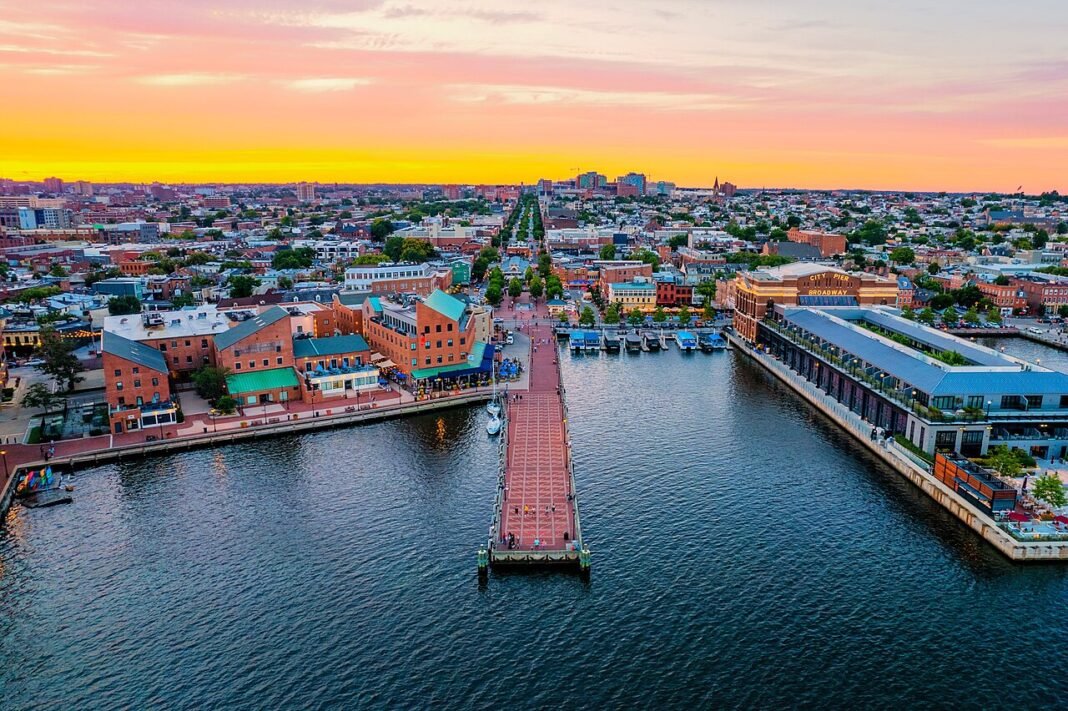
Maryland’s cost of living is defined almost entirely by its proximity to Washington D.C. — a proximity that pushes the state’s Montgomery and Prince George’s Counties among the most expensive in the country, driven by federal employment, contractor salaries, and the Washington metro’s professional class. Baltimore and the rural portions of the state run on a different economic reality entirely. Understanding Maryland costs requires specifying whether you’re considering the DC suburbs or the rest of the state.

Housing: The DC Suburb Premium
Montgomery County, Maryland‘s most affluent suburb and the largest county by population, shows median home prices of $550,000–$750,000 — a number built on excellent public schools (Montgomery County Public Schools ranks among the highest large school districts in the country), proximity to federal employment centers in Bethesda and Rockville, and the broader pull of the Washington suburban market. The communities of Bethesda, Chevy Chase, Potomac, and North Potomac are the county’s most expensive, with median prices of $800,000–$1.5 million and the best properties well into the millions. Gaithersburg and Germantown stay more accessible at $400,000–$550,000.
Prince George’s County, east of D.C. and home to the University of Maryland flagship campus, offers more accessible housing at $320,000–$450,000 median — above Baltimore but below Montgomery County, a gap that tracks lower income demographics and a less prestigious school reputation than its neighbor. Anne Arundel County (Annapolis and the suburban communities south of Baltimore) runs $380,000–$530,000.
Baltimore City is substantially more affordable than the suburbs — median home prices of $180,000–$280,000 for the city as a whole, with dramatic variation by neighborhood. The most desirable Baltimore neighborhoods (Fells Point, Canton, Federal Hill, Roland Park, Guilford) run $300,000–$600,000; the more affordable areas of Pigtown, Hampden, and Waverly run $180,000–$320,000; the most challenged city neighborhoods show prices well below $100,000 that signal serious quality-of-life concerns worth understanding before any purchase.

State Income Tax
Maryland levies a graduated state income tax. For most residents the rate runs 2% to 5.75%, but two high-income brackets added for 2025 push the top rate to 6.25% on taxable income above $500,000 and 6.5% above $1 million. On top of that sit county income taxes (2.25% to 3.2%, with Montgomery County at the high end of the range), which bring the combined state-local rate to roughly 4.75%–9.8% depending on income and county. That combined burden is among the heaviest in the country — comparable to the high-income rates in New York and California — and forms a significant part of Maryland’s above-average tax picture. A separate Maryland estate tax applies to estates over $5 million, one of the few state estate taxes still on the books.
Property taxes in Maryland vary significantly by county. Montgomery County’s effective rate sits near 0.8–1.0% of assessed value — below the national average, a function of the county’s high home values. Baltimore City’s rate of roughly 2.2% ranks among the highest in the state and the country; it widens the affordability gap on purchase price but eats into the net benefit of Baltimore ownership compared with lower-rate suburban alternatives. The Homestead Tax Credit, which caps the annual increase in a homeowner’s assessment once established, gives meaningful protection against assessment spikes but must be applied for within the first year of ownership.
Everyday Costs
Grocery costs in Maryland sit roughly 5–10% above the national average, a function of the DC metropolitan premium and the higher service costs that come with a high-income state. The mix of Costco (a strong presence in the DC suburbs), Wegmans (exceptional quality grocery with multiple Maryland locations), Aldi, and Lidl spreads the price points out. Healthcare costs land above average too, pushed up by Maryland’s role as a major healthcare industry center and the concentration of academic medical centers — Johns Hopkins Medicine and the University of Maryland Medical System — that raise prices across the market.
The Maryland Cost Calculation
Residents in the DC suburbs are paying a significant premium for federal employment proximity, outstanding schools, and access to Washington’s cultural infrastructure. That premium is defensible for households whose income flows directly from the DC employment market. For remote workers or households whose income is not DC-tied, the state opens a specific opportunity: Baltimore’s genuine affordability relative to its metropolitan amenity access, and the mid-Maryland communities of Frederick, Hagerstown, and the Eastern Shore, which deliver lower-cost living with reasonable highway and MARC train access to DC employment when needed.
Utilities and Transportation
Maryland utility costs run above the national average, a function of the Mid-Atlantic energy market and the higher cost of grid infrastructure in the densely populated I-95 corridor. Electricity averages $0.14–$0.16 per kilowatt-hour — above the national figure but below New England rates. Natural gas reaches most homes in the Baltimore and DC suburbs and provides an important heating alternative to electricity. Summer air conditioning costs are meaningful given Maryland’s humid subtropical climate (average July high of 87°F in Baltimore, with humidity that significantly increases apparent temperature). Transportation costs are driven up by tolls — the Baltimore-Washington corridor is one of the most heavily tolled stretches of highway in the country. The Bay Bridge toll, connecting the Western Shore to the Eastern Shore, adds cost for households commuting or frequently traveling to that part of the state. The MARC commuter rail system links Baltimore and DC’s Union Station via the Penn Line, which runs alongside Amtrak’s Northeast Corridor tracks; it gives households along that corridor a genuine commuter alternative. MARC trains are reliable and well-used by federal workers and private sector commuters alike, with monthly passes far cheaper than the equivalent toll-road and parking costs.
Who Maryland Makes Financial Sense For
The cost structure here is most defensible for households whose income is anchored in the federal government economy — federal employees, defense contractors, consultants, and the broad support ecosystem the DC metro generates. For these households, the mix of job security, career advancement, and the proximity premium of DC suburb living adds up to a package that justifies the above-average cost of living. For remote workers or households whose income is not DC-anchored, the equation deserves more scrutiny: the same quality-of-life advantages — excellent schools, coastal access, cultural richness — are available in Frederick County and on the Eastern Shore at far lower prices. The key insight is that cost variation by location is dramatic, and the right Maryland address for a non-DC-employed household may look nothing like the suburban Bethesda or Rockville addresses that define the state’s premium real estate market.
Frequently Asked Questions
Is Maryland expensive to live in?
It depends entirely on location. Montgomery County DC suburbs are very expensive — medians of $550,000–$750,000, with Bethesda, Potomac, and Chevy Chase reaching $800,000–$1.5 million. Baltimore City is dramatically more affordable at $180,000–$280,000 overall, with desirable neighborhoods like Fells Point and Canton running $300,000–$600,000. The state’s internal cost variation is one of the largest of any state in the country.
What are Maryland’s income taxes?
Maryland levies a graduated state income tax (2%–5.75% for most residents, rising to 6.25% over $500,000 and 6.5% over $1 million under brackets added for 2025) plus county income taxes (2.25%–3.2%), bringing the combined state-local rate to roughly 4.75%–9.8% depending on income and county. That puts Maryland among the heavier state-local income tax burdens nationally, comparable to high-income rates in New York and California. Montgomery County residents face a combined rate near the top of the range. Maryland also maintains an estate tax on estates over $5 million.
What are property taxes like in Maryland?
Property taxes vary significantly by county. Montgomery County runs roughly 0.8–1.0% effective rate. Baltimore City has an effective rate near 2.2% — one of the highest in the state — which creates meaningful carrying costs even on the city’s more affordable housing. The Homestead Tax Credit caps annual assessment increases for established owner-occupants and must be applied for within the first year of ownership.
Is Maryland a good place to live for DC workers?
Yes — Maryland’s DC suburbs (Montgomery County, Prince George’s County, Anne Arundel) offer federal employment proximity, outstanding schools (MCPS is consistently ranked among the top large school districts in the country), and suburban quality that justifies the premium for households earning DC-caliber salaries. The MARC commuter rail Penn Line also provides reliable daily service between Baltimore and DC’s Union Station, making Baltimore a more affordable base for DC workers willing to commute.
Is Baltimore affordable compared to Washington DC?
Yes — Baltimore City medians of $180,000–$280,000 represent a significant affordability advantage over DC proper ($600,000+) and comparable suburbs. Desirable Baltimore neighborhoods like Fells Point, Canton, Federal Hill, and Roland Park offer urban character and walkability at $300,000–$600,000. Baltimore to DC commute via MARC rail is approximately 45–60 minutes, making Baltimore a cost-effective base for DC-area professionals willing to commute.