Wales is one of Europe’s most underrated travel destinations — a country of extraordinary natural beauty, an ancient Celtic culture that has survived intact into the 21st century, a living language spoken by 800,000 people, and an astonishing density of medieval castles that exceeds any other country in the world. It’s also among the most accessible and affordable parts of Britain, with a warmth of welcome that visitors consistently describe as among the most genuine in the UK. If you’ve been to London but never crossed the border into Wales, you’ve missed one of the most rewarding experiences in British travel.
Cardiff: A Capital That Punches Well Above Its Size
Cardiff has transformed itself over the past two decades from a declining industrial city into a vibrant, confident European capital that knows exactly what it is. The regenerated Cardiff Bay — the old docklands that once handled the world’s coal trade — is the most visible sign of this transformation: the Senedd (Welsh Parliament), a striking wood-and-glass building designed by Richard Rogers, faces the Wales Millennium Centre, a slate-and-bronze arts complex that hosts Welsh National Opera and touring productions. The waterside restaurants and bars of Mermaid Quay make Cardiff Bay genuinely pleasant to spend an evening in.
The city center is compact and walkable. Cardiff Castle — built on a Roman fort and converted into a Victorian Gothic fantasy by the eccentric Marquess of Bute, who spent his coal-trade fortune decorating its interiors with Byzantine mosaic, Moorish arabesque, and medieval heraldry — is one of the most remarkable buildings in Britain. The covered Victorian arcades (the Royal Arcade, Morgan Arcade, and others) make Cardiff’s shopping experience distinctive and pleasurable in a way that most British city centers have lost. The Principality Stadium, where Wales plays rugby with an intensity that makes other countries’ home matches seem half-hearted, is visible from much of the city center.
_-_Flickr_-_Richard_Szwejkowski.jpg?width=1200)
Snowdonia: The Roof of Southern Britain
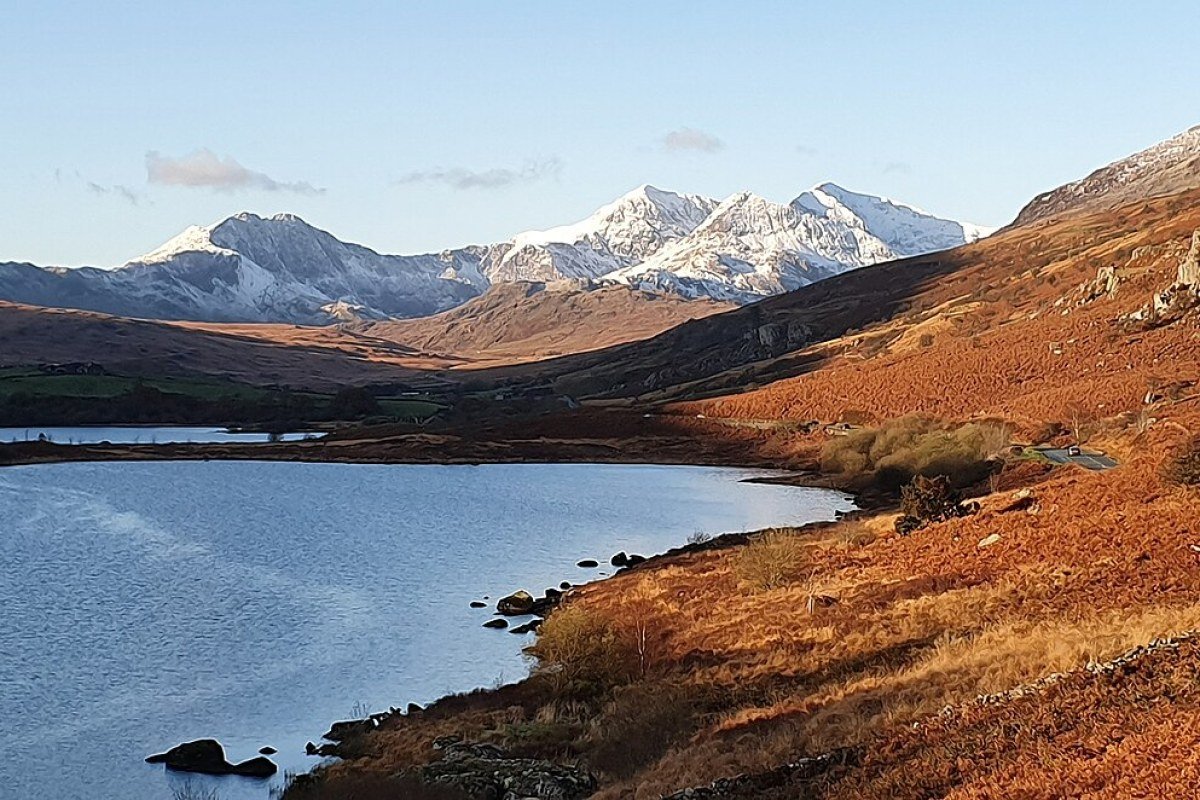
Snowdonia National Park (Eryri in Welsh) covers 823 square miles of northern Wales with the most dramatic mountain scenery in England and Wales. Mount Snowdon — 1,085 meters, the highest summit in either country outside Scotland — can be climbed by several routes of varying difficulty. The Llanberis Path is the most straightforward; the Crib Goch ridge is the most technically demanding and one of the finest ridge walks in Britain. The Snowdon Mountain Railway (UK’s only public rack-and-pinion railway) runs from Llanberis to the summit between March and November — book in advance in summer.
Beyond Snowdon, the national park has an extraordinary range of experiences: the Zip World network of zip lines (Velocity at Penrhyn Quarry is the world’s fastest zip line at 160 km/h), the slate caverns at Llechwedd (underground zip lines and an underground lake), and the Portmeirion village — an eccentric Italianate fantasy built by architect Clough Williams-Ellis between 1925 and 1975 that served as the filming location for The Prisoner TV series. The coastline of the Llŷn Peninsula, jutting into the Irish Sea from Snowdonia’s western edge, has exceptional beaches and a remote, beautiful character that feels very different from the well-trodden parts of the national park.
The Castles: 600 Fortresses in One Country
Wales has more castles per square mile than any other country in the world — over 600 in total. The most celebrated are Edward I’s “Iron Ring,” built in the late 13th century as military and political domination made architectural: Conwy (still surrounded by its original town walls, a UNESCO World Heritage Site), Caernarfon (where Prince Charles was invested as Prince of Wales in 1969, its massive polygonal towers overlooking the Menai Strait), Harlech (a clifftop fortress with views across Cardigan Bay to the mountains of the Llŷn Peninsula), and Beaumaris on Anglesey (never completed, but considered by military historians as the most technically perfect concentric castle design ever conceived).
Beyond the Iron Ring, Raglan Castle in Monmouthshire, Powis Castle (a Norman fortress converted into a country house, with extraordinary formal gardens maintained by the National Trust), and Kidwelly Castle in Carmarthenshire are all worth seeking out. Welsh castles are generally excellent value for admission compared to English heritage sites — many are managed by Cadw (Welsh historic monuments) with reasonable day-pass options.

The Pembrokeshire Coast
The Pembrokeshire Coast National Park in southwest Wales holds 186 miles of National Trail coastline — some of the finest coastal walking anywhere in Britain. Tenby is a beautifully preserved medieval walled town built on a headland with beaches on three sides; its colorful Georgian houses and Norman castle give it a character that’s entirely distinct from any other seaside town in Britain. St Davids, at the tip of the St Davids Peninsula, is technically a city (cathedral, therefore city) in the body of a small village, and its magnificent 12th-century cathedral in a valley below the city’s main square is one of the most atmospheric religious buildings in Wales.
Barafundle Bay, on the Stackpole Estate managed by the National Trust, is accessible only on foot from a car park at Stackpole Quay and is consistently named among the best beaches in the UK — and justifiably so. Blue Lagoon at Abereiddy is a former slate quarry now flooded with startlingly blue seawater, used annually for the Red Bull Cliff Diving World Series. The whole southwest Wales coastline benefits significantly from the Gulf Stream, which keeps sea temperatures warmer than you’d expect at this latitude.
The Brecon Beacons
The Brecon Beacons National Park (Bannau Brycheiniog) in south Wales provides the most accessible mountain walking in Wales for visitors based in Cardiff — the highest peaks (Pen y Fan, 886m) are 45 minutes by car from the capital. The park was one of the first International Dark Sky Reserves in the world, making it an excellent destination for stargazing, particularly in autumn and winter when the air clarity is best. The village of Crickhowell, at the park’s eastern edge, is a charming market town with excellent independent shops and restaurants, and the Monmouthshire and Brecon Canal provides gentle canal boat and cycling experiences at lower levels.
Getting Around Wales
A car is essential for exploring Wales outside Cardiff, Swansea, and the rail-accessible coastal towns. The A470 (the “Main Road of Wales”) runs north-south through the country; the A487 coastal road through mid-Wales is one of the most scenic in Britain. Flights to Cardiff from international destinations connect through Bristol Airport (50 minutes from Cardiff) and Birmingham (2 hours). Direct rail from London Paddington to Cardiff takes under 2 hours on the fastest services. Rail connections within Wales are improving but remain slow — for Snowdonia, the Cambrian Coast line from Birmingham through Shrewsbury to Aberystwyth is scenic but slow; most visitors to North Wales drive.