Outdoor Activities in South Carolina 2026: Waterfalls, Forests, and Coastline
South Carolina’s outdoor recreation portfolio is built on a geographic range that most visitors don’t fully appreciate — from the Blue Ridge escarpment’s waterfalls and granite domes in the northwest corner (where Oconee and Pickens Counties touch North Carolina and Georgia) to the ACE Basin’s vast estuarine wetlands on the coast, from Congaree National Park’s old-growth bottomland forest near Columbia to the 60-mile Grand Strand beach and the sea island kayaking corridors of the Low Country. The state’s 47 state parks, the Sumter National Forest’s 376,000 acres, the Francis Marion National Forest’s coastal lowland forest, and the National Parks Service units provide outdoor access throughout a state whose tourism marketing has historically undersold its natural assets in favor of golf and beaches.
Blue Ridge Escarpment: Waterfalls and Granite Domes
The northwest corner of South Carolina — Oconee and Pickens Counties — contains some of the most dramatic waterfalls in the eastern United States, tumbling off the Blue Ridge Escarpment’s steep face in drops of 50 to 200 feet. The most accessible include:
- Whitewater Falls: At 411 feet, the highest cascade east of the Rockies, straddling the SC-NC border in Oconee County
- Issaqueena Falls: 100-foot free fall in Stumphouse Tunnel Park, accessible by short trail
- Station Cove Falls: Hidden 60-foot falls in the Sumter National Forest, requiring a 2-mile hike
- Yellow Branch Falls: 50-foot cascade on Yellow Branch Creek, accessed via 1.6-mile trail
Table Rock State Park, in Pickens County, is the Upstate’s crown jewel — a 3,083-acre park dominated by the 3,124-foot granite dome of Table Rock Mountain, accessible via a strenuous 7.2-mile round-trip trail that provides summit views over the South Carolina foothills that rank among the finest in the state.

Congaree National Park: Ancient Bottomland Forest
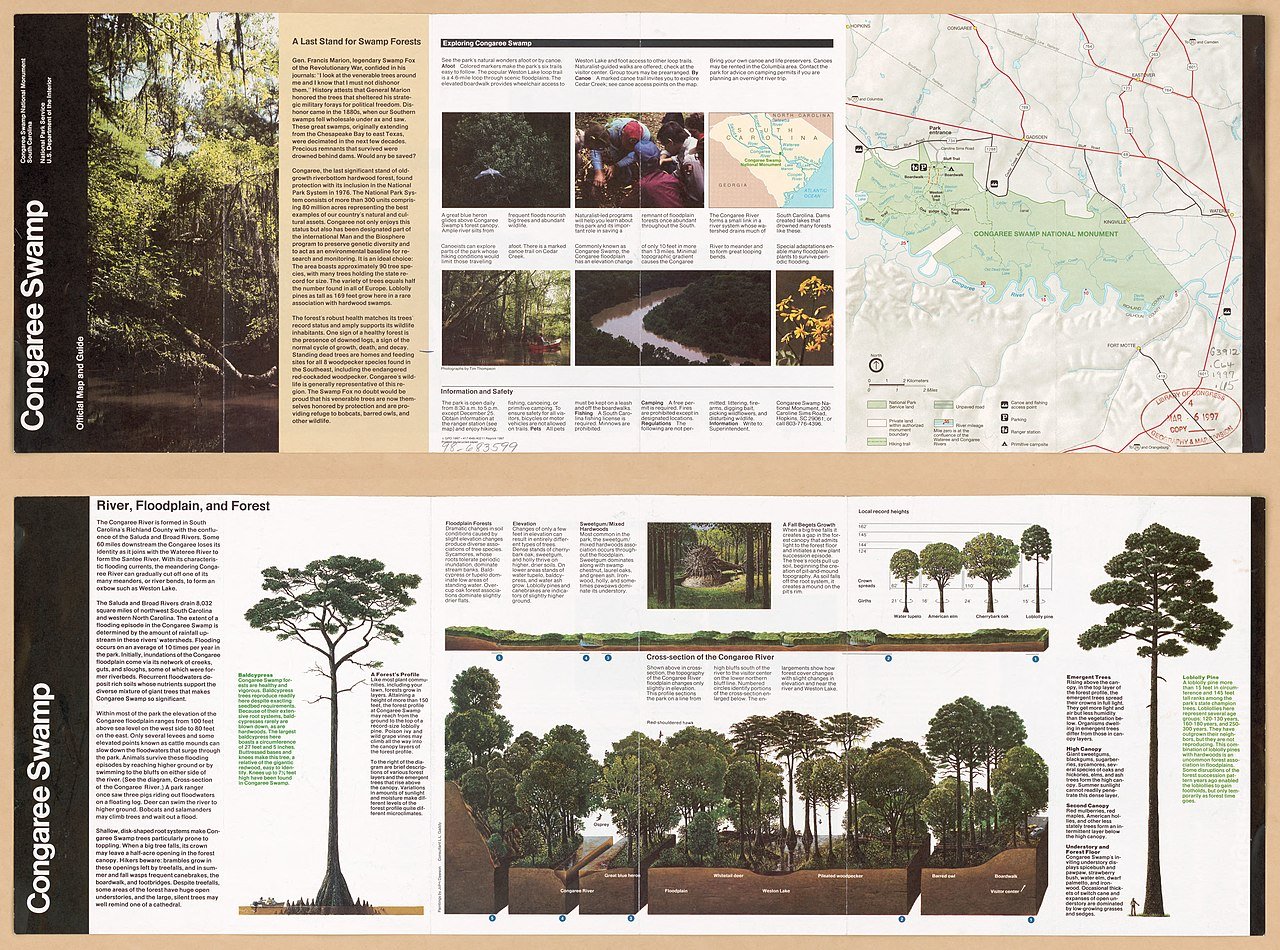
Congaree National Park protects 26,000 acres of old-growth bottomland hardwood forest in the Congaree River floodplain — a UNESCO Biosphere Reserve and International Dark Sky Park that preserves a forest ecosystem that once covered millions of acres of the American Southeast. The park’s champion trees are its signature attraction: loblolly pines over 160 feet tall, water tupelos with bases 10 feet in diameter, and the national champion cherrybark oak (197 feet) stand as living monuments to centuries of undisturbed growth.
The 10-mile Boardwalk Loop provides the most accessible experience — an elevated wooden walkway through the floodplain forest that gets above the seasonal flooding while providing eye-level views of the canopy. Kayaking Cedar Creek through the park’s wilderness provides the most immersive experience — a water trail through ancient cypresses whose buttressed trunks rise from the dark tannin-stained water in a setting that feels genuinely primeval.
ACE Basin: Pristine Estuarine Wilderness
The ACE Basin — named for the Ashepoo, Combahee, and Edisto Rivers — encompasses more than 350,000 acres of estuarine tidal wetlands, maritime forest, and agricultural fields between Charleston and Beaufort, making it one of the largest and least-disturbed estuarine ecosystems on the Atlantic coast. The basin’s combination of public (federal and state wildlife management areas) and privately conserved land provides habitat for wood storks, painted buntings, bald eagles, and the American alligator in a setting more reminiscent of the Everglades than the typical Mid-Atlantic coastal landscape.
Palmetto Trail and Coastal Paddling
The Palmetto Trail stretches 500 miles from the Blue Ridge Mountains to the Atlantic coast, crossing the full physiographic range of South Carolina — from the granite uplands of the Upstate through the Piedmont’s red clay hills to the coastal plain’s longleaf pine forest and sea island marshes. The most popular hiking sections are in the Upstate (the Oconee Passage through gorges and waterfalls) and the Low Country (the Swamp Fox Passage through the Francis Marion National Forest’s cypress swamps). The sea island kayaking corridors around Beaufort, St. Helena Island, and the ACE Basin provide some of the finest flatwater paddling on the Atlantic coast — tidal creeks through salt marsh, where dolphins follow the tide and osprey hunt the same channels used by Gullah Geechee people for generations.
Sea Island Beaches and Coastal State Parks
South Carolina’s state park system operates several of the finest coastal parks on the Atlantic Seaboard. Huntington Beach State Park, between Myrtle Beach and Pawleys Island, is widely considered the best oceanfront state park on the East Coast — a barrier beach of remarkable quality adjacent to Brookgreen Gardens, with birding that attracts serious ornithologists from across the region during spring and fall migration. Edisto Beach State Park, on Edisto Island south of Charleston, occupies a barrier island where tidal marsh, maritime forest, and Atlantic beach converge in a setting little changed from the pre-resort barrier island landscape. The tidal flats and oyster bars of the Low Country’s sea islands provide recreational clamming and oyster harvesting opportunities that have been part of the regional food culture since the earliest European settlement.
South Carolina’s outdoor recreation is accessible year-round in a way that northern states cannot match — the mild winters (October through April along the coast) provide comfortable hiking, cycling, paddling, and birding conditions when comparable destinations in New England or the upper Midwest are locked in cold and snow. The spring wildflower season (February through April along the coast and in the Upstate’s Blue Ridge foothills) provides azalea, mountain laurel, and dogwood displays that draw visitors from across the Southeast. The shrimp season (spring and fall), the oyster roast season (fall and winter), and the striped bass runs in the coastal rivers provide a seasonal outdoor food culture that connects the state’s natural resources to its distinctive culinary identity.
Planning Your Outdoor Adventure
The outdoor experiences described in this guide reward practical preparation. For wilderness and protected areas, check trail conditions, permit requirements, and seasonal access with the relevant land management authority before departure — trail closures, fire restrictions, and entry quotas can change quickly, and many high-demand parks now require advance reservations that were not needed in previous years. Weather in South Carolina can change rapidly, particularly in mountain terrain and during shoulder seasons; a layered approach with a waterproof outer shell is advisable for most outdoor pursuits regardless of the season. For water-based activities — paddling, snorkeling, diving, surfing — check current conditions with local outfitters who will have the most accurate and up-to-date information. Leave No Trace principles apply throughout: pack out everything you bring in, stay on established trails, give wildlife space, and leave natural features undisturbed for the next visitor.