


The Australian Outback covers roughly 70% of the continent — an enormous expanse of desert, spinifex plains, ancient mountain ranges, salt lakes, and red rock formations that is home to some of the oldest continuous cultures on earth and some of the most extraordinary landscapes anywhere in the world. It’s also one of the most genuinely remote places accessible to travelers — the silence, the scale, and the ancient, enduring quality of the land create a perspective shift that is difficult to find elsewhere. Visiting the Outback properly requires preparation, respect for the environment and the traditional custodians who have lived here for over 60,000 years, and a willingness to slow down and actually be present in the landscape.
The Red Centre: Uluru, Kata Tjuta, and Kings Canyon
Uluru-Kata Tjuta National Park
Uluru is the iconic heart of the Outback — a massive sandstone inselberg (isolated rock) sacred to the Anangu people, who have lived in this landscape for at least 60,000 years and whose creation stories (tjukurpa) are inscribed in the rock itself through art sites, waterholes, and caves visible on the base walk. The rock’s color changes dramatically through the day — deep red-orange at dawn, bright red through the afternoon, and extraordinary purples and magentas at sunset as the last light catches the iron-rich surface. The 10.6km base walk around Uluru reveals the full complexity of the site: art caves, water-carved gorges, permanent waterholes (some of the few reliable water sources in the region), and the physical texture of the rock surface that photographs never capture. Since October 2019, climbing Uluru has been permanently prohibited at the request of the Anangu traditional owners — the respect this shows for the sacred site is appropriate and universally observed by responsible visitors.
Kata Tjuta (the Olgas) — 36 domed sandstone formations about 50km west of Uluru — is equally extraordinary and less visited. The Valley of the Winds walk (7.4km, 3–4 hours, moderate) passes through the gorges between the domes, with views that some visitors find more dramatic than Uluru itself. The shorter Walpa Gorge walk (2.6km return, 45 minutes) enters the gorge between two of the largest domes and is excellent for those short on time.
Kings Canyon
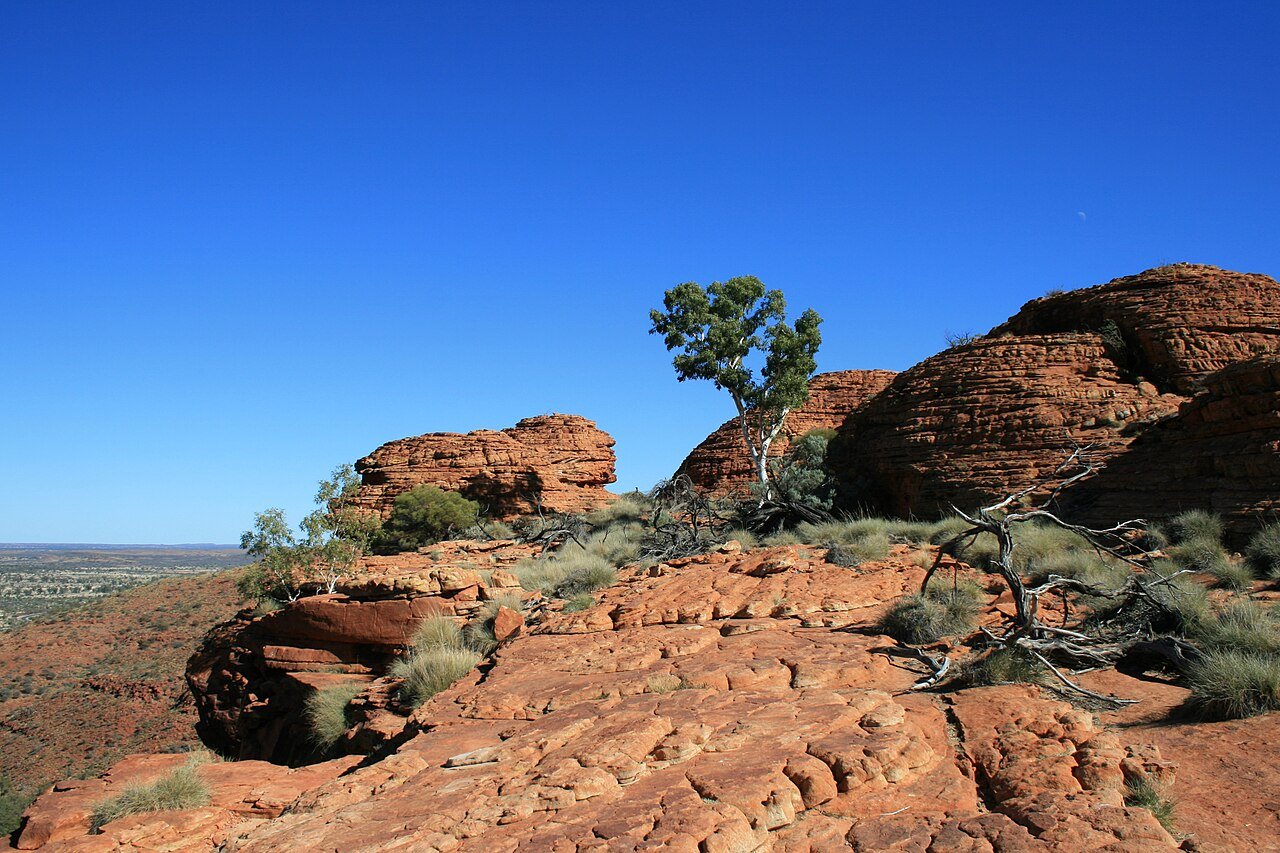
Kings Canyon in Watarrka National Park — 300km north of Uluru — is a 100-meter deep sandstone gorge with sheer red walls, a remarkable “Garden of Eden” valley of prehistoric cycad palms and permanent waterhole at its heart, and a rim walk that provides some of the finest views in central Australia. The full Kings Canyon Rim Walk (6km, strenuous, allow 4 hours) is one of the best day hikes in the Outback — particularly the “Lost City,” a section of weathered sandstone domes. Start before 8am to avoid the worst midday heat, carry at least 3 liters of water per person, and note the park closes the rim walk when temperatures exceed 36°C for safety reasons.
Alice Springs and the MacDonnell Ranges
Alice Springs (population 30,000) is the main service center of the Red Centre and a more interesting town than many visitors expect. The Aboriginal art scene here is genuine and important — the Desert Mob Art Fair (held annually in September) showcases artists from community-owned art centers across the region, and galleries like Papunya Tula Artists (founded in 1972, the original Western Desert art movement) stock works of real cultural significance. The Araluen Cultural Precinct (museum, gallery, and performing arts) is excellent. The MacDonnell Ranges, both east and west of Alice Springs, offer magnificent gorge scenery and permanent waterholes:
- Standley Chasm (50km west): A narrow slot canyon that glows orange-red in the midday light when the sun enters directly — arrive between 11am and noon for the full effect.
- Ormiston Gorge (135km west): A ghost gum-lined waterhole in a substantial gorge — one of the finest swimming spots in central Australia and an excellent overnight campsite.
- Ellery Creek Big Hole (90km west): A large permanent waterhole in a beautiful white-walled gorge — one of the most popular swimming spots in the MacDonnells.
- Trephina Gorge (75km east): A quieter, less-visited gorge with a beautiful ghost gum-lined waterhole and good walking tracks.
Kakadu National Park: The Other Outback
Kakadu in the Northern Territory’s Top End is the largest national park in Australia (20,000 square kilometers, a UNESCO World Heritage Site) and a completely different Outback landscape from the Red Centre — monsoonal, extraordinary for birdlife, and containing the most important collection of Aboriginal rock art in the world. The rock art sites at Ubirr and Nourlangie span 20,000 years of continuous human occupation and record the full span of Northern Territory history through human imagery, animal paintings (thylacines, Tasmanian tigers, animals now extinct), and “contact art” depicting European sailing ships. Kakadu’s floodplains teem with birdlife — jabiru storks, brolgas, magpie geese (in their hundreds of thousands during the dry season), sea eagles, red-tailed black cockatoos. Yellow Water Cruise at dawn (daily, book in advance) is the finest single wildlife experience in the park. The best time to visit: May–October (dry season, roads open, wildlife concentrated near remaining water).

Essential Safety in the Outback
The Outback is genuinely remote and the consequences of being unprepared are serious. These are not suggestions — they are requirements:
- Water: Carry a minimum of 4 liters per person per day for any activity — more in summer or on strenuous walks. Never rely on waterholes being accessible or drinkable. Keep emergency water in your vehicle at all times.
- Vehicle: For remote tracks (anything beyond the main sealed roads), a 4WD with high clearance is required. Carry two spare tires (not one), a traction board, a high-lift jack, jump cables, and enough fuel between stops. Check that your rental agreement permits off-road driving.
- Communication: Mobile coverage is non-existent in most of the Outback. A personal locator beacon (PLB) or satellite communicator (Garmin inReach, SPOT) is essential for remote travel. Hire from park visitor centers if needed.
- Tell someone: Always file a detailed itinerary with someone reliable before entering remote areas. Stick to it — this is how search and rescue finds you if something goes wrong.
- Heat: Temperatures can reach 48–50°C in the Red Centre in December and January. Never hike or undertake outdoor activity between 10am and 4pm in summer. Spring (August–October) and autumn (April–May) are far better for Outback travel.
- Wildlife: Most of Australia’s 20 most venomous snakes live in the Outback. Watch where you place hands and feet, particularly around rocks, logs, and in long grass. Shake out shoes and clothing left outside overnight.