

Moving to Alaska: What Nobody Tells You Before You Go
Every year, a few thousand people make the decision to relocate to Alaska. Some have been planning it for years; others get a job offer and give themselves six weeks. Some move for the landscape, some for the fishing, some for the tax structure. A meaningful number move on impulse and leave within two years. The ones who stay tend to share a set of characteristics: they went in with realistic expectations, they adapted their lifestyle to Alaska’s demands rather than expecting Alaska to accommodate their prior habits, and they found — often to their surprise — that what they gained in the trade was worth more than what they gave up.
This guide covers the practical realities of relocating to Alaska in 2026, with particular attention to the things that are genuinely different from any lower-48 move and that newcomers consistently report being underprepared for.
The Job Market: Where Opportunities Actually Are
Alaska’s economy has a distinctive structure that shapes employment opportunities in ways that differ sharply from most US states. The oil industry, while smaller than it once was, remains a significant economic driver — oil production on the North Slope funds a substantial portion of state government and supports a network of engineering, logistics, and support services firms based primarily in Anchorage. Jobs in the oil sector typically offer excellent pay and benefits but often require rotating schedules — two weeks on, two weeks off is a common pattern for North Slope workers — and involve periods of time in genuinely remote and demanding environments.
The healthcare sector is Alaska’s most consistent growth area. Providence Alaska Medical Center, Alaska Native Medical Center, and the Southcentral Foundation together constitute one of the largest employment clusters in the state, and the chronic shortage of physicians, nurses, and allied health professionals means that qualified candidates can often negotiate competitive salaries. The state government and the Municipality of Anchorage are also major employers, offering stable employment with solid benefits in a state where private sector employment can be cyclical.
The fishing industry — both commercial fishing and the onshore processing plants that handle the catch — provides substantial employment on a seasonal basis. Alaska’s fishing economy is one of the world’s largest, centered on salmon, pollock, crab, halibut, and cod. Commercial fishing work is physically demanding, dangerous, and offers highly variable income, but skilled fishermen and processing plant workers can earn substantial wages in compressed seasonal windows. This is not a career path for everyone, but for the right person it can fund an Alaskan lifestyle through a relatively short annual working period.
Tourism employment is seasonal but significant, particularly in Southeast Alaska, the Kenai Peninsula, and Denali corridor. Guides, lodge operators, boat captains, interpretive staff, and hospitality workers all find employment from May through September. Many Alaskans combine seasonal tourism work with other income sources or use the seasonal structure to enable travel or personal projects during the off-season.
Remote work has opened Alaska to a category of resident that the state previously couldn’t attract — people with established careers in technology, finance, consulting, or other portable professions who can maintain their income while choosing to live in a state whose natural environment is otherwise incompatible with their professional requirements. For this group, Alaska’s combination of outdoor access, no state income tax, and the annual PFD creates a compelling financial case.

Getting to Alaska and Getting Your Stuff There
The logistics of moving to Alaska are more complex than any domestic move within the contiguous 48 states. Your primary options for getting your belongings to Anchorage or Fairbanks are:
Driving the Alaska Highway: The Alaska Highway runs approximately 1,390 miles from Dawson Creek, British Columbia to the Alaska border near Tok, and then continues to Fairbanks or Anchorage via additional routes. The drive from Seattle to Anchorage covers roughly 2,400 miles, takes five to seven days under normal conditions, and requires crossing Canadian customs twice. Road conditions can be challenging, particularly in early spring when frost heaves create serious surface damage. Driving your own vehicle to Alaska gives you maximum flexibility and eliminates shipping costs for the vehicle, but requires genuine preparation for the remote conditions along the way.
Shipping via the Alaska Marine Highway or TOTEM Ocean Trailer Express (TOTE): Many movers ship vehicles and household goods via ocean freight from Seattle or Tacoma to Anchorage. Commercial freight shipping is well-established and reliable for Alaska-bound goods; the Alaska Marine Highway ferry system also allows passengers to transport vehicles and limited household goods as accompanied freight.
Professional moving companies: Many major moving companies serve Alaska, but costs are substantially higher than lower-48 moves due to the distance and logistics. Get multiple quotes, verify that companies have Alaska-specific experience, and budget generously.
The Permanent Fund Dividend: Establishing Eligibility
To receive the annual Permanent Fund Dividend, you must establish and maintain Alaska residency, which has specific legal requirements beyond simply moving there. You must intend to remain in Alaska indefinitely, not claim residency elsewhere, and be present in Alaska for a qualifying period in the year before applying.
Critically, the PFD is not retroactive — you become eligible for the dividend in the year after you establish residency, and you must apply annually through the Permanent Fund Dividend Division of the Alaska Department of Revenue. Missing the application window (typically January 1 through March 31) means forfeiting that year’s payment. Set a calendar reminder on January 1 of each year you live in Alaska.
Absences from Alaska can affect eligibility. Trips outside the state are permitted under normal circumstances, but extended absences for certain purposes (attending school outside Alaska, working outside Alaska, medical treatment) must be specifically documented as qualified absences. The rules are specific and worth reading carefully through the official APFC documentation.
Registering Your Vehicle and Getting Your Alaska License
New Alaska residents must obtain an Alaska driver’s license within 90 days of establishing residency — longer than most states. You will need your out-of-state license, proof of identity, Social Security number, and proof of Alaska residency (a utility bill, bank statement, or lease agreement with your Alaska address). Alaska DMV offices are managed by the Division of Motor Vehicles under the Alaska Department of Administration; main offices operate in Anchorage, Fairbanks, and Juneau, with limited satellite service elsewhere.
Vehicle registration in Alaska is handled through the same DMV system. You will need your vehicle’s title, current registration from your previous state, proof of Alaska insurance, and a completed registration application. Inspection requirements are minimal — Alaska does not require emissions testing — but studded snow tires, if you plan to use them, are subject to a seasonal use window and small fee.
Preparing Your Home and Vehicle for Alaska Winter
This is the section that newcomers most consistently underprepare for. Alaska winters are genuinely demanding on both vehicles and buildings, and the cost of inadequate preparation can range from inconvenient to dangerous.
Vehicle winterization: Install a block heater (a heating element that keeps the engine coolant warm) before your first winter, and make sure your parking space has electrical access to plug it in. Use synthetic oil rated for extreme cold. Install winter tires — all-season tires are inadequate in serious Alaska winter conditions. Keep your fuel tank above half when temperatures are extreme; a low tank in a frozen vehicle on a remote road is a dangerous combination. Carry an emergency kit including jumper cables, a shovel, traction aids, and a sleeping bag rated for conditions colder than you expect to encounter.
Home winterization: If your home has pipes in unconditioned spaces, ensure they are insulated or heat-taped to prevent freezing. Know where your main water shutoff is in case a pipe bursts. Keep supplemental heating available as backup if your primary system fails during extreme cold. Ensure your home’s insulation and weatherstripping is in good condition — the cost of heating a poorly insulated structure in Fairbanks at -40°F is genuinely punishing.
Mental and Lifestyle Preparation
Alaska’s impact on mental health deserves honest discussion. The combination of extreme winter darkness (Anchorage gets about 5.5 hours of daylight at the winter solstice; Fairbanks gets under 4 hours), cold that restricts outdoor activity, and social isolation that comes with living in a small population spread across a large state can be genuinely difficult for people not prepared for it.
Seasonal Affective Disorder (SAD) is more common in Alaska than in most US states, and the state has developed practical responses: light therapy lamps are widely used, mental health services have reduced stigma around winter mental health challenges, and the social infrastructure of outdoor recreation, ski culture, and winter festivals (Anchorage’s Fur Rendezvous, Fairbanks’ Ice Classic and Winter Carnival) creates community engagement through the dark months.
The people who thrive in Alaska winters typically have one or two things in common: either they genuinely enjoy cold-weather outdoor recreation (skiing, snowmobiling, ice fishing, dog mushing), or they have developed a domestic interior life — cooking, crafts, reading, game nights, community involvement — that sustains them through the months when outdoor time is limited. Pure summer outdoor enthusiasts who haven’t considered the winter often struggle in year one.
Things That Will Surprise You About Daily Life
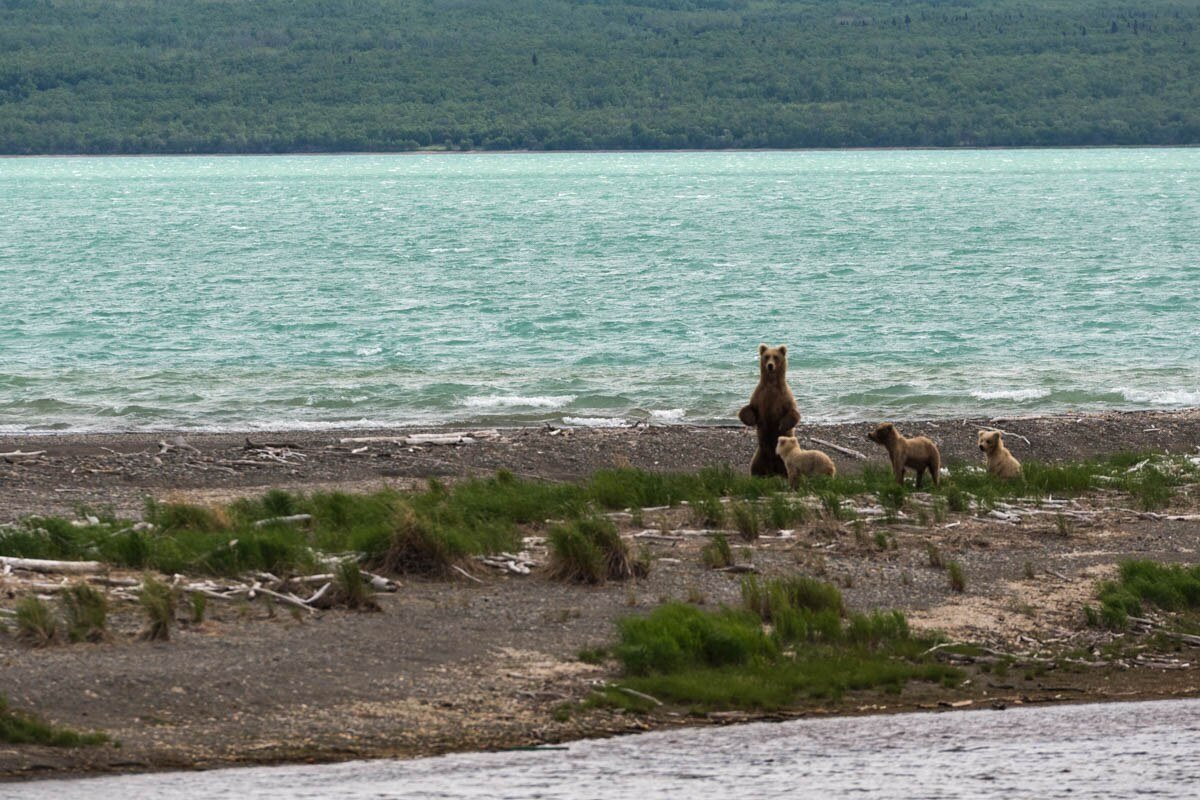
- Moose are present year-round in most Alaska communities and are genuinely dangerous. A moose can kill a human. Do not approach, do not get between a cow and her calf, and take moose-in-the-yard sightings seriously.
- The 24 hours of summer light is beautiful and deeply disruptive to sleep for most newcomers. Invest in blackout curtains before May.
- Amazon Prime still delivers to Anchorage and Fairbanks, but shipping times are longer than lower-48 experiences and some sellers don’t ship to Alaska at all. You will develop patience for this, or you will order in bulk.
- The outdoor recreation community in Alaska is exceptionally strong and welcoming to newcomers. Joining a trail running club, a ski patrol, a fishing club, or even a recreational hockey league in Anchorage or Fairbanks is one of the best ways to build a social network in your first year.
- People say they will leave after two years. Many are still there fifteen years later. Alaska has a way of becoming home that is genuinely difficult to explain and genuinely real.
Final Thoughts on Moving to Alaska
Alaska is the kind of state that tests the gap between who you think you are and who you actually are. People who believe they are adventurous and outdoorsy find out whether that self-image holds up through February in Fairbanks. People who thought they needed city amenities discover whether they were right. The state has a way of providing clarity about what actually matters to you that few environments can match.
If you’re serious about the move — if you’ve done the cost calculations, prepared for the winter, arranged your employment, and thought through the isolation — go. Alaska will meet the commitment you bring to it. It almost always does.