.jpg?width=1200)
Cost of Living in Missouri 2026: Midwest Affordability at a Major City Scale
Missouri offers one of the most compelling cost-of-living propositions of any state with major metropolitan areas — housing costs in both St. Louis and Kansas City are dramatically below those of comparable cities in coastal states, the state income tax is moderate and declining, and everyday costs reflect the Midwest’s structural advantage in food, energy, and services. For households who can source their income from Missouri’s employment base or who have location-independent income, the state provides an extraordinary combination of urban sophistication and Midwest affordability that is available in few other American states at this scale.
Housing: St. Louis’s Extraordinary Value
St. Louis is one of the most undervalued major urban real estate markets in the United States — a city with legitimate cultural institutions (the Art Museum, the Symphony, the Cardinals and Blues professional sports franchises, an excellent restaurant and bar scene), good transit infrastructure (MetroLink light rail connecting the airport, downtown, and the inner suburbs), and housing costs that are a fraction of comparable urban markets. St. Louis City proper shows median home prices of $140,000–$220,000 — among the lowest of any American city with metropolitan amenities at this level. The most desirable urban neighborhoods (the Central West End, Lafayette Square, Soulard, Tower Grove South, Shaw, Maplewood) show prices of $200,000–$400,000 for renovated single-family homes in walkable neighborhoods with excellent restaurant access.
The inner suburbs of St. Louis County provide the combination of excellent schools and suburban character that drives family demand at prices well below comparable suburban markets. Clayton, the St. Louis County seat and the most prestigious inner suburb, shows medians of $450,000–$700,000 for single-family homes — still dramatically below Boston, DC, or Bay Area equivalents with comparable school quality. University City, Kirkwood, Webster Groves, and Maplewood provide more accessible entry points at $200,000–$380,000 with good transit access and walkable commercial districts. Creve Coeur, Chesterfield, and the western St. Louis County communities provide the most space-intensive suburban environments at $300,000–$550,000.
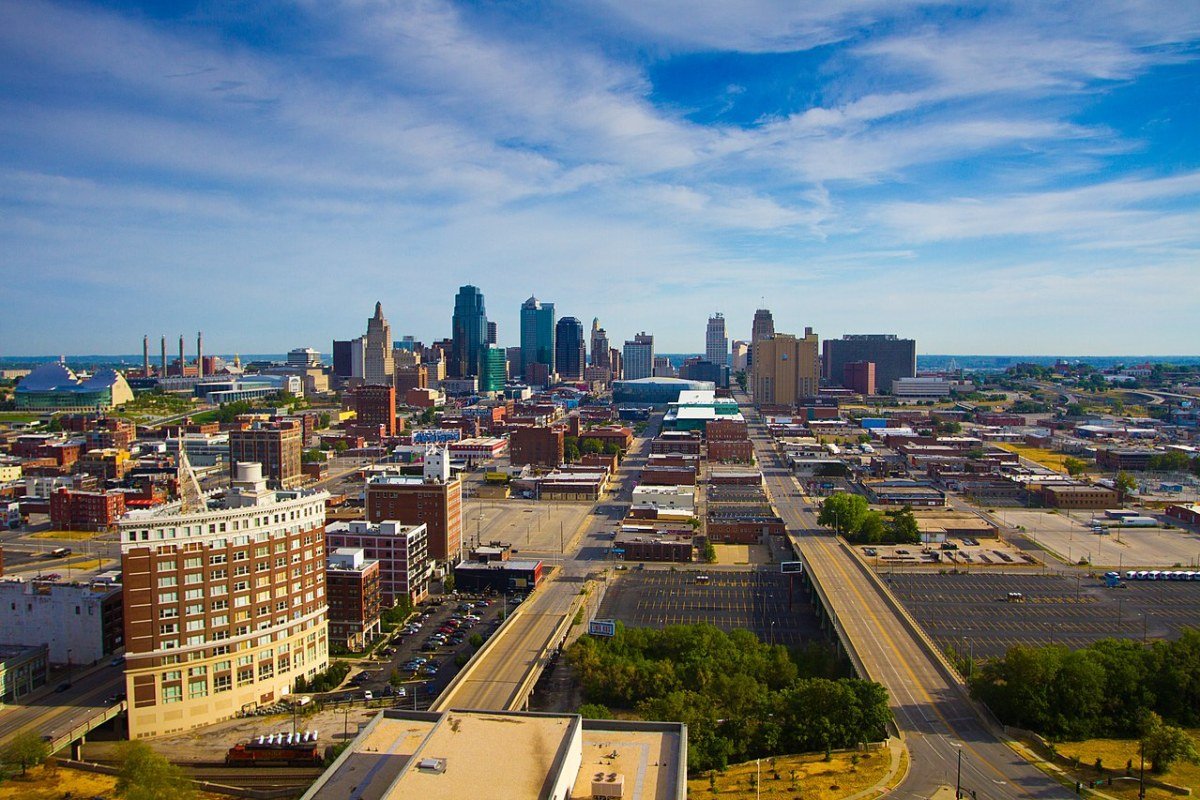
Kansas City’s housing market occupies similar territory — affordable by coastal standards, with growing premium neighborhoods reflecting the city’s cultural and economic revival of the past decade. Kansas City proper shows median prices of $180,000–$280,000 for single-family homes. The most desirable neighborhoods — the Country Club Plaza area (the first planned outdoor shopping center in America, still the city’s most prestigious commercial and residential district), Brookside, Waldo, Westport, and the Crossroads Arts District — run $250,000–$500,000. The Kansas side of the metro (Overland Park, Leawood, Shawnee) provides excellent suburban schools at $280,000–$500,000; the Missouri side’s Lee’s Summit, Lees Summit, and Blue Springs provide more affordable family housing at $220,000–$350,000.

State Income Tax
Missouri’s state income tax has been gradually reduced in recent years — the top rate has fallen from 5.4% to 4.8% and is scheduled to continue declining toward 4.5% pending revenue triggers. The graduated structure has five brackets from 1.5% to 4.8%, making Missouri’s income tax moderate by national standards and well below high-tax states like California (13.3%), New York (10.9%), and Minnesota (9.85%). Missouri’s tax reforms reflect a competitive positioning against states with no income tax; the state has balanced cuts against maintaining public services in ways that are more sustainable than some aggressive tax-cut states.
Kansas City residents are subject to a 1% city earnings tax — a city income tax that applies to residents of Kansas City, Missouri (not to Kansas side residents). St. Louis City has a similar 1% earnings tax on residents. These local taxes add to the state rate for residents of the two major cities, bringing the combined effective rate for St. Louis and Kansas City residents to approximately 5.8–6.8% — moderate by national standards but something to factor into city vs. suburb decisions for households on the margin.
Property Taxes
Missouri property taxes are below the national average — the statewide average effective rate is approximately 0.9–1.1% of market value. Applied to Missouri’s low median home values, this produces annual property tax bills that are remarkably affordable in absolute terms. A $200,000 St. Louis neighborhood home typically carries annual taxes of $1,800–$2,200; a $350,000 Kansas City suburban home runs $3,500–$4,200. Missouri provides a homestead preservation credit for owner-occupants that limits annual assessment increases, providing protection against rapid appreciation-driven tax increases. Clay County and Jackson County (Kansas City metro) and St. Louis City and County administer their own assessments with some variation in effective rates.
Everyday Costs
Missouri’s everyday costs are consistently below the national average. Grocery prices run 4–8% below national average — a reflection of the state’s agricultural production and the competitive retail environment with a mix of Schnucks (St. Louis-based regional chain), Dierbergs (premium local chain), Aldi, Walmart, and Whole Foods in the major markets. The Midwest’s agricultural production keeps meat, dairy, and produce costs lower than coastal markets. Restaurant dining in both St. Louis and Kansas City is significantly more affordable than comparable dining in major coastal cities — the barbecue institutions (Joe’s Kansas City, Arthur Bryant’s), the Soulard neighborhood bars, and the emerging restaurant scenes of the Crossroads and Maplewood provide genuine culinary quality at prices 30–50% below New York or Chicago equivalents.
Energy costs in Missouri are near the national average — the state’s coal and natural gas electricity generation produces rates of approximately 10–12 cents per kilowatt-hour, below the national average. Heating costs are significant in winter (Missouri’s winters are colder than the Deep South but milder than Minnesota), with natural gas heating averaging $800–$1,400 annually for a typical home. Air conditioning is a meaningful expense in Missouri’s hot, humid summers — June through August high temperatures regularly reach 90–100°F with high humidity in both St. Louis and Kansas City.
The Missouri Value Case
Missouri presents one of the strongest value propositions of any state east of the Mississippi for households who want urban sophistication at Midwest prices. The specific case is strongest for St. Louis: a city where a household can purchase a beautifully renovated brick home in a walkable neighborhood with excellent restaurants and transit access for $250,000–$350,000, access world-class free cultural institutions (the Art Museum, the Zoo, Forest Park), and live within an hour of Ozark wilderness — all on a budget that in Boston, New York, or San Francisco would barely cover a studio apartment’s rent. The honest counter-argument involves St. Louis’s concentrated poverty and crime (which are real and require neighborhood-specific research), the city’s declining population (which affects property value appreciation potential), and the state’s political environment (Missouri’s legislature has moved in a significantly conservative direction in recent years, which matters for households whose priorities include social policy). These factors require honest evaluation alongside the financial case — but the financial case itself is genuinely extraordinary.