


Best Places to Live in Mississippi 2026: From Oxford to the Gulf Coast
Mississippi’s best places to live are shaped by the state’s specific economic geography — the university towns that provide the state’s most diverse employment and cultural resources, the Gulf Coast communities with their beach access and casino-driven economy, and the capital region around Jackson, which provides state government employment and metropolitan-scale amenities. The state’s Delta communities, while historically significant and culturally rich, face economic and infrastructure challenges that make them realistic choices only for specific households with particular connections to the region. The best Mississippi residential choices reward careful attention to specific community character rather than state-level generalizations.
1. Oxford — Mississippi’s Cultural Capital
Oxford consistently ranks as the most desirable place to live in Mississippi — a judgment that reflects the University of Mississippi’s presence and the cultural density it generates, the quality of the Square commercial district, and the literary heritage that has made Oxford a destination for writers and readers from across the country. The Ole Miss campus provides employment for thousands of faculty, administrators, and staff; the university hospital (UMMC’s teaching facilities in Oxford) draws medical professionals; and the technology and research enterprises associated with the university have begun attracting startup activity that diversifies Oxford’s employment beyond the academic sector.
Oxford’s neighborhoods — the historic residential streets north of the Square, the newer subdivisions south and east of campus — provide housing at $220,000–$400,000 for single-family homes, with the older historic neighborhoods commanding premiums for their character and walkability. The trade-off of Oxford’s desirability is its relative isolation — the nearest major airport is in Memphis (75 miles north), and Oxford’s small-city scale means that many amenities require driving to Memphis for access. But the quality of daily life within Oxford — the bookstore, the restaurants, the music at Rowan Oak events and university performances — is genuinely remarkable for a city of 25,000.
2. Hattiesburg — The Hub City
Hattiesburg, in the pine hills of southeastern Mississippi, is the state’s most functional mid-sized city — a community of 48,000 (metropolitan area 170,000) anchored by the University of Southern Mississippi and William Carey University, with a hospital complex (Forrest General and Merit Health Wesley) that serves as the regional medical center for southeastern Mississippi, and a downtown district (called the Hub City Arts and Entertainment District) that has developed a genuine concentration of restaurants, galleries, and live music venues over the past decade. The Hub City Farmers Market, the Hattiesburg Arts Council, and the proximity to Gulf Islands National Seashore and DeSoto National Forest provide quality-of-life amenities that exceed what the city’s size would suggest.
Median home prices of $150,000–$230,000 for single-family homes make Hattiesburg the most affordable city in Mississippi with genuine metropolitan amenities. The Midtown neighborhood (the historic residential area closest to downtown), the Oak Grove area to the west, and the newer subdivisions around USM’s south campus provide diverse residential options. For households drawn to Mississippi by its affordability but who need a city with genuine hospital and university employment, Hattiesburg offers the best combination of amenity and accessibility outside of Jackson and Oxford.
3. Ocean Springs — The Gulf Coast’s Best Town
Ocean Springs, on the Mississippi Gulf Coast east of Biloxi, is the most charming and livable community on the Mississippi coast — a city of 18,000 with a walkable historic downtown of independent restaurants, galleries, and boutiques, a strong arts community centered on the Walter Anderson Museum of Art (honoring the eccentric and brilliant artist who painted the Fort Massachusetts murals and lived in Ocean Springs from 1937 to his death in 1965), and direct access to the barrier island beaches of Gulf Islands National Seashore. The Front Beach area, where old live oaks arch over the road along the Sound shoreline, provides one of the most beautiful streetscapes in Mississippi.
Ocean Springs’s housing — Craftsman bungalows and coastal cottages in the historic district, newer construction on the outskirts — runs $220,000–$380,000 for single-family homes, with waterfront and Sound-access properties reaching $400,000–$700,000. The hurricane insurance requirement (Katrina devastated the Gulf Coast in 2005, and Ocean Springs was severely affected) is a meaningful financial commitment — homeowners should budget $3,000–$5,000 annually for adequate insurance coverage. For households who can manage the insurance reality and who want the specific combination of arts culture, beach access, and small-city character that Ocean Springs provides, it represents the Gulf Coast’s finest residential option.
.jpg?width=1200)
4. Starkville — Mississippi State’s University Town
Starkville, home to Mississippi State University (the state’s largest university by enrollment), is the second of Mississippi’s two significant university towns — a smaller and less polished community than Oxford but one with genuine assets: MSU’s agricultural and engineering research enterprise creates employment for scientists, engineers, and technicians; the Dudy Noble Field baseball stadium hosts one of the most atmospheric college baseball programs in the country; and the downtown Oktibbeha County area has developed a modest restaurant and arts scene anchored by the university community. The MSU horse park and equestrian facilities, the Noxubee National Wildlife Refuge nearby, and the state’s network of civil rights sites provide outdoor and cultural context beyond campus.
Median home prices of $150,000–$220,000 make Starkville among the most affordable university towns in the United States — a genuine opportunity for households who want the intellectual and cultural environment of a university community without the premium that more nationally recognized universities command. The trade-off is Starkville’s relative isolation in northeastern Mississippi, limited healthcare specialization outside MSU’s primary care, and the smaller cultural scene relative to Oxford.
5. Tupelo — Northeast Mississippi’s Center
Tupelo, in the Tennessee Hills region of northeastern Mississippi, is the state’s third-largest city and its most economically diverse community outside of the coast — a city of 38,000 that has developed manufacturing employment (Toyota has one of its North American assembly plants here, employing thousands and anchoring a manufacturing supply chain) alongside healthcare (North Mississippi Medical Center is the largest non-metropolitan hospital in Mississippi), retail (Tupelo is the regional shopping center for northeastern Mississippi and parts of Tennessee), and tourism (the Elvis Presley Birthplace Museum marks Tupelo’s most famous native son). The city’s historic downtown, the Natchez Trace Parkway’s northern terminus near Tupelo, and the Tombigbee National Forest provide additional amenity beyond the economic base.
Median home prices of $160,000–$250,000 for Tupelo’s residential neighborhoods reflect a market driven by genuine local employment rather than university or coastal premiums. The Lyric Theatre on Broadway Street, the BancorpSouth Arena, and the Tupelo Coliseum host the entertainment and events that serve the regional population. For households with manufacturing, healthcare, or retail employment, Tupelo provides a stable, affordable, and genuinely livable community that represents Mississippi’s economic model at its most functional.
6. Biloxi — Gulf Coast Urban Center
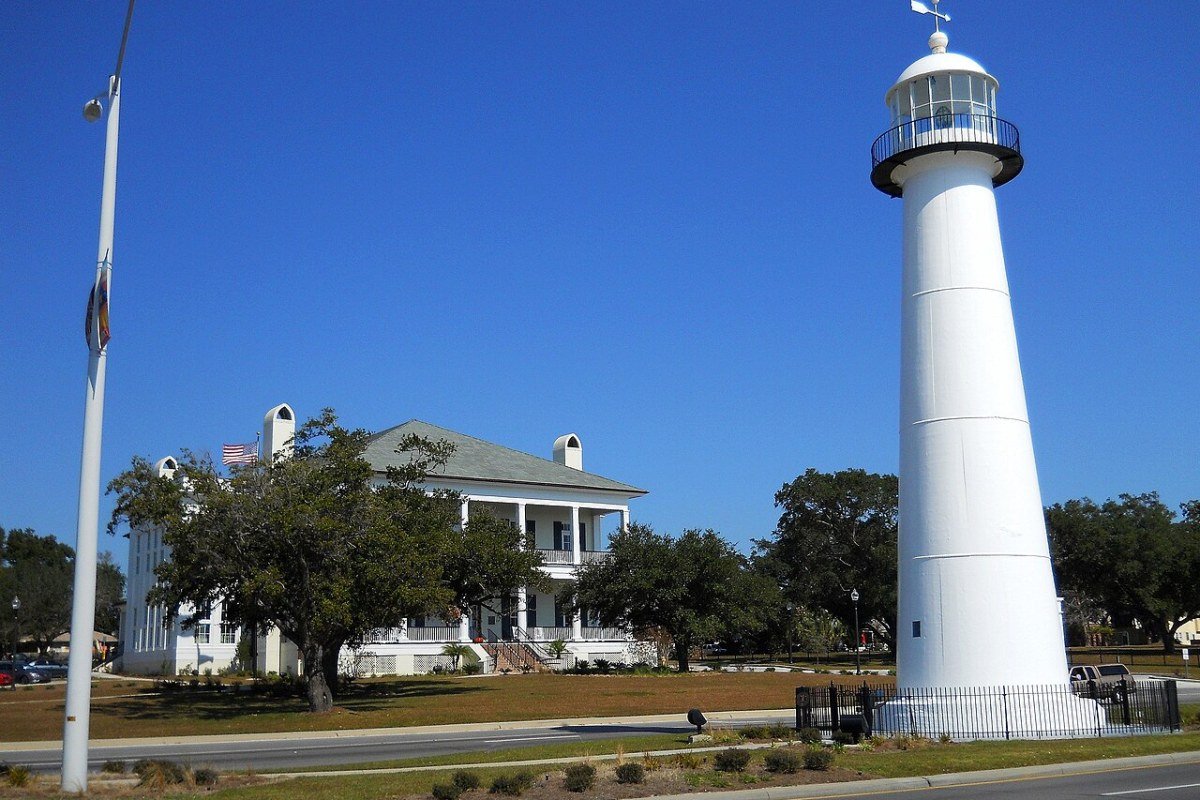
Biloxi, the Gulf Coast’s largest city with 46,000 residents, provides the most urban experience on the Mississippi coast — a city with a casino resort corridor (12 casino resorts along the Gulf coast, generating significant tax revenue and hospitality employment), a historic downtown centered on the lighthouse and the Biloxi Town Green, seafood restaurants serving the Gulf’s shrimp and oyster harvest, and Keesler Air Force Base (which provides significant military and contractor employment). The trade-off relative to Ocean Springs is scale and character — Biloxi’s casino development has made it more commercialized than its neighbor, but it provides substantially more employment and a greater range of urban services.
Median home prices of $180,000–$280,000 in Biloxi and the surrounding communities (D’Iberville, Long Beach, Gulfport) provide Gulf Coast living at prices that are dramatically below Florida’s Gulf Coast equivalents. The hurricane insurance requirement is the most significant financial reality for Biloxi homeowners, and the memory of Katrina — which destroyed a substantial portion of Biloxi’s historic building stock and generated storm surge that reached miles inland — is a genuine reminder of the coastal exposure that all Gulf Coast properties carry.