
Best Places to Live in Massachusetts 2026: From Boston’s Neighborhoods to the Pioneer Valley
Massachusetts residential choices divide between the exceptional density of options within Greater Boston — where neighborhood character varies more block-by-block than city-by-city — and the genuinely different communities of Worcester, the Pioneer Valley, and the Berkshires that offer an alternative Massachusetts experience at dramatically different price points. The state rewards residents who think carefully about what they actually need from their community rather than defaulting to the Boston neighborhoods with the most prestige, which often command premiums that don’t translate into proportionally better daily lives.
1. Cambridge — The Intellectual City
Cambridge is the most intellectually dense city in America — a 7-square-mile city of 120,000 people that houses Harvard University, MIT, and a concentration of research hospitals, technology startups, and academic institutions that has no equal in any comparably sized American city. The result is a residential environment that is simultaneously one of the most expensive in the country and one of the most intellectually stimulating — bookstores survive in Cambridge when they fail everywhere else, the concentration of languages heard on the street reflects a genuinely international academic community, and the density of serious restaurants (both cheap and expensive) reflects an educated population that eats well.
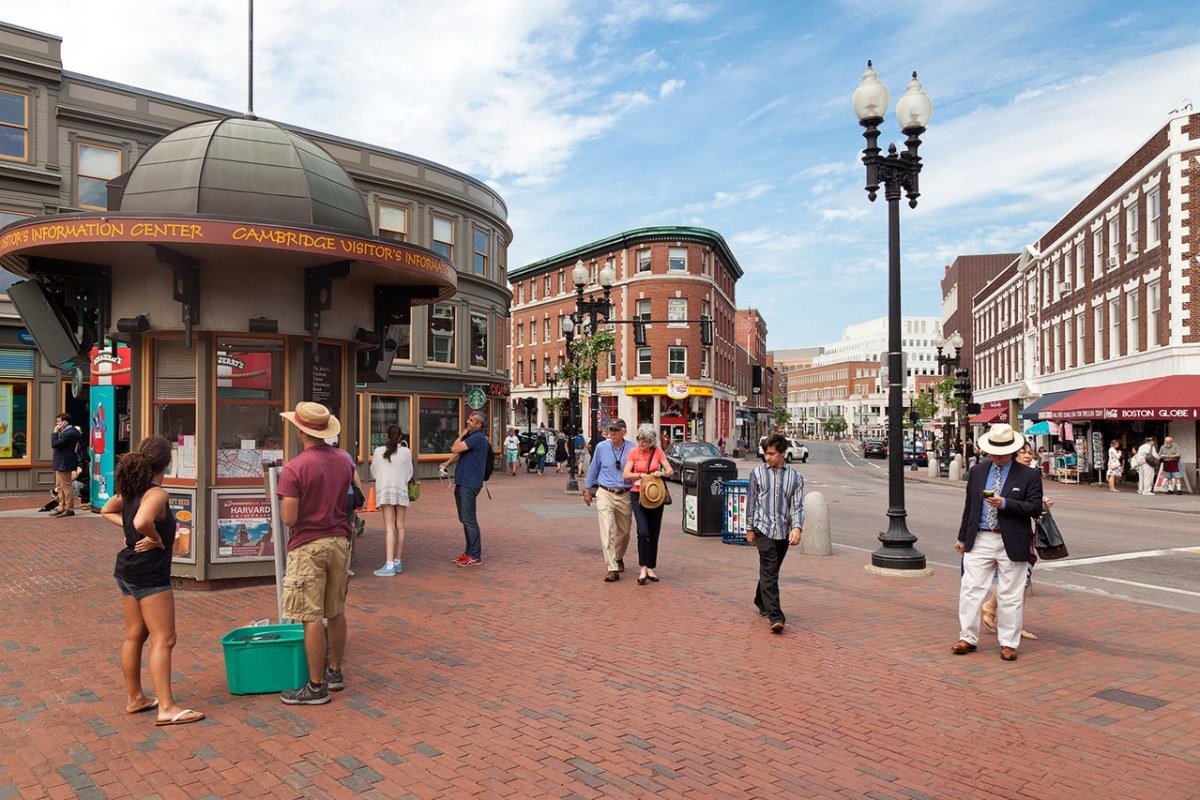
Harvard Square and the neighborhoods surrounding it — Agassiz, Cambridgeport, Inman Square — provide the most complete urban pedestrian experience in the Boston metro, with the Red Line subway providing 15-minute access to downtown Boston. Median home prices of $850,000–$1.1 million reflect the permanent demand of a community where every year’s incoming Harvard and MIT class produces a new cohort of potential long-term residents. Rents at $2,600–$3,500 for a one-bedroom are steep but comparable to other elite university cities. Cambridge is the correct choice for households whose work or academic life is centered on the Cambridge institutions and who value the specific character of a city that takes ideas seriously.
2. Somerville — Urban Value Adjacent to Cambridge
Somerville, immediately north of Cambridge and served by multiple MBTA Green and Red Line stations, has undergone the most dramatic residential transformation of any Boston-area city in the past twenty years. The arrival of the Green Line Extension (opening additional stations through Davis Square and connecting Somerville to downtown Boston via the Green Line) catalyzed appreciation that has made Somerville’s neighborhoods — Davis Square, Union Square, Ball Square, Magoun Square — among the most desirable in the metro for young professional households who want urban density, walkability, and community character at prices 10–20% below Cambridge.
Davis Square remains the neighborhood center: a commercial strip of independent restaurants, bars, music venues, and the Somerville Theatre (a beloved independent cinema) that has maintained its neighborhood character through the appreciation cycle. Home prices of $700,000–$950,000 and rents of $2,400–$3,200 for one-bedrooms reflect the transit premium and neighborhood quality. Somerville’s “Winter Hill” and “Prospect Hill” neighborhoods provide slightly more accessible entry points at $600,000–$800,000 for condominiums. For households priced out of Cambridge who want similar urban density and transit access, Somerville is the natural alternative.
3. Brookline — The Exceptional School District
Brookline is an independent municipality completely surrounded by Boston — a geographic quirk that gives it Boston-adjacency without Boston’s school system. Brookline Public Schools is consistently ranked among the top five public school districts in Massachusetts, making it one of the most sought-after suburban school districts on the East Coast. The combination of excellent schools, walkable commercial neighborhoods (Coolidge Corner is one of the finest walkable neighborhood commercial districts in Greater Boston), and Green Line access to downtown Boston creates demand that pushes median home prices to $1.1 million–$1.5 million for single-family homes and $700,000–$950,000 for condominiums.
Coolidge Corner itself — a neighborhood centered on the intersection of Harvard Street and Beacon Street, anchored by the Coolidge Corner Theatre (a beloved independent cinema showing art films and hosting events) and lined with independent restaurants, a bookstore, and specialty retail — provides the walkable urban-village environment that many families want without the noise and density of Boston proper. Brookline is the correct choice for families with school-age children who want urban walkability and excellent public education, and who have household incomes sufficient to afford the premium.

4. Newton — The Family Suburb
Newton is the prototypical Boston inner suburb — a collection of 13 distinct villages (Newton Centre, Newton Highlands, Chestnut Hill, Newtonville, and others) unified by exceptional schools, safe streets, and Green Line and commuter rail access to Boston. Newton Public Schools is regularly ranked among the finest large suburban school districts in New England, and the Newton North and Newton South high schools feed graduates into the country’s most selective universities at rates that rival much smaller private schools. Median home prices of $900,000–$1.3 million for single-family homes reflect the school premium more than any other single factor.
Newton’s village structure creates distinct neighborhood characters within a single city: Newton Centre has the most walkable commercial district; Chestnut Hill has the most upscale retail (the Chestnut Hill Mall and its surrounding independent shops); Newtonville and Auburndale are slightly more affordable while maintaining Newton school access. For families with children who are Boston-employed and want the most academically oriented public school system in the metro, Newton justifies its premium. For households without children, the premium may not translate into proportional quality-of-life improvements relative to closer-in alternatives.
5. Salem — Historic Character with MBTA Access
Salem, 16 miles north of Boston on the Rockport commuter rail line (approximately 30 minutes to North Station), has evolved from a city known primarily for its 1692 witch trials (and the enormous Halloween tourism those trials generate every October) into one of the most livable mid-sized cities on the North Shore. The downtown historical district — Federal-era architecture, the Peabody Essex Museum (one of the finest maritime art collections in the country), Derby Wharf, and the pedestrian commercial district of Essex Street — provides an authentic New England historic character that newer suburban development cannot replicate.
Median home prices of $450,000–$600,000 for single-family homes and $320,000–$480,000 for condominiums represent a dramatic value relative to the inner suburbs, with the trade-off of the commuter rail commute rather than subway access to Boston. Salem’s growing restaurant scene, its independent bookstores and specialty retail, the Derby Street Shops, and the waterfront character of the Willows neighborhood create a community with genuine urban quality at outer-suburb prices. For Boston-commuting households who prioritize historic character, walkability, and lower housing costs over inner-suburb transit convenience, Salem is among the best values on the North Shore.
6. Northampton — The Pioneer Valley Alternative
Northampton, in the Pioneer Valley of western Massachusetts approximately 90 miles west of Boston, represents the most compelling non-Boston residential option in Massachusetts for households whose employment is remote or Pioneer Valley-based. A small city of 30,000 anchored by Smith College (one of the nation’s most prestigious women’s colleges) and served by the Five College Consortium (Amherst, Hampshire, Mount Holyoke, and UMass Amherst within a 20-mile radius), Northampton has developed a cultural density — independent bookstores, live music, restaurants, galleries, and the Calvin Theatre’s performance calendar — that rivals cities many times its size.
Northampton’s Main Street commercial district is one of the best small-city downtowns in New England: walkable, independent, with a diversity of restaurants (Japanese, Vietnamese, Ethiopian, Italian, Mexican) that reflects the academic community’s cosmopolitan character. Median home prices of $350,000–$500,000 are dramatically below Greater Boston while offering genuine Massachusetts quality of life — the Connecticut River Valley’s agricultural land, the Holyoke Range trails, the Tanglewood music festival in the Berkshires a short drive west, and the Pioneer Valley’s own summer arts calendar. For remote workers, retirees, or academics whose employment is within the Five College Consortium, Northampton offers the best quality-of-life-to-cost ratio of any Massachusetts community.
7. Worcester — Emerging Urban Value
Worcester, Massachusetts’s second-largest city with 200,000 residents and a growing downtown anchored by Holy Cross, Clark University, and WPI (Worcester Polytechnic Institute), is the most underrated residential option in the state for young professionals and households priced out of Greater Boston. The city’s downtown revitalization — the Polar Park baseball stadium (home of the Red Sox Triple-A affiliate), the expanded DCU Center convention and events complex, a growing restaurant and bar scene along Main Street — has created urban momentum that was absent a decade ago. Median home prices of $280,000–$380,000 and rents of $1,400–$1,800 for one-bedrooms represent the most affordable urban housing in any Massachusetts city with genuine amenities.
Worcester is served by the MBTA commuter rail (approximately 75 minutes to Boston’s South Station) and Interstate 290/90, making Boston employment possible for households willing to tolerate the commute. More practically, Worcester’s own employment base — the university medical centers, the WPI technology ecosystem, and the manufacturing employers of the central Massachusetts region — provides a local labor market that doesn’t require Boston commuting. For households who want Massachusetts living — New England character, excellent healthcare access, proximity to Boston-caliber cultural institutions — without the Boston premium, Worcester is the correct answer.