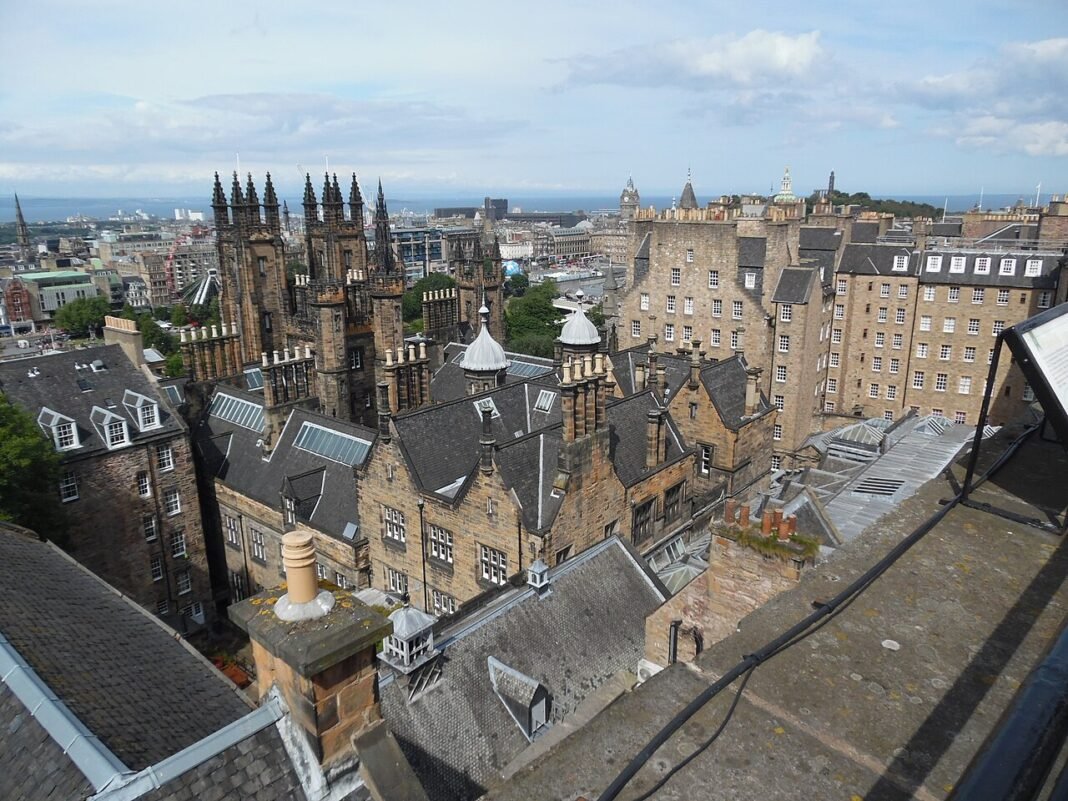
Scotland offers one of the most compelling financial propositions in the United Kingdom — lower housing costs than England’s major cities (Edinburgh and Glasgow are far cheaper than London and broadly comparable to Manchester), the same NHS healthcare entitlement, and the unique benefit of free university tuition for Scottish-domiciled students at Scottish universities, a provision that carries real weight for families with children approaching university age. The country’s overall cost of living tracks closely with the north of England — Edinburgh’s housing prices are the highest in Scotland yet still sit well below London, while Glasgow and the Highland towns deliver some of the UK’s most affordable professional living. Understanding Scotland’s cost structure means grasping both the UK framework it sits within (same tax system, same NHS, same national minimum wage) and the Scotland-specific policies that set it apart from the rest of the UK.
Housing in Scotland
Scotland‘s housing market works differently from England’s in several ways — the conveyancing process (property purchase uses a Scottish solicitor system with sealed-bid procedures for sought-after homes), the tenure landscape (Scotland has proportionally more social rented housing than England), and the price levels (average house prices sit well under England’s).
- Edinburgh: Scotland’s most expensive city. A one-bedroom flat in the city centre or New Town rents for £1,200–£1,800/month; in the western suburbs (Morningside, Bruntsfield) £1,000–£1,500/month. Buying: a one-bedroom flat in the New Town or Marchmont costs £200,000–£350,000; a two-bedroom £300,000–£500,000; a family terraced house in Stockbridge or Morningside £450,000–£750,000. The city’s tech, finance, and tourism employment base keeps pushing prices upward
- Glasgow: Scotland’s largest city is far cheaper. City centre one-bedroom flats rent for £900–£1,300/month; buying starts at £100,000–£160,000 for a one-bedroom. The West End (Hillhead, Partick) is Glasgow’s most desirable area (Victorian tenement flats, Byres Road, proximity to the university) and carries premiums above these averages; the East End (including the Commonwealth Games legacy areas) is cheaper and regenerating quickly
- Aberdeen: Scotland’s oil and gas capital. Rental costs trail only Edinburgh: one-bedroom city centre flats £900–£1,400/month. The oil-industry mark-up has eased since the 2015 price falls, but Aberdeen remains Scotland’s third dearest city for housing
- Highland towns: Inverness (one-bedroom flats £700–£1,000/month), Aviemore (limited stock, expensive in proportion to size), Fort William (very limited private rental market). Rural Highland housing is far cheaper to buy than urban Scotland, but the private rental market in most communities is very thin

Scotland-Specific Financial Benefits
- Free university tuition: Scottish-domiciled students at Scottish universities pay no tuition fees; the Scottish Government covers the cost through the Student Awards Agency for Scotland (SAAS). This applies to first degrees; postgraduate funding is more limited. EU students in the pre-2021 cohort also benefited; new EU arrivals after 2021 pay the international rate. For families with children, the saving is real relative to England (where the tuition cap rose to £9,535/year for 2025/26) — potentially £28,600 or more per child over a three-year degree
- Free personal care: Scotland provides free personal care (home help, day care, residential care) to all adults over 65 regardless of assets, a policy not matched in England. For families approaching retirement or caring for elderly relatives, that changes the long-term cost picture
- NHS prescriptions: Prescriptions are free in Scotland (charges were abolished in 2011); in England, the prescription charge is £9.90/item for 2025/26. Regular prescription users save meaningfully from Scottish residency
- Real Living Wage commitment: The Scottish Government requires public sector employers and accredited Real Living Wage employers to pay at least the Living Wage Foundation’s rate of £13.45/hour (2025/26), above the UK National Living Wage of £12.71/hour from April 2026
Groceries, Food, and Everyday Costs
- Supermarket prices: Scotland’s supermarket prices broadly match England’s; the same chains (Tesco, Sainsbury’s, ASDA, Morrisons, Lidl, Aldi) operate at comparable price points. Island communities (the Western Isles, Orkney, Shetland) face ferry transport mark-ups on grocery prices; the Scottish Government’s Island Communities Act 2018 aims to address supply-chain cost disparities, but the gap remains
- Eating and drinking: A pub meal in Scotland runs £12–£18; fish suppers (the Scottish version of fish and chips) £8–£14. Glasgow and Edinburgh’s restaurant scenes hold their own against English equivalents at lower price points; Edinburgh’s New Town restaurants are the dearest, comparable to central London
- Scotch whisky: Distillery visits with tasting typically cost £20–£60 per person; bottles at the distillery shop often come in below retail. The Speyside, Highland, Islay, and Campbeltown regions each have distinct styles; a whisky route taking in 5–10 distilleries on the Malt Whisky Trail is one of Scotland’s signature experiences
Employment in Scotland
- Scottish Government and NHS Scotland: Public sector employment anchors the major cities. NHS Scotland recruits continuously for nurses, doctors, and allied health professionals; the Scottish Government and its agencies (Historic Environment Scotland, NatureScot, Transport Scotland) provide much of Edinburgh’s public administration work
- Energy sector: Aberdeen is Europe’s offshore oil and gas capital; the shift to renewables has added jobs in offshore wind, tidal energy, and hydrogen. The Scottish energy sector employs roughly 100,000 people
- Technology and financial services: Edinburgh hosts a major financial services cluster (Aberdeen Group — formerly Standard Life Aberdeen — Baillie Gifford, and Lloyds Banking Group’s Edinburgh offices); Glasgow’s tech sector is expanding quickly, with CodeBase, one of the UK’s largest tech accelerators, based in the city
- Tourism: Scotland’s tourism industry (around 15 million domestic and international visitors a year) supports roughly 200,000 jobs in hospitality, guiding, transport, and accommodation; work is seasonal in many Highland and island locations
Budgeting Practically for Scotland
Knowing Scotland’s headline costs is the foundation — the next step is working out which are fixed and which you can shape around your own life. Housing is the largest variable in almost every budget, and the right neighbourhood within Scotland can produce dramatically different monthly outgoings while keeping you close to the places and amenities you care about. Utilities, transport, and food costs compound over time, so even small monthly differences add up over a year. Scotland’s advantage against high-cost cities such as London, Dublin, or Manchester is real and measurable, and many people who relocate find their finances ease alongside a better quality of life. Treat these figures as a starting framework and check current rental and property prices for your specific target area, since local markets can move faster than annual cost-of-living studies can capture.
Frequently Asked Questions
Is Glasgow more affordable than Edinburgh?
Yes, by a wide margin — Glasgow is one of the UK’s best-value major cities. City centre 1-bedroom flats rent for £900–£1,300/month and cost £100,000–£160,000 to buy. Edinburgh is Scotland’s most expensive city: 1-bedroom flats rent for £1,200–£1,800/month and cost £200,000–£350,000 to buy; a family terraced house in Stockbridge or Morningside runs £450,000–£750,000. The Glasgow West End (Victorian sandstone tenements, Byres Road, proximity to the university) is the city’s most desirable area and commands premiums above the averages — but even there, Glasgow’s cost-to-quality ratio beats Edinburgh comfortably. Aberdeen’s housing (1BR rent £900–£1,400/month) reflects the residual oil-industry mark-up.
Does Scotland have free university tuition?
Yes — Scottish-domiciled students at Scottish universities pay no tuition fees. The Scottish Government covers the cost through SAAS (Student Awards Agency for Scotland). For families with children approaching university age, this is one of Scotland’s clearest financial advantages over England, where the tuition cap rose to £9,535/year for 2025/26. Over a three-year degree, Scottish residency can save roughly £28,600 per child. EU students arriving after 2021 pay the international rate; UK students from England, Wales, and Northern Ireland studying in Scotland are charged separate fees.
What other financial benefits does Scotland provide over England?
Three stand out: (1) Free prescriptions — Scotland abolished prescription charges in 2011, while each item in England costs £9.90 for 2025/26, a useful saving for households with regular medications. (2) Free personal care — Scotland provides free personal care for all adults over 65 regardless of assets, which England does not, easing the cost burden for families approaching retirement. (3) Real Living Wage — the Scottish Government requires public sector employers to pay the Living Wage Foundation rate of £13.45/hour (2025/26), above the UK National Living Wage of £12.71/hour from April 2026, which helps lower-income workers most.
What is Scotland’s employment base outside the public sector?
Three private sector clusters define the economy. Edinburgh’s financial services sector (Aberdeen Group, formerly Standard Life Aberdeen; Baillie Gifford; Lloyds Banking Group) is one of Europe’s most important fund management and insurance centres. Aberdeen is Europe’s offshore oil and gas capital, now pivoting toward offshore wind and renewables — the Scottish energy sector employs roughly 100,000 people. Glasgow’s technology sector is growing fast, with CodeBase, one of the UK’s largest tech accelerators, based in the city; both Glasgow and Edinburgh draw software development and fintech operations. Scotland’s tourism industry (around 15 million visitors a year) supports roughly 200,000 jobs in hospitality, guiding, and accommodation.
Is Edinburgh or Glasgow better value for a professional?
Glasgow offers the stronger cost-to-quality ratio for most professionals. Housing runs 30–40% below Edinburgh, while access to cultural infrastructure (the Kelvingrove Art Gallery, the Burrell Collection, the OVO Hydro venue, and the West End restaurant and bar scene) holds up against Edinburgh. Edinburgh commands a premium for its Old Town and New Town heritage, the Festival, and its status as Scotland’s capital — but for professionals working in Glasgow or willing to commute, the financial case for Glasgow is clear. For those tied to Scottish Government, law, or financial services roles centred in Edinburgh, the capital’s higher costs are offset by the concentration of those career opportunities.