Tennessee’s outdoor recreation is anchored by the most visited national park in the United States and extended through a trail and river network that makes the state one of the finest outdoor destinations in the American Southeast. The Great Smoky Mountains’ 800 miles of trails, the Ocoee River’s Olympic-level whitewater, the Big South Fork National River and Recreation Area, Fall Creek Falls State Park (home to the highest plunge waterfall east of the Rocky Mountains), and the Natchez Trace Parkway‘s 444-mile historic corridor together reward residents from any corner of the state with outdoor experiences few states can match. Tennessee is a premier paddling state — the Tennessee River system, the Ocoee, the Hiwassee, the Nolichucky, and dozens of smaller streams cover everything from flatwater family paddling to Class V expert whitewater. The state’s 56 state parks cover terrain from the Appalachian highlands to the Mississippi Delta bottomlands.
Great Smoky Mountains: America’s Most Visited National Park
With 800 miles of maintained trails across 520,000 acres, the Smokies hold hiking options for every ability level. The park’s biodiversity is remarkable — more tree species than in all of northern Europe, over 1,500 species of flowering plants, and the famous synchronous firefly (Photinus carolinus) display in late May and June that draws lottery-controlled crowds to Elkmont Campground. Key trails include the Alum Cave Trail (4.4 miles RT, most photogenic hike in the park), the Chimney Tops (3.5 miles RT, a steep climb to an observation point with views of Mount LeConte and the Chimneys pinnacles; the rock summit itself has been closed since the 2016 wildfire), and the Appalachian Trail (71 miles through the park’s ridgeline, requiring backcountry permits and shelter reservations). Cades Cove, a preserved valley of 19th-century homesteads reached on an 11-mile loop road, delivers the best wildlife viewing in the park — white-tailed deer, black bears, wild turkeys, and coyotes are regularly seen. Park entry is free but timed entry reservations are required for Cades Cove in peak season.
Ocoee River: Olympic Whitewater
The Ocoee River in the Cherokee National Forest near Ducktown in eastern Tennessee is the most run commercial whitewater river in North America — and for good reason. The Upper Ocoee section, site of the 1996 Atlanta Olympics whitewater slalom events, runs consistent Class III–IV rapids through a steep mountain gorge. Multiple outfitters (Nantahala Outdoor Center, Ocoee Outdoors, Cherokee Adventures) guide half-day and full-day trips open to first-time paddlers without sacrificing the thrill. The Middle Ocoee is slightly less demanding and equally scenic. The Hiwassee River just to the south offers a gentler flatwater and Class I–II run ideal for families and wildlife viewing — great blue herons, river otters, and bald eagles are regularly encountered.
Fall Creek Falls State Park
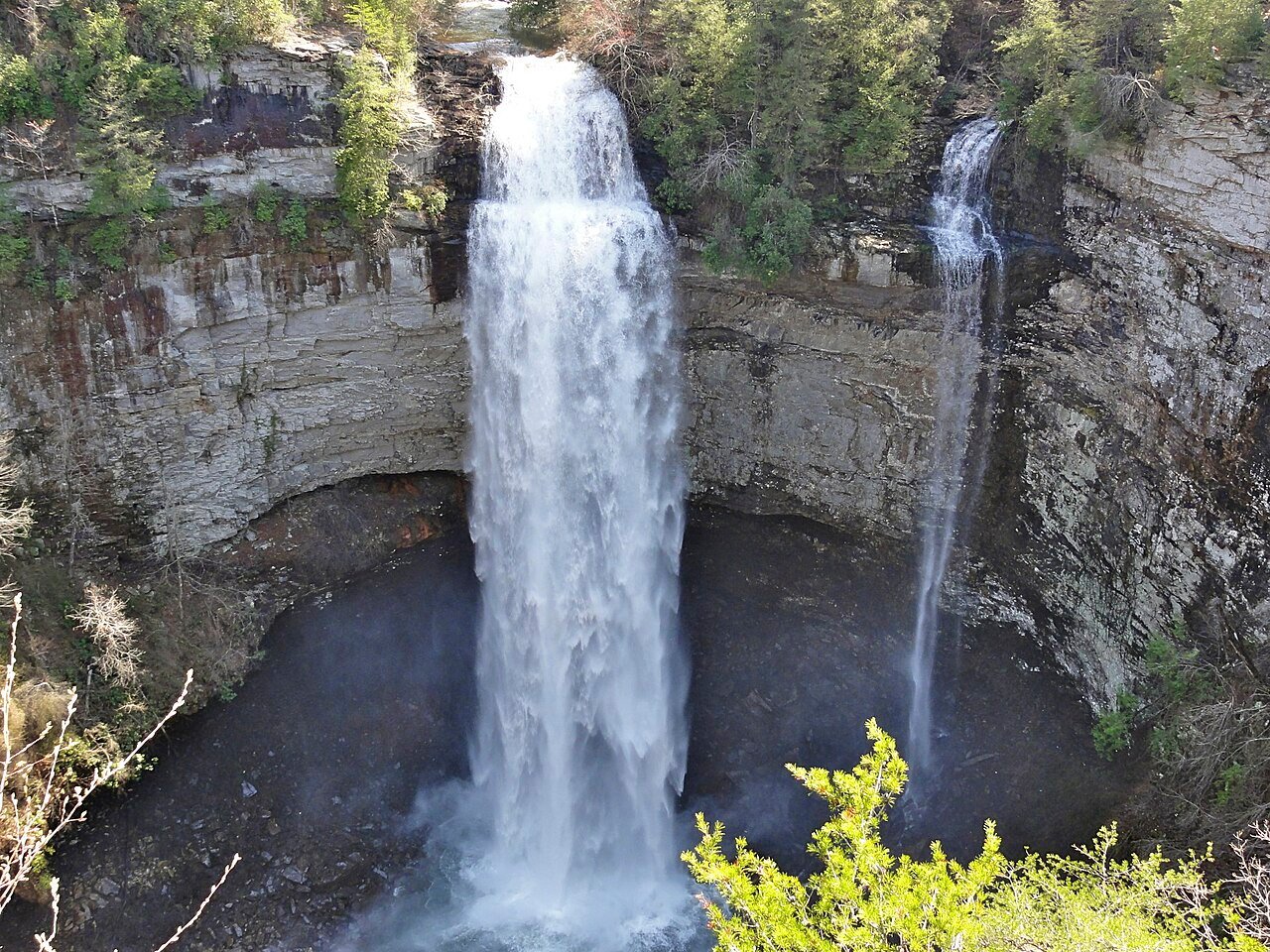
Fall Creek Falls State Park on Tennessee’s Cumberland Plateau is the state’s flagship park — 20,000 acres centered on Fall Creek Falls (256 feet, the highest plunge waterfall east of the Rocky Mountains), with four additional major waterfalls (Cane Creek Falls, Piney Creek Falls, Rockhouse Creek Falls), 34 miles of hiking trails, mountain biking trails, fishing lakes, a golf course, and cabin and camping accommodations. The loop trail connecting all major waterfalls (approximately 5 miles) is the finest single day hike on the Cumberland Plateau. The park’s 1960s-era inn and restaurant have been renovated to modern standards. Fall Creek Falls is at its most powerful after significant rainfall, when the volume over the main drop turns genuinely dramatic.
Big South Fork National River and Recreation Area
The Big South Fork of the Cumberland River carves a gorge of extraordinary depth through the northern Cumberland Plateau near Oneida — a protected area of 125,000 acres managed by the National Park Service. The Angel Falls Rapid section of the river delivers Class III–IV kayaking and rafting; the gorge rim trails open onto the plateau’s geology (natural arches, rock shelters, potholes) that rivals anything in the better-known canyon lands. Drawing a fraction of the Smokies’ crowds, the NRRA holds onto a sense of wildness rare in the eastern United States. Equestrian trails (150+ miles) are particularly well-developed, and horseback riding is permitted throughout the recreation area.
Natchez Trace Parkway
The Natchez Trace Parkway — a 444-mile National Park Service parkway running from Nashville to Natchez, Mississippi — follows the historic trail used by Native Americans, European traders, and early American settlers through the Tennessee, Alabama, and Mississippi countryside. The parkway is designated bicycle-friendly, with no commercial vehicles permitted and 50 mph maximum speeds that make cycling the route realistic for experienced riders. The Tennessee sections (Nashville to the Alabama border, approximately 100 miles) pass through rolling woodland, historic sites (including the gravesites of Meriwether Lewis and General John Coffee), and remarkable tupelo gum swamp corridors. Fall foliage along the parkway from mid-October to early November is among the finest in the southeastern United States.
Caving: Tennessee’s Underground World
Tennessee contains more than 10,000 recorded caves — the highest density of any state in the country — a consequence of the limestone karst geology of the Cumberland Plateau and Central Basin. Cumberland Caverns near McMinnville is the longest show cave in Tennessee, with the Volcano Room — a massive chamber that has hosted underground concerts. Ruby Falls in Chattanooga (a 145-foot underground waterfall deep within Lookout Mountain) is the most dramatic single underground feature in the state. Mammoth Cave is just across the Kentucky border and pairs easily with a Tennessee trip. For experienced cavers, the Wild Cave Tour at Cumberland Caverns opens up undeveloped passages of the cave system in a true adventure setting.
Planning Your Outdoor Adventure
The outdoor experiences described in this guide reward practical preparation. For wilderness and protected areas, check trail conditions, permit requirements, and seasonal access with the relevant land management authority before departure — trail closures, fire restrictions, and entry quotas can change quickly, and many high-demand parks now require advance reservations that were not needed in previous years. Weather in Tennessee can change rapidly, particularly in mountain terrain and during shoulder seasons; a layered approach with a waterproof outer shell is advisable for most outdoor pursuits regardless of the season. For water-based activities — paddling, rafting, tubing — check current conditions with local outfitters who will have the most accurate and up-to-date information. Leave No Trace principles apply throughout: pack out everything you bring in, stay on established trails, give wildlife space, and leave natural features undisturbed for the next visitor.
Frequently Asked Questions
What does the Great Smoky Mountains offer beyond the most-visited national park designation?
The Great Smoky Mountains National Park holds 800 miles of maintained trails across 520,000 acres — the most trail-dense national park in the eastern United States. The park’s biodiversity is exceptional: more tree species than in all of northern Europe, 1,500+ species of flowering plants, and the synchronous firefly (Photinus carolinus), which produces coordinated light flashes only in the Smokies in late May and June, requiring lottery permits for Elkmont Campground access. Key trails include the Alum Cave Trail (4.4 miles round trip, the park’s most photogenic hike), the Chimney Tops (3.5 miles round trip, a steep climb to an observation point; the rock summit has been closed since the 2016 wildfire), and the backcountry Appalachian Trail (71 miles through the park’s ridgeline). Cades Cove, reached on an 11-mile loop road, offers the best wildlife viewing — white-tailed deer, black bears, wild turkeys, and coyotes are regularly seen. Entry is free.
What makes the Ocoee River the most run commercial whitewater in North America?
The Ocoee River in the Cherokee National Forest near Ducktown is the most commercially run whitewater river in North America — and was selected as the site of the 1996 Atlanta Olympics whitewater slalom events, a designation that validated its Class III–IV character internationally. The Upper Ocoee section runs 4 miles of consistent rapids through a dramatic mountain gorge, with multiple outfitters (Nantahala Outdoor Center, Ocoee Outdoors, Cherokee Adventures) operating guided half-day and full-day trips open to first-time paddlers while still challenging experienced boaters. The Middle Ocoee is slightly less demanding but equally scenic. The adjacent Hiwassee River runs a gentler Class I–II stretch ideal for families and wildlife viewing — great blue herons, river otters, and bald eagles are regularly encountered. Both rivers are within an hour of Chattanooga, making Tennessee’s southeastern corner one of the most concentrated whitewater destinations in the South.
What makes Fall Creek Falls the premier state park experience in Tennessee?
Fall Creek Falls State Park on Tennessee’s Cumberland Plateau is the state’s flagship park — 20,000 acres centered on Fall Creek Falls at 256 feet, the highest plunge waterfall east of the Rocky Mountains. The park also includes four additional major waterfalls (Cane Creek Falls, Piney Creek Falls, Rockhouse Creek Falls, and Cane Creek Cascades), 34 miles of hiking trails, mountain biking trails, fishing lakes, and accommodations ranging from the renovated inn and restaurant to camping. The loop trail connecting the major waterfalls (approximately 5 miles) is the finest single day hike on the Cumberland Plateau. The falls are most spectacular after significant rainfall when the volume creates a genuinely dramatic display. The park’s combination of geological spectacle, comprehensive accommodation, and accessibility from Nashville (approximately 2 hours) makes it the state’s most versatile and most-attended overnight park destination.
What does Big South Fork National River and Recreation Area offer for outdoor visitors?
The Big South Fork of the Cumberland River carves a gorge of extraordinary depth through the northern Cumberland Plateau near Oneida — a protected area of 125,000 acres managed by the National Park Service. The Angel Falls Rapid section of the river offers Class III–IV kayaking and rafting by guided trip. The gorge rim trails open onto geological features — natural arches, rock shelters, potholes — that rival the better-known canyon lands of the American West in quality while drawing a fraction of the visitation. Far quieter than the Smokies, the recreation area holds onto a sense of wildness rare in the eastern United States. More than 150 miles of equestrian trails are particularly well-developed — horseback riding through the gorge country is one of the most distinctive outdoor experiences available in Tennessee.
What makes Tennessee the most cave-rich state in the United States?
Tennessee contains more than 10,000 recorded caves — the highest density of any state in the country — a consequence of the extensive limestone karst geology of the Cumberland Plateau and the Central Basin. Cumberland Caverns near McMinnville is the longest show cave in Tennessee, with the Volcano Room — a massive chamber that has hosted underground concerts — accessible via guided tours that include Wild Cave adventure options for experienced cavers. Ruby Falls in Chattanooga — a 145-foot underground waterfall deep within Lookout Mountain — is the most dramatic single underground feature in the state, open to any visitor. Raccoon Mountain Caverns, near Chattanooga, is another public cave option. The karst landscape that creates Tennessee’s caves also produces the springs, sinking streams, and natural bridges of the plateau that define its above-ground outdoor character.