The United States National Park System is one of the great achievements of American civilization — an idea so good that it has been replicated by countries around the world. Theodore Roosevelt called it “the best idea America ever had,” and after a century of experience, that assessment holds up. Sixty-three national parks protect over 52 million acres of wilderness, geological wonder, historical significance, and wildlife habitat. From the tropical reefs of Biscayne to the arctic solitude of Gates of the Arctic, from Yellowstone’s geysers to the ancient sequoias of California, the range is genuinely staggering. Here’s how to approach the system, which parks to prioritize, and how to visit without the frustrations that have come with the surge in park popularity.
The America the Beautiful Pass: Always Worth It
If you’re planning to visit two or more national parks in a 12-month period, buy the America the Beautiful Annual Pass ($80). It provides unlimited entry to all 63 national parks, national monuments, national forests, Bureau of Land Management sites, and other federal recreation areas. The pass covers the entire vehicle (up to four adults in a passenger car), making it extraordinary value — the Grand Canyon entrance fee alone is $35 per vehicle. Passes are available at any park entrance, online at recreation.gov, or by calling 888-275-8747.
The Iconic Parks: America’s Greatest Hits
Great Smoky Mountains (Tennessee and North Carolina)
America’s most visited national park — and the only one with no entrance fee — is often underestimated precisely because of its accessibility and popularity. But the Smokies are genuinely extraordinary: 800+ miles of hiking trails through ancient Appalachian forest, black bears in the meadows, synchronized firefly events in June (the only place in North America where fireflies synchronize their flashing), and fall foliage that is among the most spectacular in the world. Clingmans Dome, the highest point in the park at 6,643 feet, has 360-degree views on clear days. The Cades Cove loop road is one of the best wildlife drives anywhere in the Eastern US.
Grand Canyon (Arizona)
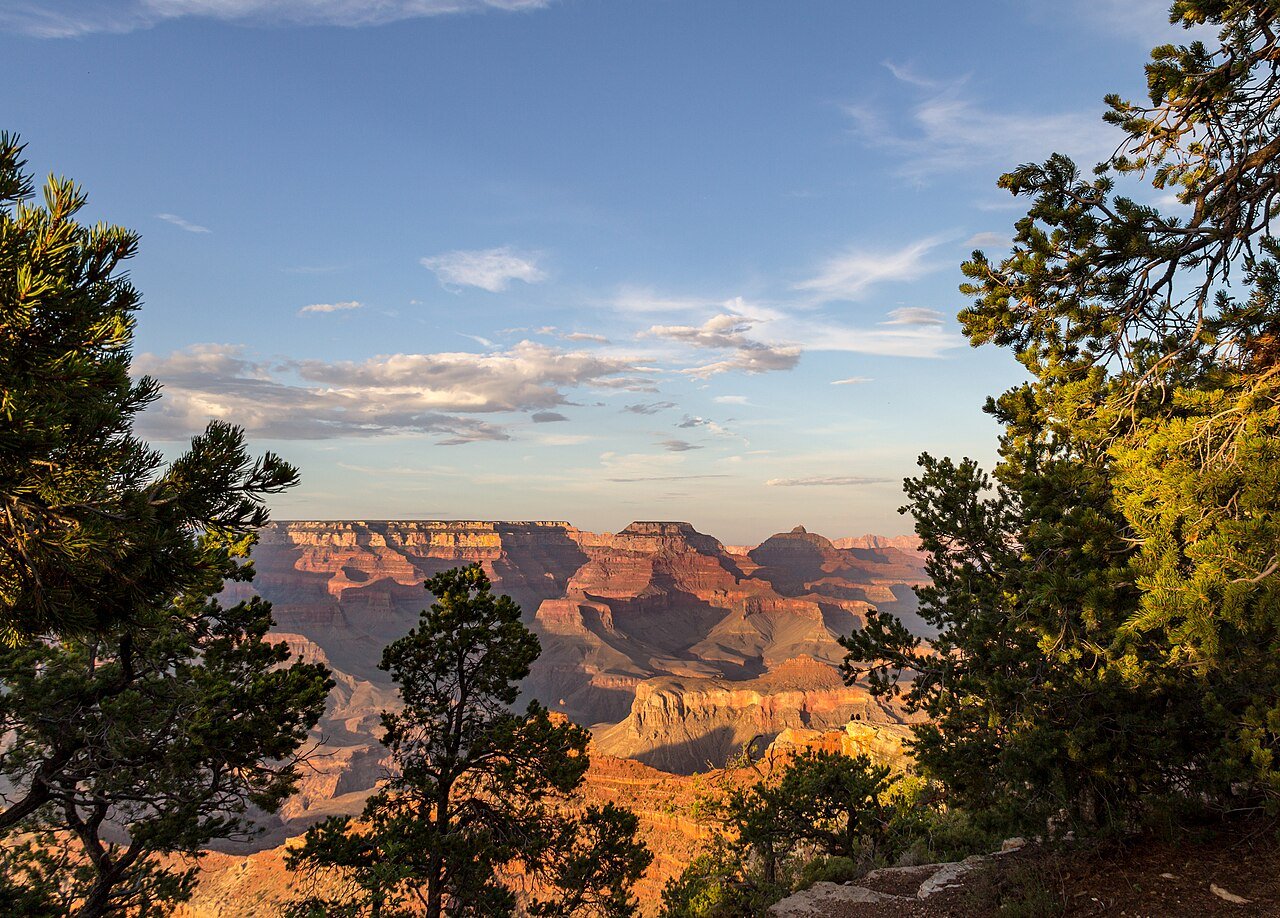
The Grand Canyon doesn’t become less impressive the more you learn about it — it becomes more so. The numbers alone are staggering: 277 miles long, up to 18 miles wide, over a mile deep. The South Rim is open year-round and has the most visitor infrastructure. The North Rim is open mid-May to mid-October, is quieter, less accessible, and arguably more beautiful. To truly understand the canyon, hike below the rim — even a mile down the Bright Angel Trail transforms your perspective entirely, as you descend through 1.7 billion years of geological history laid out in horizontal bands of rock. Rim-to-river-to-rim requires a multi-day permit and advance planning; reserve through recreation.gov in January for the following year.
Yellowstone (Wyoming, Montana, and Idaho)
Yellowstone is the world’s first national park (established 1872) and still one of the most remarkable places on earth. The geothermal features are the obvious draw — Old Faithful erupts predictably every 90 minutes or so, but the Grand Prismatic Spring (with its vivid concentric rings of color produced by heat-loving bacteria) is arguably the most visually stunning feature in the park. The wildlife watching, however, is what converts casual visitors into devoted Yellowstone pilgrims. The Lamar Valley in the northeastern corner — “America’s Serengeti” — regularly offers sightings of bison herds, wolf packs, grizzly bears, pronghorn, and elk in a single morning. Dawn is the peak time.
Zion National Park (Utah)
Zion is the crown jewel of Utah’s “Mighty Five” national parks — a canyon of Navajo sandstone in shades of rust, cream, and white, carved by the Virgin River over millions of years. The Angels Landing hike (5.4 miles round trip, with chains bolted into the rock for the final exposed section) is one of the most thrilling day hikes in the American West — the views from the top are extraordinary, and the exposure on the final approach is genuinely heart-pumping. The Narrows, a hike through the Virgin River itself between 1,000-foot walls of slickrock, is equally iconic and requires no special skills, just waterproof footwear. Book timed entry permits months in advance via recreation.gov.
Underrated Parks Worth Seeking Out
- Congaree National Park (South Carolina): One of the least-visited and most magical national parks — an old-growth bottomland hardwood forest with towering trees, elevated boardwalk trails, and synchronous firefly events in May/June. Just outside Columbia and almost never crowded.
- North Cascades National Park (Washington): Arguably the most dramatic mountain scenery in the lower 48, with over 300 glaciers and essentially zero crowds. Highway 20 through the park is one of the great scenic drives in the country.
- Great Basin National Park (Nevada): Remote and rarely visited, with ancient bristlecone pine forests (individual trees exceeding 5,000 years old), the impressive Lehman Caves, and consistently rated among the darkest night skies in the country for stargazing.
- Guadalupe Mountains National Park (Texas): The highest peak in Texas, fossilized Permian reef, exceptional fall foliage, and almost no crowds — one of the best-kept secrets in the national park system.
Planning Your National Park Visit: What’s Changed
National park visitation has surged dramatically since 2020, and several of the most popular parks now require timed entry reservations that sell out months in advance. Zion, Yosemite, Glacier, Rocky Mountain, and Acadia have all implemented some form of advance reservation or permit system. The key: visit recreation.gov each January and book your permits for the following summer immediately. For less popular parks, walk-up entry remains the norm.
Shoulder-season visits (May and September/October rather than July/August) dramatically reduce crowding and often provide better conditions: wildflowers in May, autumn foliage and fewer people in September/October, lower hotel rates near national parks, and wildlife that has not been pushed back by crowds. Some parks are genuinely extraordinary in winter — Yellowstone with snow is an entirely different and arguably more beautiful experience than the summer version, and cross-country skiing or snowshoeing through an empty Great Smoky Mountains is an experience most visitors never have.
Accommodation in and Near the Parks
In-park lodges (run by Xanterra Parks & Resorts at most major parks) book up a full year in advance for peak season — the Old Faithful Inn at Yellowstone and the El Tovar at the Grand Canyon South Rim are iconic and worth the effort of booking 12 months out. Campgrounds within the parks also fill months in advance for summer; recreation.gov opens reservations at 8 AM Mountain Time exactly six months before each date.
Gateway towns — Springdale (Zion), Moab (Arches and Canyonlands), West Yellowstone (Yellowstone), and Gatlinburg (Great Smokies) — have extensive accommodation options that provide park access without the difficulty of in-park reservations. Glamping has become increasingly popular around many parks, offering a middle ground between camping and hotel comfort. A national parks road trip combining multiple parks is one of the great American travel experiences — a multi-week itinerary through Utah’s Mighty Five (Zion, Bryce Canyon, Capitol Reef, Canyonlands, Arches) can be done beautifully in 10–14 days.