,_The_Strip_--_2012_--_6232.jpg?width=1200)
Nevada Travel Guide 2026: Las Vegas, Red Rock Canyon, and the Great Basin
Nevada is a state of extraordinary contrasts — the neon spectacle of the Las Vegas Strip, which has no equivalent anywhere in the world and which delivers a kind of concentrated commercial entertainment that is simultaneously absurd and genuinely impressive, exists in the same state as some of the most remote and least visited wilderness in the lower 48 states. The Great Basin, which covers most of Nevada, is the largest endorheic drainage basin in North America — a vast, high desert of parallel mountain ranges and dry valleys where the rain falls and stays, where ancient bristlecone pines grow in the White Pine Range, and where the night sky over Great Basin National Park is among the darkest in the continental United States. Between the Strip and the wilderness, Nevada offers Red Rock Canyon National Conservation Area (the finest rock climbing and canyon hiking accessible from any American city), the arts culture of Reno (genuinely the “Biggest Little City” in some respects), and the singular experience of the Black Rock Desert where Burning Man transforms a dry lake bed into the world’s largest temporary city. Nevada rewards visitors who come for both extremes.
Las Vegas: The World’s Entertainment Capital
Las Vegas is the most visited city in the United States — 42 million annual visitors come to a metropolitan area of 2.2 million people to experience a concentration of entertainment, dining, and spectacle that genuinely does not exist in any comparable form elsewhere. The Strip (Las Vegas Boulevard South, the 4.2-mile corridor of casino resorts from the Mandalay Bay south to the Strat Tower north) contains more hotel rooms than any comparable stretch of road in the world — the MGM Grand (6,852 rooms), the Venetian (7,092 rooms), the Wynn (4,748 rooms), and the Bellagio (3,933 rooms) are each larger than any non-Las Vegas hotel in North America. The concentration of celebrity chef restaurants, Michelin-starred dining, Broadway-caliber production shows, major boxing and UFC events, and the EDM music scene that has made Las Vegas the global capital of electronic dance music creates an entertainment density that produces sensory overload regardless of your prior resistance to the concept.
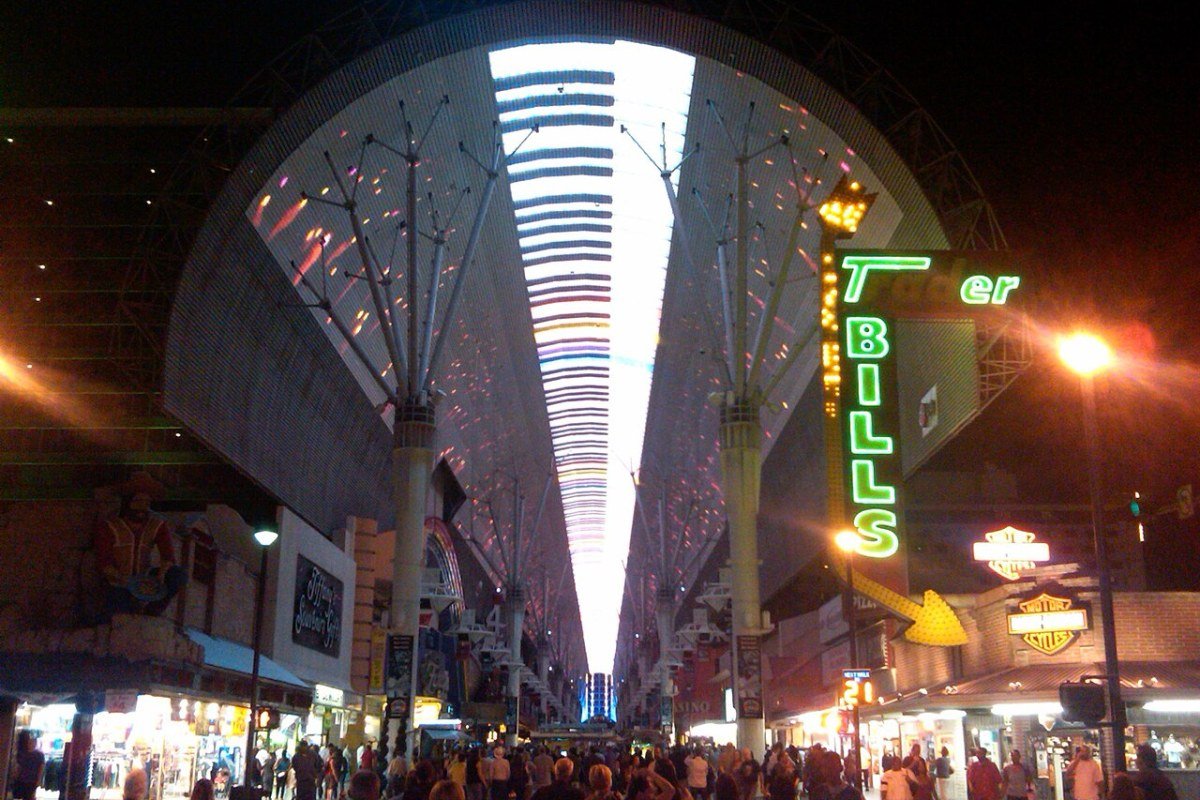
Beyond the Strip, Downtown Las Vegas (Fremont Street) has undergone a genuine revitalization driven in part by Tony Hsieh’s Downtown Project (which brought startup culture and creative investment to the area before its controversial dissolution) and in part by the organic development of the Arts District on South Main Street — galleries, independent restaurants, and the monthly First Friday event that has created a walkable creative district genuinely distinct from the Strip’s commercial entertainment. The Neon Museum (a 2-acre outdoor museum of retired Las Vegas signs, available for guided tours at night when the restored signs are illuminated) is the most authentically Las Vegas cultural experience outside the casinos — a history of the city told entirely through its commercial signage.

Red Rock Canyon and the Las Vegas Natural Landscape
Red Rock Canyon National Conservation Area, 17 miles west of the Las Vegas Strip on Charleston Boulevard, provides one of the most spectacular natural environments accessible from any major American city — a 13-mile scenic loop through the Calico Hills’ red and cream sandstone formations, with 30 miles of hiking trails, world-class rock climbing routes on the Sandstone Bluffs and Rainbow Wall, and the dramatic Keystone Thrust geology where ancient gray limestone was pushed over younger red sandstone by tectonic forces 65 million years ago. The canyon’s accessibility (the scenic loop opens at 6 AM, before the desert heat becomes prohibitive in summer), its proximity to Las Vegas, and the quality of its trails (ranging from easy washes through the White Rock Hills to the demanding Calico Tanks hike to a natural tinaja above the formations) make it the most underappreciated natural attraction in the American West.
Valley of Fire State Park, 50 miles northeast of Las Vegas, provides an equally dramatic but less visited red rock environment — the oldest state park in Nevada, with ancient Aztec sandstone formations of brilliant red and orange, petroglyphs left by the Ancestral Puebloans and other prehistoric inhabitants, and the Elephant Rock and the Beehives formations that are among the most photographed geological features in Nevada. Fire Wave, a swirling multi-colored sandstone formation accessible via a 1.5-mile trail, has become the park’s most popular destination — arrive before 8 AM to avoid both the heat and the crowds.
Reno: The Real Nevada
Reno, Nevada’s second-largest city and the self-proclaimed “Biggest Little City in the World,” has undergone a cultural transformation over the past decade that has begun separating it from its identity as Las Vegas’s smaller, older sibling. The Nevada Museum of Art (the only accredited art museum in Nevada, with a striking building designed by Will Bruder and a permanent collection focusing on art of the American West and the Great Basin environment), the Midtown arts district (a concentration of galleries, restaurants, and independent retail on South Virginia Street that has emerged as Reno’s most creative neighborhood), and the proximity to Lake Tahoe (45 minutes over Mount Rose Highway) and the Sierra Nevada ski resorts (Heavenly, Northstar, and Squaw Valley are each within 90 minutes) have created a quality-of-life proposition for Reno residents that the city’s casino-heavy reputation has obscured.
Great Basin National Park
Great Basin National Park, near the Nevada-Utah border in White Pine County, is one of the least visited national parks in the lower 48 and one of the most rewarding — a park that contains Nevada’s highest peak (Wheeler Peak, 13,063 feet), the ancient Lehman Caves (whose cave formations include the rare cave shield, found at only a handful of caves in the world), a grove of bristlecone pines near Wheeler Peak (including individuals more than 3,000 years old, among the oldest living organisms on earth), and a night sky free from light pollution that allows unaided Milky Way viewing for most of the year. The Alpine Lakes Loop trail (2.7 miles, passing three subalpine lakes beneath Wheeler Peak’s north face) is one of the finest short hikes in Nevada; the full Wheeler Peak summit hike (8.6 miles round trip) provides views across 100 miles of Great Basin desert. The park’s remoteness — it is genuinely far from any major city, the nearest being Salt Lake City at 4.5 hours — ensures that even on summer weekends its trails and campgrounds feel uncrowded in ways that Zion, Bryce, and Arches cannot.