
Cost of Living in North Carolina 2026: Sun Belt Affordability and the Triangle Premium
North Carolina’s cost-of-living profile is defined by the Sun Belt growth story that has made the state one of the fastest-growing in the country for two consecutive decades — affordable housing (relative to the coastal markets from which most in-migrants arrive), no estate tax, a moderate income tax rate, and a climate that provides mild winters at Southern latitudes have combined to attract households from the Northeast, California, and the upper Midwest at rates that have begun to moderate the housing affordability advantage while maintaining the broader cost advantage. The Research Triangle (Raleigh-Durham-Chapel Hill) has experienced price appreciation driven by tech company relocations and expansions that pushes its housing market increasingly above the North Carolina average; Charlotte’s financial services economy creates similar pressure in the Piedmont’s largest city; and Asheville’s popularity as a lifestyle destination has pushed mountain community prices above what local incomes would support. Smaller cities and the coastal communities outside the Outer Banks tourist zone remain genuinely affordable by most American benchmarks.
Housing: The Triangle, Charlotte, and Beyond
The Research Triangle’s housing market has experienced the most dramatic price acceleration in North Carolina over the past decade — driven by the arrival of Apple (a $1 billion campus announced in 2021), Google, Amazon, and dozens of tech and biotech companies drawn by Research Triangle Park (one of the largest research parks in the world), Duke University, the University of North Carolina, and North Carolina State University’s combined research and talent infrastructure. Raleigh median single-family home prices now run $380,000–$520,000 in desirable school zones (North Raleigh, Wake Forest, Cary, and Apex consistently command premiums); Durham’s desirable neighborhoods (Trinity Park, Watts-Hillandale, Old West Durham) run $350,000–$550,000; Chapel Hill’s proximity to UNC drives medians of $450,000–$650,000 in the walkable neighborhoods near campus. The surrounding communities — Apex, Holly Springs, and Fuquay-Varina in Wake County — have absorbed significant growth at $320,000–$480,000 for new construction suburban homes.
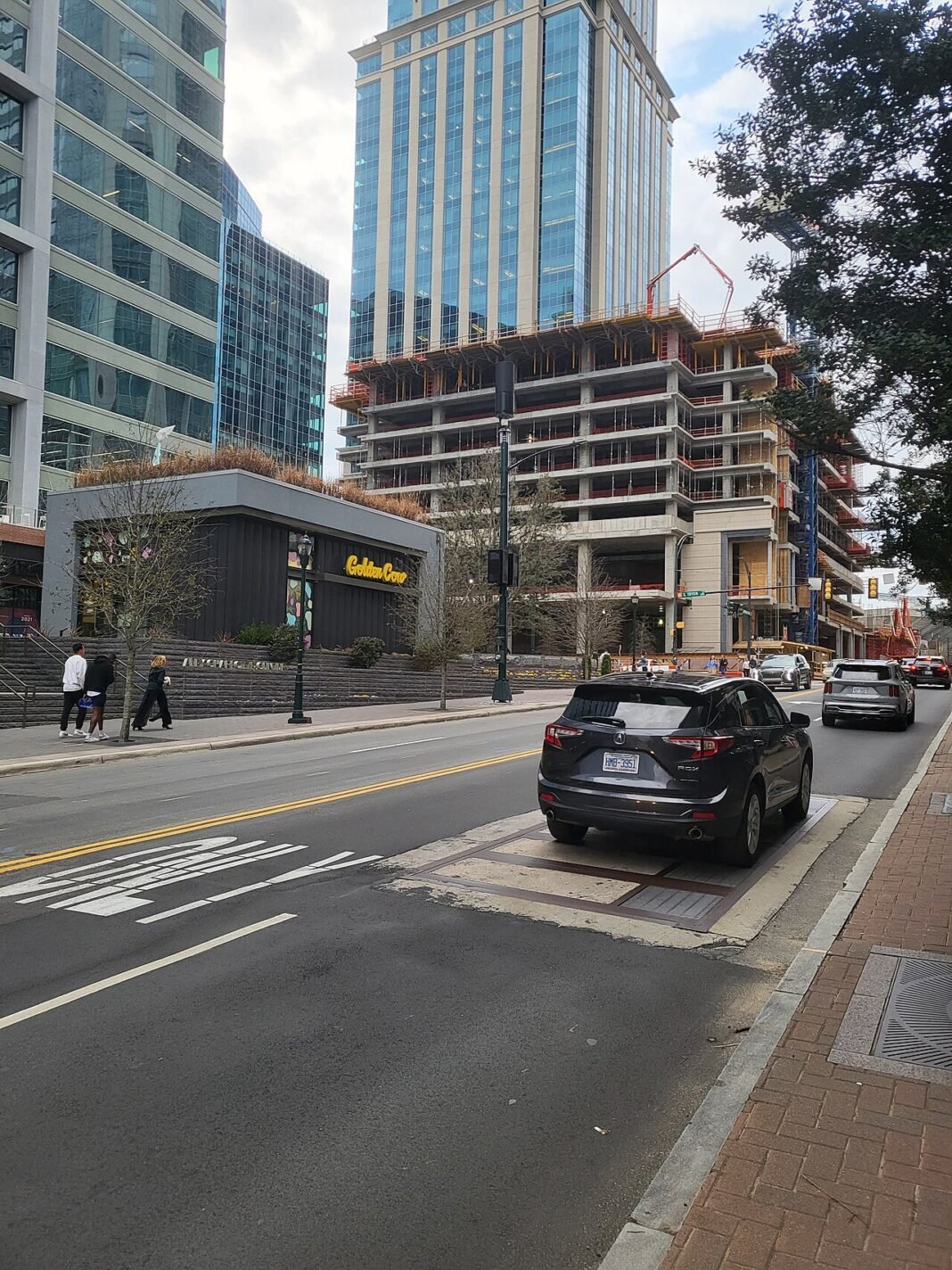
Charlotte, the state’s largest city and the second-largest financial center in the United States (behind New York City — Bank of America and Truist Financial are both headquartered here), shows median prices of $350,000–$500,000 for single-family homes in the desirable neighborhoods of Myers Park, Dilworth, Eastover, and South Park. The adjacent communities of Matthews, Huntersville, and Cornelius (on Lake Norman’s shore) provide suburban alternatives at $320,000–$480,000. Asheville’s housing market has been distorted by its status as the most sought-after lifestyle destination in the American South — median prices of $420,000–$620,000 for desirable in-town properties, well above what local hospitality and arts economy wages support, reflecting the in-migration of remote workers and retirees from higher-cost markets. The state’s smaller cities — Greensboro, Winston-Salem, Fayetteville, and the communities of the coastal plain — maintain medians of $200,000–$320,000 that represent genuine affordability by any national comparison.

State Income Tax
North Carolina has moved aggressively toward a flat income tax structure — the state has been reducing its income tax rate annually since 2013, with the rate at 4.5% in 2024 and scheduled to decline further to 3.99% by 2027 and potentially to 2.49% by 2030 under the current legislative roadmap. The flat tax structure (applying equally to all income above the standard deduction) is simpler than graduated systems and the trajectory toward elimination represents one of the most significant ongoing state tax policy changes in the country. For high-income households moving from California (13.3% top rate) or New York (10.9%), the income tax advantage of North Carolina is substantial and has been a significant driver of the professional in-migration that has fueled the Research Triangle’s growth.
North Carolina’s sales tax is 4.75% at the state level, with county additions bringing the combined rate to 6.75–7.5% depending on county — moderate compared to the highest-rate states. The state exempts groceries from the full sales tax rate (applying a reduced 2% rate), providing modest relief on the most essential household purchases. North Carolina’s franchise taxes on businesses and the capital gains treatment within the income tax system are factors for business owners and investors that require professional tax advice but are generally more favorable than the comparable taxes in coastal high-tax states.
Property Taxes
North Carolina’s property taxes are moderate by national standards — effective rates average approximately 0.8–1.0% of assessed value statewide, below the national average. Mecklenburg County (Charlotte) shows effective rates of approximately 0.95–1.1%; Wake County (Raleigh) approximately 0.7–0.9%; Buncombe County (Asheville) approximately 0.7–0.85%. Applied to the current housing market, these rates produce annual property taxes of approximately $3,000–$5,000 for typical single-family homes in the major metros — modest in absolute terms despite the appreciation in home values. North Carolina’s property assessments are typically conducted every four to eight years by county, so rapidly appreciating markets can have a lag between current market value and assessed value that reduces the tax burden temporarily.
Everyday Costs and the North Carolina Calculation
North Carolina’s everyday costs are below national averages in most categories — groceries running approximately 3–5% below national averages in the Piedmont cities, restaurant prices significantly below coastal peers, and utilities (particularly for the mild climate’s relatively moderate heating and cooling demands) at or below national averages. The combination of moderate income taxes (declining rapidly), below-average property taxes, below-national-average everyday costs, and significantly lower housing prices than California, New York, or New England makes North Carolina a genuinely compelling financial choice for households from the Northeast or Pacific Coast whose employment is location-flexible or who can transition to remote work. The honest assessment includes the trade-offs: public school quality varies significantly by district (Wake County schools rank among the best in the state, but the state’s overall educational metrics lag many peer states), the infrastructure of smaller communities may not match what residents of dense northeastern metros expect, and the summer heat and humidity — particularly in the Piedmont and coastal plain — require lifestyle adjustments that extend the effective summer season well into September.