
Cost of Living in Arizona 2026: Sun, Space, and Value
Arizona has spent the past decade absorbing a wave of migration from higher-cost states — California in particular — and the financial logic driving that movement is straightforward. The state’s cost of living runs approximately 3–6% below the national average overall, with specific categories offering substantially larger advantages. No state estate tax, modest income taxes on a graduated scale that tops out at 2.5% (following a 2022 flat-tax reform), and housing markets that, while significantly more expensive than five years ago, still offer meaningful value compared to West Coast alternatives.
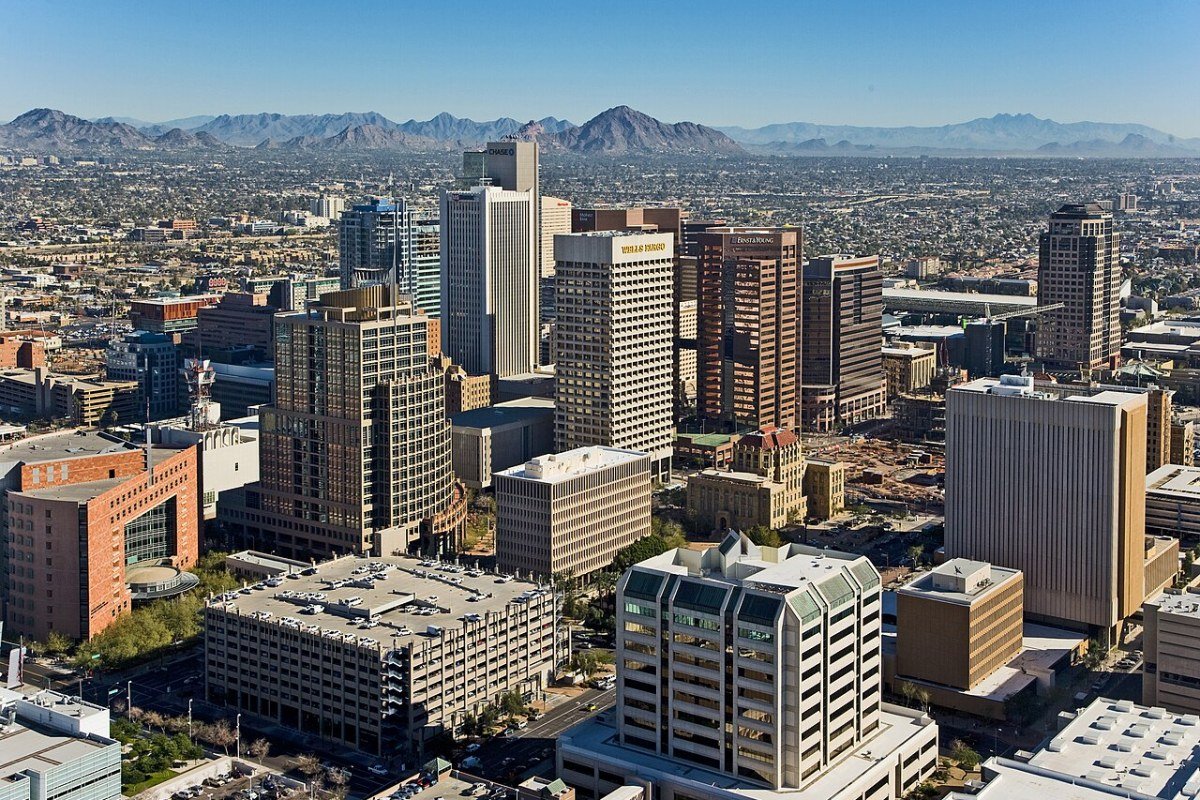
Understanding Arizona’s cost structure requires understanding its internal geography. The Phoenix metro area — which contains nearly 5 million people, more than two-thirds of the state’s population — has its own pricing dynamics that differ from Tucson (the second city), Flagstaff (the high-country hub), and the vast rural stretches of the state. This guide breaks down the actual numbers across categories and locations.
Housing: Still Affordable by Major Metro Standards
Arizona’s housing market experienced dramatic appreciation between 2020 and 2023 as migration from California, Oregon, Washington, and other high-cost states compressed years of price appreciation into a very short period. Phoenix metro median home prices rose over 80% between early 2020 and their 2022 peak. The market has since stabilized, but prices remain substantially higher than pre-pandemic levels.
As of early 2026, Phoenix metro median home prices sit in the $410,000–$450,000 range — expensive relative to the state’s historical norms but still significantly below Los Angeles ($800,000+), San Francisco ($1.1M+), or Seattle ($700,000+). The Phoenix market’s internal variation is substantial: Scottsdale averages well above $600,000; Mesa, Chandler, and Gilbert average $400,000–$500,000; and more affordable entry points can be found in parts of Phoenix itself, Glendale, and particularly the East Valley suburbs.
Tucson’s market remains considerably more accessible, with median prices in the $290,000–$340,000 range as of early 2026. Tucson absorbs fewer California migrants than Phoenix, partly due to its smaller job market, and this has moderated price appreciation. For retirees or remote workers not tied to Phoenix’s economy, Tucson’s combination of lower prices, university culture, proximity to Mexico (Nogales is 60 miles south), and excellent hiking makes it a genuinely compelling option.

Rental markets follow similar patterns. A two-bedroom apartment in Phoenix averages $1,400–$1,800 per month depending on location and amenities. Scottsdale commands $1,800–$2,400. Tucson offers two-bedroom units in the $1,100–$1,400 range. Flagstaff — constrained by its small geography and university population — runs $1,400–$1,800 despite its smaller city character.
Taxes: Arizona’s Flat Tax Reform
In 2022, Arizona transitioned to a flat income tax rate of 2.5% — a significant reduction from the previous graduated structure that topped out at 4.5%. This change benefited higher-income earners most substantially, but the 2.5% rate is competitive with any state that levies income tax. Combined with no estate tax, no inheritance tax, and a statewide sales tax of 5.6% (cities and counties add their own, bringing the effective rate in Phoenix to around 8.6%), Arizona’s tax burden is moderate by national standards.
Property taxes in Arizona are lower than national averages, typically running 0.5–0.7% of assessed value annually. The combination of moderate income taxes, lower property taxes, and solid public services creates a fiscal environment that many relocation-focused financial advisors cite as a primary driver of Arizona’s migration numbers.
Utilities: The Air Conditioning Reality
Arizona’s summer heat creates utility costs that are significantly higher than national averages for the June–September period. A typical single-family home in the Phoenix metro can expect electricity bills of $250–$400 per month during peak summer — and in larger homes or during extreme heat events (temperatures above 115°F are not unusual in Phoenix in late June and July), costs can exceed $500. This is one of the genuine financial penalties of desert living that is sometimes downplayed in relocation-focused marketing.
The annual picture is more moderate: winters in Phoenix require minimal heating, and mild shoulder seasons (October–November and March–April) often allow residents to run neither heat nor AC. Annual average utility costs in Phoenix come to roughly $2,400–$3,600 — elevated compared to national norms but not dramatically so when averaged across all 12 months. Flagstaff, at higher elevation, has opposite seasonality: winters require meaningful heating but summers are mild enough that air conditioning is often unnecessary.
Food, Healthcare, and Transportation
Grocery costs in Arizona run very close to the national average, with Phoenix’s large population base supporting competitive supermarket pricing. Whole Foods, Trader Joe’s, Sprouts (which was founded in Arizona), and Fry’s (Kroger’s Arizona brand) all operate extensively in the metro, and specialty ethnic grocery options — particularly Mexican and Asian — are excellent in Phoenix given the city’s demographic composition.
Healthcare costs in Arizona are moderately above the national average, driven partly by a specialist shortage in rural areas and partly by the Phoenix market’s rapid growth outpacing healthcare infrastructure. The Banner Health system and Dignity Health are the primary networks in the Phoenix metro; Tucson has Banner University Medical Center. Remote and rural areas of Arizona — which constitute most of the state’s land area — have significant healthcare access challenges that are a real consideration for anyone contemplating non-urban Arizona living.
Transportation costs in Phoenix are heavily auto-dependent: the city’s public transit system (Valley Metro Rail) covers limited corridors and most residents commute by car. Gas prices in Arizona typically run slightly below the national average. The Phoenix metro’s sprawling geography means commutes can be long even when traffic is moderate, and the combination of car payment, insurance, fuel, and maintenance typically runs $600–$900 per month for Phoenix residents.
Overall Financial Picture
For someone moving from California, New York, Washington State, or Colorado, Arizona’s cost structure represents a meaningful improvement across most categories — particularly housing and income taxes. For someone moving from the Midwest or Southeast, the picture is more mixed: summer utilities are higher, housing has appreciated significantly, and the auto-dependent infrastructure of Phoenix can make total transportation costs substantial.
The strongest financial case for Arizona is made by remote workers, retirees, and people in industries with significant Phoenix presence (finance, tech, real estate, healthcare). The combination of 2.5% flat income tax, no estate tax, moderate overall living costs, and 300+ days of sunshine annually has made Arizona one of the top domestic migration destinations in the United States for six consecutive years — and the financial logic behind that movement is genuine.