.jpg?width=1200)
Best Places to Live in North Dakota 2026: Fargo, Bismarck, and the Prairie Cities
North Dakota’s residential communities are concentrated in the eastern third of the state, where the Red River valley and the Missouri River coteau support the state’s population centers. The western oil patch offers employment opportunity but the housing and lifestyle volatility of a resource economy; the small towns of the Prairie Pothole Region provide deep affordability and community character for households whose employment is location-flexible; and the university cities of Fargo and Grand Forks provide the cultural amenities and job market depth that attract most in-migrants. Bismarck, the state capital, balances government employment stability with genuine community quality. North Dakota’s best places to live reward those who value space, community, and affordability over urban density and the cultural intensity available in larger metropolitan areas.
1. Fargo — The State’s Cultural Hub
Fargo is North Dakota’s most dynamic city — the largest in the state, the fastest-growing, and the most culturally active. North Dakota State University (NDSU) and its research and technology ecosystem drive an economy that has diversified from agricultural and retail services into technology, healthcare, and professional services. The downtown district’s revitalization has produced a genuine small-city cultural scene — independent restaurants, live music venues, the Fargo Theatre (a restored 1926 movie palace), and arts spaces that attract talent that might otherwise bypass the Great Plains. The Red River valley’s flat topography provides excellent cycling infrastructure, and the Fargo Park District maintains an impressive parks and trail system. The primary challenge is the climate — Fargo winters are among the harshest in the lower 48 states, and newcomers from more temperate climates should prepare honestly for the experience. Median home prices of $280,000–$320,000 provide exceptional value for the urban amenity available.
2. Bismarck — The Capital’s Balance
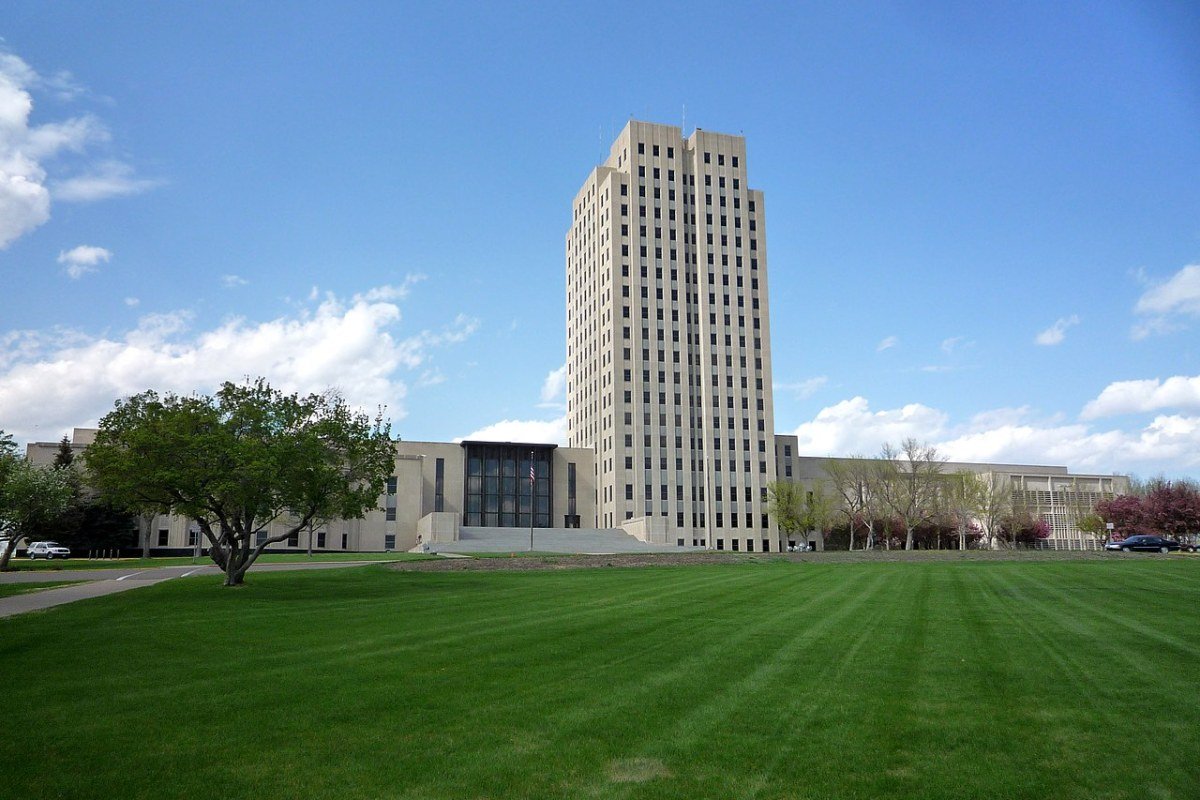
Bismarck, the state capital, offers the employment stability of government alongside a growing private sector and the most geographically dramatic setting of any North Dakota city — perched on bluffs above the Missouri River, with the unusual “skyscraper on the prairie” Art Deco State Capitol tower providing a distinctive skyline. The capital’s economy is more diversified than most North Dakota cities, with state government, healthcare (Sanford and CHI St. Alexius medical centers), agriculture, and retail services providing a more recession-resistant employment base than the oil-dependent western communities. The Missouri River corridor provides outdoor recreation — fishing, boating, and the Lewis & Clark interpretive sites at the confluence of the Missouri and Heart Rivers — that complements the badlands access of Theodore Roosevelt National Park three hours to the west. Median home prices run $270,000–$310,000.
3. Grand Forks — The University City
Grand Forks, home to the University of North Dakota (UND) and its medical, law, and aerospace programs, provides a university-city character that distinguishes it from North Dakota’s other population centers. The university’s presence drives a healthcare sector, a research ecosystem, and a student population that sustains more cultural activity per capita than the city’s 60,000 residents might otherwise support. Downtown Grand Forks has benefited from sustained investment following the catastrophic 1997 Red River flood, with a rebuilt commercial district that serves both the university community and the regional population. The city’s proximity to the Canadian border gives it connections to Winnipeg that add cultural variety. Median home prices at $220,000–$260,000 make Grand Forks one of the most affordable university cities in the country.
4. Minot — The Magic City
Minot, in north-central North Dakota, earned its “Magic City” nickname from the remarkable speed of its growth during the railroad era — and has maintained relevance through its position as a regional hub for the oil patch country to its southwest, the Minot Air Force Base (one of the most significant military installations in the upper Midwest), and its service role for the surrounding agricultural region. The North Dakota State Fair is held in Minot annually, drawing attendance that demonstrates the city’s regional centrality. Housing is affordable (median $200,000–$240,000), the community is stable, and the city’s location provides access to both the central North Dakota prairie and the Souris River valley’s outdoor recreation.
5. West Fargo / Mandan — The Suburb Option
West Fargo, the fastest-growing municipality in North Dakota, provides suburban family infrastructure adjacent to the Fargo metro — newer housing stock at $250,000–$330,000, strong school districts, and proximity to Fargo employment without the density of the city proper. The West Fargo school district has grown rapidly alongside the community and has made significant facility investments. Across the Missouri River from Bismarck, Mandan serves as the capital region’s suburban alternative — a community with its own character, excellent schools, and somewhat lower housing costs than Bismarck proper, connected by bridge to the state’s employment center. For families seeking suburban infrastructure at the lowest costs available in any North Dakota metro area, Mandan provides a compelling option.
Small Town North Dakota
North Dakota’s small towns — Valley City, Wahpeton, Dickinson, Jamestown, Devils Lake — each serve regional populations and provide community character that differs from the major cities. For location-flexible households (remote workers, retirees, farmers, and small business owners serving local markets), the small towns provide the most affordable housing in the state (often $150,000–$200,000 for well-maintained single-family homes), tight community bonds, and access to the state’s outdoor resources without city overhead. Jamestown’s buffalo monument and National Buffalo Museum, Valley City’s Sheyenne River valley parks, and Dickinson’s proximity to Theodore Roosevelt National Park give specific small towns recreational and cultural anchors that make them viable full-time residential choices for the right household profile.
Making Your Decision
Choosing where to live in North Dakota comes down to honestly matching your priorities with what each city and community genuinely delivers. Budget, career opportunities, access to outdoor recreation, climate preferences, and community character all weigh differently depending on your life stage and values — and no ranking can substitute for that personal assessment. The cities and towns profiled in this guide represent the strongest overall options, but North Dakota has smaller communities that offer compelling alternatives for those willing to trade urban convenience for affordability, quieter living, or closer access to natural landscapes. If possible, spend at least a long weekend in your shortlisted communities before committing — the practical factors matter enormously, but so does the less quantifiable sense of whether a place simply feels right for where you are in life.