North Carolina’s affordability rests on a Sun Belt growth story that has made it one of the country’s fastest-growing states for two straight decades. Housing that still looks cheap to anyone arriving from the coasts, no estate tax, a flat income tax that keeps falling, and mild winters at a Southern latitude have pulled households out of the Northeast, California, and the upper Midwest in such numbers that the housing edge has narrowed even as the broader cost advantage holds. The pressure shows up unevenly. Tech relocations and expansions have lifted the Research Triangle (Raleigh-Durham-Chapel Hill) well above the statewide norm; Charlotte’s banking economy does the same to the Piedmont’s largest city; and Asheville’s pull as a mountain-lifestyle destination has carried prices past what local paychecks can cover. Step outside those magnets — into the smaller cities and the coastal communities beyond the Outer Banks tourist belt — and the state is still genuinely cheap by national standards.

Housing: The Triangle, Charlotte, and Beyond
No North Carolina market has accelerated like the Research Triangle. The arrival of Apple (a $1 billion campus announced in 2021, though the company secured a multi-year timeline extension in late 2025), Google, Amazon, and dozens of biotech and tech firms — drawn by Research Triangle Park, one of the world’s largest research parks, plus the combined research muscle of Duke, the University of North Carolina, and North Carolina State — reshaped demand across Wake and Durham counties. Raleigh’s median single-family price now lands between $380,000 and $520,000 in the school zones buyers chase, with North Raleigh, Wake Forest, Cary, and Apex commanding the premiums. Durham’s older in-town neighborhoods — Trinity Park, Watts-Hillandale, Old West Durham — sit in the $350,000 to $550,000 band, while Chapel Hill, hemmed in by UNC and tight zoning, pushes walkable medians toward $450,000 to $650,000. The outlying towns of Apex, Holly Springs, and Fuquay-Varina have absorbed much of the spillover, with new-construction suburban homes priced from $320,000 to $480,000.
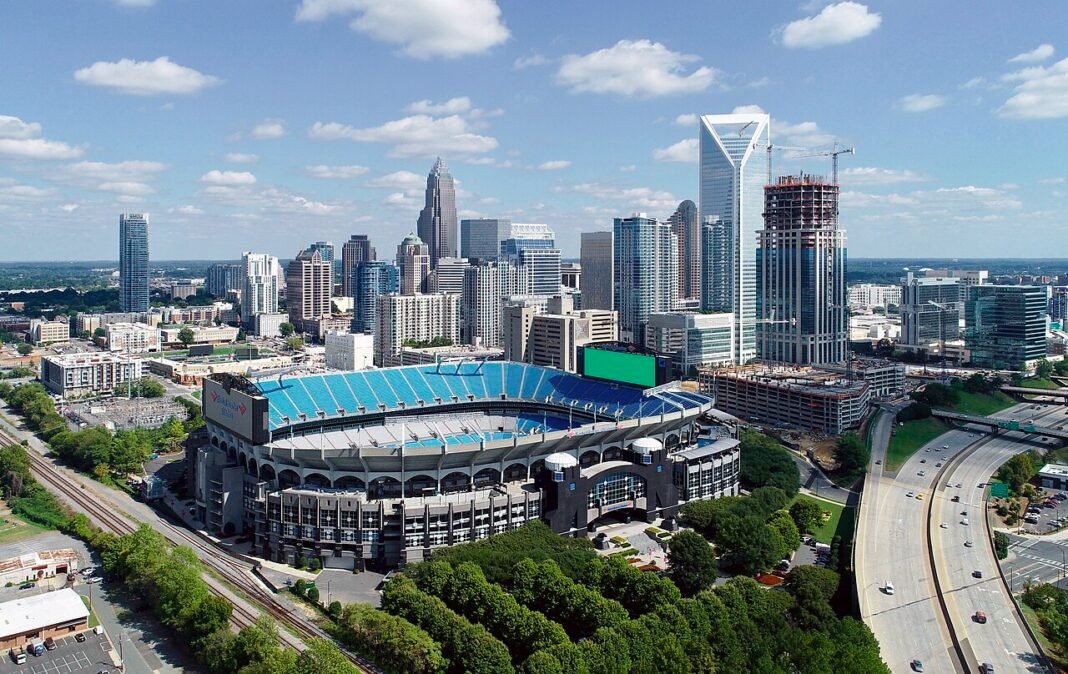
Charlotte tells a different version of the same story. As the second-largest banking center in the United States — Bank of America and Truist Financial both keep their headquarters here — the city anchors a professional economy that keeps a floor under prices. Citywide medians fall in the $350,000 to $500,000 range, but the marquee uptown-adjacent neighborhoods break that pattern entirely: Dilworth clears $700,000 and Myers Park, Eastover, and SouthPark run well into seven figures. Out in the suburbs, Matthews, Huntersville, and Cornelius (the last perched on Lake Norman) offer a step down at roughly $320,000 to $480,000. Asheville is the state’s true outlier. As the most coveted lifestyle town in the American South, it carries in-town medians near $420,000 to $620,000 — far beyond what its hospitality and arts wages can stretch to — driven by remote workers and retirees relocating from costlier markets. Hurricane Helene, which tore through western North Carolina in September 2024, briefly cooled the market by pushing some owners to sell, yet prices have proven resilient and the recovery has outpaced early expectations. The state’s mid-size cities and coastal plain — Greensboro, Winston-Salem, Fayetteville and their neighbors — hold medians of $200,000 to $320,000, the kind of number that still looks like a deal anywhere in the country.

State Income Tax
North Carolina has spent more than a decade converting a graduated income tax into a single flat rate, and then cutting that rate almost every year since 2013. It reached 4.25% for 2025 and dropped to 3.99% for the 2026 tax year, with further reductions written into law: 3.49% scheduled for 2027 and 2.99% for 2028, and a long-term floor of 2.49% that the state can reach in the early 2030s if General Fund revenue clears statutory triggers. One flat rate on all income above the standard deduction is simpler than a bracketed system, and the downward trajectory ranks among the more aggressive state tax overhauls in the country. For a household leaving California (top rate 13.3%) or New York (10.9%), the gap is large — and it has been a real engine behind the professional in-migration fueling the Triangle. There is no estate tax to worry about either.
Sales tax starts at 4.75% statewide, with county add-ons lifting the combined rate to somewhere between 6.75% and 7.5% — moderate next to the heaviest-taxing states. Groceries escape most of that, taxed at a reduced 2% rate that takes a little sting out of the weekly trip to the supermarket. Franchise taxes on businesses and the way capital gains fold into the income tax do warrant professional advice for owners and investors, but they generally land easier here than the equivalent levies in high-tax coastal states.
Property Taxes
Property taxes sit comfortably below the national average, with effective rates statewide running roughly 0.7% to 0.9% of assessed value. The big metros track close to that: Mecklenburg County (Charlotte) lands around 0.8% to 1.0% once city and county levies combine, Wake County (Raleigh) near 0.7% to 0.9%, and Buncombe County (Asheville) lower still at roughly 0.6% to 0.75%. On a typical single-family home in any of those markets, the annual bill works out to about $3,000 to $5,000 — restrained in absolute dollars even after years of appreciation. Counties reassess only every four to eight years, so in fast-climbing markets the gap between what a house would sell for and what it is assessed at can hold the tax burden down for a while.
Everyday Costs and the North Carolina Calculation
Day-to-day spending undercuts national averages across most categories: groceries run a few percent below the national figure in the Piedmont cities, restaurant tabs come in well under their coastal counterparts, and utilities stay at or below average thanks to a mild climate that keeps heating and cooling demands modest. Stack that against declining income taxes, below-average property taxes, and home prices a fraction of California, New York, or New England, and North Carolina makes a compelling financial case for any household from the Northeast or Pacific Coast with location-flexible or remote work. The trade-offs deserve a clear-eyed look, though. Public-school quality swings hard by district — Wake County’s schools rank among the state’s strongest, but North Carolina’s overall educational metrics trail many peer states. Smaller communities may not offer the infrastructure that transplants from dense northeastern metros take for granted. And the summer heat and humidity, heaviest in the Piedmont and coastal plain, demand real adjustment, stretching the effective warm season well into September. None of it erases the cost and tax advantages — it just keeps the picture honest.
Frequently Asked Questions
Is North Carolina affordable to live in?
Yes, once you step outside the major metros. Smaller cities such as Greensboro, Winston-Salem, and Fayetteville hold medians of $200,000–$320,000. The Research Triangle has appreciated sharply, though — Raleigh now sits at $380,000–$520,000 and Chapel Hill at $450,000–$650,000, lifted by tech relocations — while Charlotte runs $350,000–$500,000 citywide. Even those markets compare well to California or the Northeast, but North Carolina is no longer cheap everywhere.
What is North Carolina’s income tax rate?
It is a flat rate that has fallen almost yearly since 2013 — 4.25% for 2025 and 3.99% for the 2026 tax year, with 3.49% scheduled for 2027, 2.99% for 2028, and a 2.49% floor reachable in the early 2030s if revenue triggers are met. For high earners arriving from California (13.3% top rate) or New York (10.9%), that is a sizable, ongoing advantage. There is no estate tax, and groceries are taxed at a reduced 2% rate.
Are property taxes low in North Carolina?
Below the national average — effective rates run about 0.7%–0.9% statewide. Mecklenburg County (Charlotte) lands near 0.8%–1.0%, Wake County (Raleigh) around 0.7%–0.9%, and Buncombe County (Asheville) roughly 0.6%–0.75%. On a typical single-family home in the major metros, annual bills come to about $3,000–$5,000. Counties reassess only every four to eight years, which can lag rising prices.
Why has Asheville become so expensive?
As the most coveted lifestyle town in the American South, Asheville has drawn remote workers and retirees from pricier markets, pushing in-town medians to roughly $420,000–$620,000 — far above what local hospitality and arts wages support. Hurricane Helene briefly nudged some owners to sell in late 2024, but prices held and recovery has run ahead of expectations. It is now a premium lifestyle market rather than a bargain mountain town.
What are the trade-offs of living in North Carolina?
School quality varies widely by district — Wake County’s are among the state’s best, but North Carolina’s overall educational metrics trail many peer states. Summer heat and humidity in the Piedmont and coastal plain are intense and stretch into September. And infrastructure in smaller communities may fall short of northeastern-metro expectations. They are real trade-offs set against meaningful cost and tax advantages for households leaving high-cost states.