The Scottish Highlands represent some of the most spectacular wilderness landscape in Europe — a vast terrain of ancient mountains, silver lochs, remote glens, and a coastline so complex and indented that mapping it properly took the Admiralty years. It’s also one of the most historically layered landscapes in Britain: every glen has its massacre, every castle its siege, every island its clearances. The North Coast 500 road trip route has brought international attention to this region since 2015, but the Highlands reward those who go further than the Instagram stops and spend real time in its most extraordinary corners. Here’s how to approach it properly.
The North Coast 500: Scotland’s Route 66
The NC500 — a 516-mile scenic route looping around the northern Highlands, starting and ending in Inverness — was launched in 2015 and became one of the world’s most talked-about road trip routes almost immediately. The route takes in the Black Isle and Easter Ross to the east, the wild north coast (Durness, Smoo Cave, the ancient beach at Sandwood Bay, Cape Wrath — the most northwesterly point of mainland Britain), the dramatic northwest (Torridon, Applecross, the Bealach na Bà mountain pass), and Skye and the western shores of Loch Ness on the return south to Inverness. Allow a minimum of five days; seven to ten days lets you actually stop, walk, and absorb what you’re seeing rather than just photograph it through the windscreen. The route has become considerably busier since 2020 — drive mid-week in shoulder season (May or September) for the best combination of decent weather and manageable traffic.
Glencoe: The Most Atmospheric Valley in Scotland
Glencoe is one of the most atmospheric places in Britain — a wide, U-shaped glacial valley flanked by enormous mountains that seem to press in from all sides. The Three Sisters (Beinn Fhada, Gearr Aonach, and Aonach Dubh) are the most dramatic peaks; the Lost Valley (Coire Gabhail), accessible by a 3-mile round trip from the valley floor, is a hidden glacial bowl that once sheltered MacDonald cattle. The Glencoe Visitor Centre tells the story of the 1692 Massacre of Glencoe, in which 38 members of the MacDonald clan were killed by government troops who had accepted their hospitality for two weeks before receiving orders to kill their hosts at dawn — an act of treachery that resonates in Highland memory to this day. Glencoe Mountain Resort operates Scotland’s oldest ski area on the flanks of Meall a’Bhùiridh — the skiing is limited but the mountain scenery is incomparable.

The Isle of Skye: Scotland’s Crown Jewel
Skye is the largest of Scotland’s Inner Hebrides islands — and one of the most spectacular landscapes in all of Britain. The Trotternish Peninsula in the north has the most otherworldly geology: the Old Man of Storr, a 50-meter pinnacle of basalt rising above a glacial loch, is the most photographed subject in Scotland; the Quiraing — a massive landslip of tilted rock columns, pinnacles, and hidden plateaus — is even more extraordinary, especially on a clear morning. The Fairy Pools in the south of the island are crystal-clear mountain pools fed by waterfalls from the Black Cuillin, warm enough to swim in briefly (briefly) in summer. The Cuillin ridge offers some of the finest and most challenging mountain scrambling in Britain — genuinely technical terrain that requires experience and good weather. Portree, the island’s main town, has a beautiful harbor lined with colorful buildings, good seafood restaurants, and the full range of accommodation options. Book well in advance for summer — Skye has become so popular that accommodation fills months ahead.
Inverness, Loch Ness, and the Cairngorms
Inverness is the Highland capital and the most practical base for exploring the region — excellent accommodation at every price point, a growing food scene, and easy access to Loch Ness, the Cairngorms, and the NC500 in all directions. Loch Ness is 23 miles long, 230 meters deep, and contains more fresh water than all the lakes and reservoirs in England and Wales combined. The Loch Ness Monster (Nessie) is almost certainly fictional — the 1934 “Surgeon’s Photograph” that launched the modern legend was a known hoax — but Urquhart Castle on the western shore is a genuine 13th-century fortress ruin with dramatic views over the loch and one of the finest castle settings in Scotland. The Cairngorms National Park (the largest national park in the UK, covering 4,528 sq km) has a sub-arctic plateau landscape unlike anything else in Britain: reindeer herds, ospreys, red squirrels, capercaillie, and mountain hares in their white winter coats. Aviemore is the main base town; the Cairngorm Mountain funicular provides access to the high plateau. The Strathspey Steam Railway between Aviemore and Broomhill offers an excellent heritage railway experience through the birchwood landscape of the Spey valley.
The Western Highlands: Torridon, Applecross, and Beyond
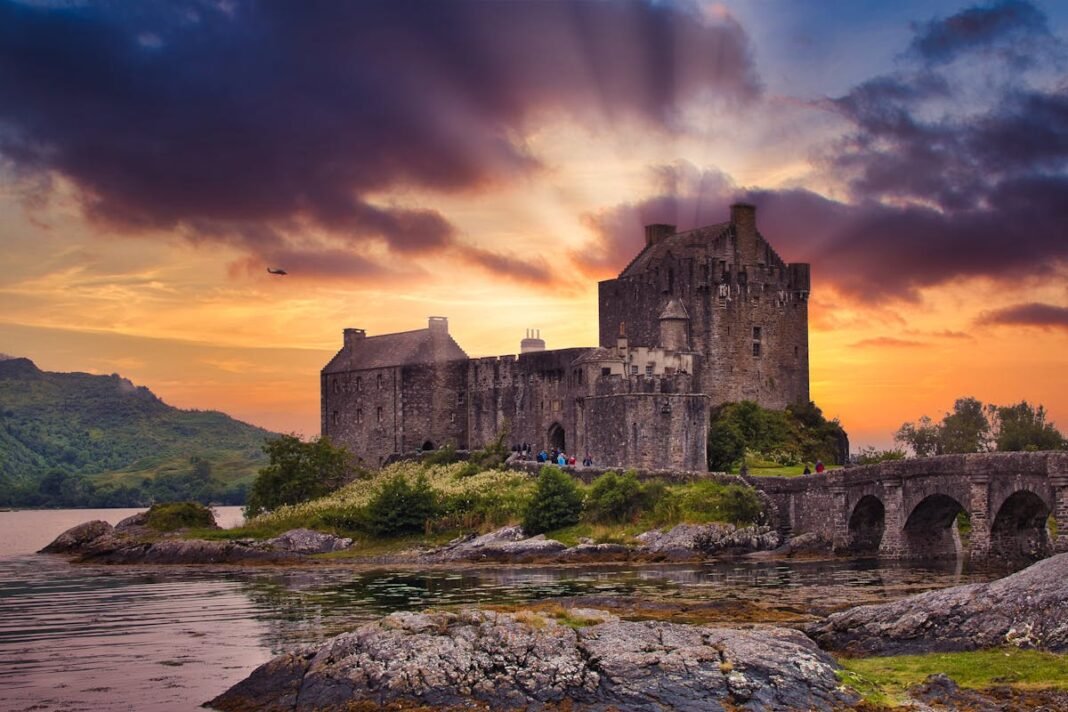
The northwest Highlands between Ullapool and Kyle of Lochalsh contain some of the most remote and beautiful landscapes in Britain. The Torridon mountains — Liathach, Beinn Eighe, Beinn Alligin — rise from Precambrian sandstone deposited 750 million years ago, making them among the oldest mountains on earth; their layered geology is visible in the banding of colors on their flanks. The Applecross Peninsula, reached via the Bealach na Bà (the highest mountain pass road in Britain, reaching 626 meters), has a remote feeling that is remarkable given its accessibility — and the Applecross Inn at the far end of the pass is one of the finest seafood pubs in Scotland, with a seafood platter sourced directly from local boats. Eilean Donan Castle, on its small island at the confluence of three sea lochs, is the most photographed castle in Scotland and justifiably so — the views across Loch Duich to the Kintail mountains are extraordinary.
.jpg?width=1200)
Whisky: The Spirit of the Highlands
The Scottish Highlands and islands produce the world’s finest single malt Scotch whisky, and visiting a distillery in its home landscape transforms the understanding of what you’re drinking. Speyside (the river valley southeast of Inverness) has the highest concentration of distilleries in the world — the Whisky Trail connects Glenfiddich, Balvenie, Glenfarclas, Cardhu, and a dozen others along a single route. The island distilleries are more remote but equally rewarding: Talisker on Skye (peaty, maritime, intensely flavored), Laphroaig and Ardbeg on Islay (the most intensely peated whiskies made anywhere), and Glenmorangie north of Inverness (delicate, floral, frequently finished in unusual casks). Most distilleries offer tours with tasting; booking in advance is recommended for the most popular. The Scotch Whisky Experience in Edinburgh is an excellent primer if distillery visits aren’t on the itinerary.
Practical Planning
- Getting there: Inverness Airport has direct connections from London (1.5 hours), Edinburgh, and several European cities. ScotRail runs the spectacular train route from Inverness to Kyle of Lochalsh (82 miles of Highland scenery). Glasgow has the West Highland Line to Fort William and Mallaig — one of the world’s great railway journeys, passing Rannoch Moor and the Glenfinnan Viaduct.
- Driving: A car is essential for serious Highlands exploration. Most Highland roads outside the main A roads are single-track with passing places. Drive slowly, be patient, and use passing places to allow faster vehicles to overtake — it’s not a race.
- Weather: Notoriously unpredictable — warm sunshine can turn to horizontal rain and back again within an hour. Pack waterproof layers for all outdoor activities regardless of the forecast. The best weather months are typically May–June and September.
- Midges: The Highland midge is present May–September, worst in still, humid conditions near standing water. Avon Skin So Soft (genuinely effective, originally marketed as a moisturizer) and dedicated midge repellents are essential for camping and outdoor activities in midge season.
- Accommodation: Book everything well in advance for summer. The NC500 in particular fills up months ahead for July–August. Wild camping is legal in Scotland under the Land Reform Act 2003 — one of the best budget options for Highlands travel.