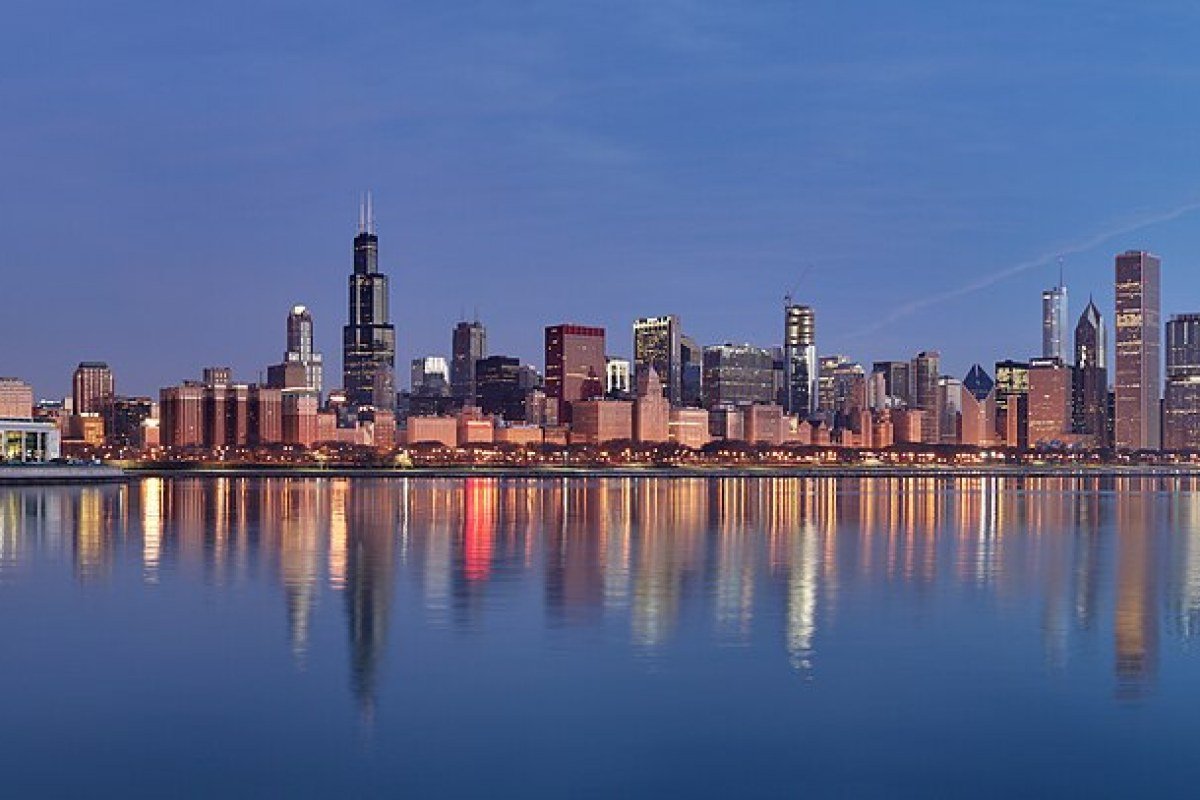
Chicago is the city that Americans love to overlook — consistently overshadowed by the bicoastal hype around New York and Los Angeles, it quietly goes about being one of the greatest cities in the world. The architecture here is the most significant of any American city. The food scene is extraordinary in its range and ambition. The lakefront is 26 miles of public parkland without a single private development between the boulevard and the water. The blues and jazz legacy runs deep and is still very much alive. And the people — Midwestern friendly in a city that has nothing to prove — make it one of the most enjoyable places to travel in North America. If you’ve never been, you’re missing something essential.
Architecture: Chicago’s Greatest Gift to the World
Chicago’s built environment is the most architecturally important of any American city — arguably of any city on earth for the period of 1880 to 1970. The Great Chicago Fire of 1871 destroyed most of the city and created a blank slate on which Louis Sullivan, Daniel Burnham, and William Le Baron Jenney would essentially invent the modern skyscraper. Frank Lloyd Wright developed his Prairie Style in the Oak Park suburb. Later, Ludwig Mies van der Rohe, who fled Nazi Germany and settled in Chicago, would bring European modernism to American architecture at a scale that changed how cities everywhere are built.
The Chicago Architecture Foundation Center River Cruise is the single best way to experience this legacy — a 90-minute boat tour along the Chicago River with expert guides pointing out 50+ buildings from the water, explaining the architects, the construction challenges, and the historical context. It costs around $50 and is worth every cent. The Chicago Architecture Center on Michigan Avenue has exhibitions and walking tour maps if you prefer land-based exploration.
The Riverwalk and Lakefront
The Chicago Riverwalk — a pedestrian path along the south bank of the Chicago River between Lake Shore Drive and Lake Street — is one of the great urban public spaces in America. Lined with restaurants, bars, kayak rental stands, and gardens, with the canyon of skyscrapers visible above in every direction, it’s the ideal place to spend a warm Chicago afternoon. The best views are from the river level, looking up at the buildings that line both banks.
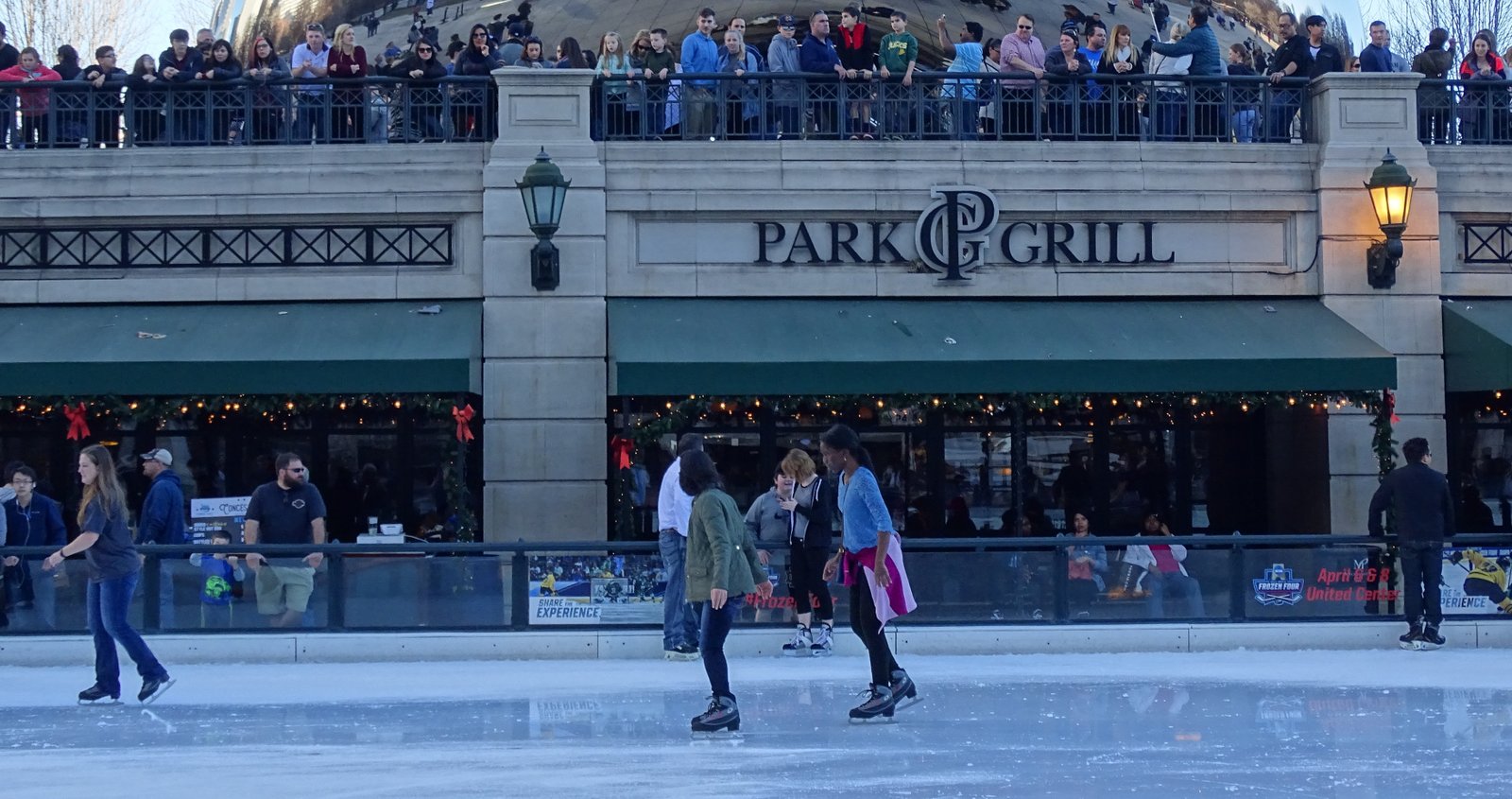
The lakefront extends 26 miles with no private developments — a result of a 1836 decree that the shoreline remain “public ground, forever to remain vacant of buildings.” Millennium Park and its centerpiece Cloud Gate sculpture (the Bean) are the most visited section; the Crown Fountain — two 50-foot glass towers that project Chicagoans’ faces and occasionally release water from the mouth — is one of the most clever pieces of public art in the country. North Avenue Beach, about two miles north of downtown, is the best urban beach in the United States — genuinely beautiful, lively without being overwhelming, with an Art Deco boathouse and excellent sunset views back toward the city.
The Food: From Deep Dish to Alinea
Chicago’s food scene has a remarkable range — from the hyper-local (the Chicago-style hot dog: an all-beef Vienna Beef frank in a poppy-seed bun with yellow mustard, onion, neon-green relish, sport peppers, tomato, pickle spear, and celery salt — never ketchup, never) to the globally influential (Alinea, Grant Achatz’s avant-garde restaurant, is regularly cited as one of the top 10 restaurants in the world, with a multi-hour tasting experience that redefines what a meal can be).
Deep dish pizza deserves its own paragraph because it’s genuinely unlike pizza anywhere else — a thick, buttery crust with chunky tomato sauce poured on top of the mozzarella (yes, inverted), requiring 45 minutes to cook and no fewer than two slices to feel satisfied. Lou Malnati’s is the most beloved local chain; Pequod’s Pizza in Lincoln Park makes a caramelized-crust deep dish that devotees consider superior. The West Loop neighborhood has become Chicago’s most exciting dining district — Stephanie Izard’s Girl & the Goat, the Publican, and a dozen other serious restaurants occupy what was recently a warehouse district.
Beyond fine dining: the neighborhoods deliver. Pilsen and Little Village (Chicago’s Mexican neighborhoods on the Southwest Side) have outstanding taquerias, carnitas shops, and Mexican bakeries. Chinatown on the South Side has excellent dim sum. Andersonville (North Side) has some of the best international food in the city at neighborhood prices. The restaurant scene in Wicker Park and Logan Square has been quietly producing some of the most innovative cooking in the country for the past decade.
Blues, Jazz, and Live Music
Chicago is the birthplace of electric blues — the amplified, urban sound that directly inspired rock and roll. B.B. King, Muddy Waters, Howlin’ Wolf, and Little Walter all developed their styles here in the 1940s and 50s. Buddy Guy’s Legends on South Wabash is the most famous blues club, owned by the legendary guitarist himself who still occasionally performs unannounced. The Kingston Mines in Lincoln Park has two stages running simultaneously every night of the year and is more neighborhood joint than tourist attraction. The Chicago Jazz Festival in Grant Park (free, Labor Day weekend) is one of the best free music festivals in the country.

Neighborhoods Worth Exploring
- Wicker Park/Bucktown: The most creative and independently-minded neighborhoods, with excellent coffee shops, record stores, vintage clothing, small galleries, and live music venues along Milwaukee Avenue. The Flat Iron Arts Building hosts dozens of artists’ studios.
- Logan Square: Chicago’s most exciting food and bar scene right now — the Longman & Eagle, the Whistler (also a music venue), and Lost Lake (one of the best tiki bars in the country) are all here. The boulevard system of parks is genuinely beautiful.
- Hyde Park: Home to the University of Chicago, the Museum of Science and Industry (Chicago’s most family-friendly major museum), the incredible Oriental Institute, and Barack Obama’s former home. The neighborhood has an intellectual energy unlike any other in the city.
- Andersonville: A North Side neighborhood with a strong LGBTQ+ community, Swedish heritage (the Swedish-American Museum is excellent), outstanding independent bookshops, and some of the most relaxed and genuinely good restaurants in the city. Less crowded than other neighborhoods, more local in feel.
Getting There and Getting Around
O’Hare International Airport (ORD) is one of the busiest airports in the world and a major hub for both American and United Airlines, with direct flights to Chicago from essentially everywhere. Midway Airport (MDW) on the southwest side handles mostly domestic budget carriers and is significantly less hectic. The CTA Blue Line connects O’Hare directly to downtown (The Loop) in about 45 minutes for $5 — faster and more reliable than a taxi or rideshare in traffic, and dramatically cheaper. Chicago’s public transit system covers the entire city effectively; a Ventra card makes the system seamless. Amtrak’s Chicago Union Station is the hub of the entire US rail network, with direct service to New York, Washington DC, New Orleans, Minneapolis, San Francisco (the California Zephyr), and Seattle (the Empire Builder).
Best Time to Visit Chicago
June through September is the sweet spot — warm temperatures (70–85°F / 21–30°C), the lakefront fully activated, outdoor concerts in every park, and the energy of a city celebrating its brief but glorious summer. Chicago Summertime, a series of free outdoor concerts in Grant Park (Jazz, Blues, Lollapalooza), runs through the entire season. September and October offer excellent fall weather and lighter crowds. Winter in Chicago (November through March) is genuinely cold — Lake Michigan creates a wind chill that can feel brutal — but the city doesn’t slow down, hotel rates are dramatically lower, and the restaurant scene is at its coziest and most local-feeling. Spring is beautiful but brief and unpredictable.