Best Places to Live in Massachusetts 2026: From Boston’s Neighborhoods to the Pioneer Valley
Where you live in Massachusetts usually comes down to one decision: the dense menu of options inside Greater Boston, where character shifts block by block rather than city by city, or the genuinely different communities of Worcester, the Pioneer Valley, and the Berkshires that deliver an alternative version of the state at far lower prices. Residents who think hard about what they actually need from a neighborhood tend to do better than those who chase the addresses with the most prestige, since those names often carry premiums that never translate into proportionally better daily lives.
1. Cambridge — The Intellectual City
Cambridge packs Harvard University, MIT, a cluster of research hospitals, technology startups, and academic institutions into roughly 6.4 square miles and 123,000 people, a concentration no comparably sized American city can match. The result is a place that is at once one of the country’s most expensive addresses and one of its most intellectually charged. Bookstores survive here when they fold everywhere else, the range of languages on the sidewalk reflects a genuinely international academic community, and the depth of the restaurant scene, both cheap and expensive, follows from an educated population that eats well.
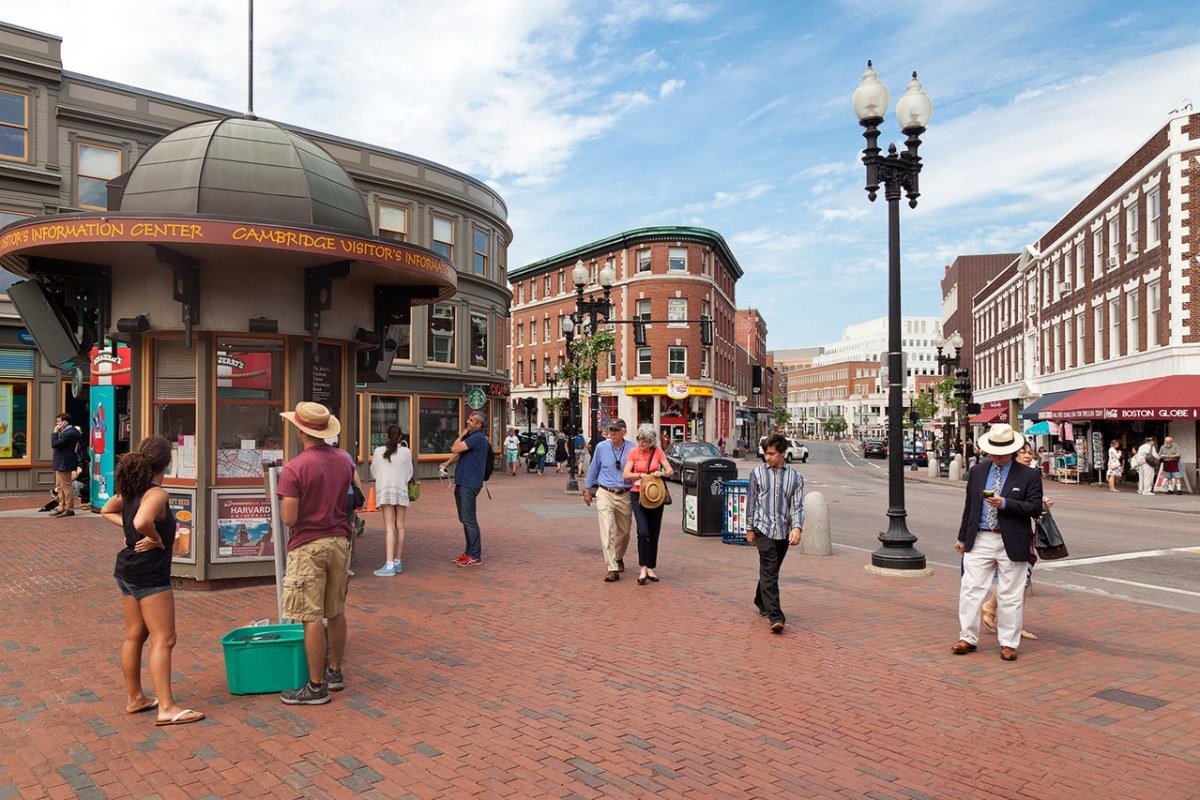
Harvard Square and the neighborhoods around it, Agassiz, Cambridgeport, and Inman Square, deliver the most complete urban pedestrian experience in the Boston metro, with the Red Line putting downtown 15 minutes away. Median home prices run $850,000 to $1.1 million, sustained by a city where every incoming Harvard and MIT class seeds a new cohort of long-term residents. A one-bedroom rents for $2,600 to $3,500, steep but in line with other elite university cities. Cambridge makes sense for households whose work or studies center on its institutions and who genuinely value a city that takes ideas seriously.

2. Somerville — Urban Value Adjacent to Cambridge
Somerville, immediately north of Cambridge and now served by both MBTA Green and Red Line stations, has changed more dramatically over the past twenty years than any other Boston-area city. The Green Line Extension, which opened its Somerville and Medford branches in 2022 and added stations at Union Square, Magoun Square, and Ball Square, locked in an appreciation cycle that pushed neighborhoods such as Davis Square, Union Square, Ball Square, and Magoun Square to the top of many young professionals’ lists. Buyers get urban density, walkability, and a strong community feel at prices 10 to 20 percent below Cambridge.
Davis Square anchors the city: a strip of independent restaurants, bars, music venues, and the Somerville Theatre, a beloved repertory cinema that has held onto its neighborhood character through the whole appreciation cycle. Homes here go for $700,000 to $950,000, and one-bedrooms rent for $2,400 to $3,200, reflecting both the transit premium and the quality of the streets. The Winter Hill and Prospect Hill neighborhoods open the door a little wider, with condominiums in the $600,000 to $800,000 range. For anyone priced out of Cambridge who still wants that walk-everywhere density and subway access, Somerville is the obvious move.
3. Brookline — The Exceptional School District
Brookline is an independent municipality wrapped almost entirely by Boston, a geographic quirk that hands it Boston-adjacency without Boston’s school system. Its public schools rank among the top five districts in Massachusetts and rate as some of the most sought-after on the East Coast. Pair that with walkable commercial neighborhoods, Coolidge Corner being one of the finest in Greater Boston, and Green Line access downtown, and you get demand that lifts single-family prices to $1.1 million to $1.5 million and condominiums to $700,000 to $950,000.
Coolidge Corner sits at the meeting of Harvard Street and Beacon Street, anchored by the Coolidge Corner Theatre, an independent cinema that screens art films and hosts events, and lined with independent restaurants, a bookstore, and specialty retail. It gives families the walkable urban-village feel they want without the noise and density of Boston proper. Brookline rewards families with school-age children who prize public education and walkability, and who earn enough to carry the premium.
4. Newton — The Family Suburb
Newton is the archetypal Boston inner suburb, a collection of 13 distinct villages, among them Newton Centre, Newton Highlands, Chestnut Hill, and Newtonville, tied together by strong schools, safe streets, and Green Line and commuter rail links to the city. Newton North and Newton South regularly send graduates to the country’s most selective universities at rates that rival far smaller private schools, and that reputation, more than anything else, explains single-family prices of $900,000 to $1.3 million.
The village structure produces real differences within one city. Newton Centre has the most walkable commercial district, Chestnut Hill the most upscale retail around the Chestnut Hill Mall and its surrounding shops, while Newtonville and Auburndale stay slightly more affordable without losing access to the same schools. Families with children who work in Boston and want the metro’s most academically driven public system will find Newton worth its premium. Households without kids, by contrast, may not see that premium pay off against closer-in alternatives.

5. Salem — Historic Character with MBTA Access
Salem sits 16 miles north of Boston on the MBTA’s Newburyport/Rockport Line, roughly 30 minutes to North Station, and has grown well past the reputation of its 1692 witch trials and the enormous Halloween tourism they still draw every October. The downtown historic district carries a New England authenticity that newer suburbs cannot fake: Federal-era architecture, the Peabody Essex Museum, Derby Wharf, and the pedestrian commercial spine of Essex Street.
Single-family homes here sell for $450,000 to $600,000 and condominiums for $320,000 to $480,000, a dramatic discount against the inner suburbs, with the trade-off being a commuter-rail ride rather than a subway one. A growing restaurant scene, independent bookstores and specialty shops, the Derby Street Shops, and the waterfront feel of the Willows neighborhood give Salem genuine urban quality at outer-suburb prices. Boston-bound households that value historic character, walkability, and lower housing costs over inner-suburb transit will find few better deals on the North Shore.
6. Northampton — The Pioneer Valley Alternative
About 100 miles west of Boston in the Pioneer Valley, Northampton is the strongest non-Boston option in Massachusetts for anyone whose work is remote or rooted in the valley. A city of 30,000 built around Smith College, one of the nation’s most prestigious women’s colleges, and tied into the Five College Consortium, with Amherst, Hampshire, Mount Holyoke, and UMass Amherst all within a 20-mile radius, it has built a cultural life, independent bookstores, live music, restaurants, galleries, and the Calvin Theatre’s concert calendar, that rivals cities many times its size.

The Main Street commercial district ranks among the best small-city downtowns in New England: walkable, independently owned, and lined with Japanese, Vietnamese, Ethiopian, Italian, and Mexican kitchens that mirror the academic community’s cosmopolitan tastes. Homes sell for $350,000 to $500,000, far below Greater Boston, while the quality of life holds up: the Connecticut River Valley’s farmland, the Holyoke Range trails, the Tanglewood festival a drive west in the Berkshires, and the valley’s own summer arts calendar. For remote workers, retirees, or academics tied to the Five College Consortium, no Massachusetts community offers a better ratio of quality of life to cost.
7. Worcester — Emerging Urban Value
Worcester, the state’s second-largest city at roughly 210,000 residents, has become the most underrated option in Massachusetts for young professionals and anyone priced out of Greater Boston. A growing downtown built around Holy Cross, Clark University, and WPI now has real momentum: Polar Park, home of the WooSox, the Boston Red Sox Triple-A affiliate; the expanded DCU Center; and a thickening restaurant and bar scene along Main Street, none of which existed at this scale a decade ago. Homes sell for $280,000 to $380,000 and one-bedrooms rent for $1,400 to $1,800, the most affordable urban housing in any Massachusetts city with amenities to match.
The MBTA commuter rail links Worcester to South Station in about 75 minutes, and Interstates 290 and 90 make Boston employment workable for anyone willing to commute. More to the point, Worcester carries its own economy. University medical centers, the WPI technology ecosystem, and the manufacturers of central Massachusetts give the city a local labor market that does not depend on Boston at all. Households that want New England character, strong healthcare, and proximity to Boston-caliber culture without the Boston price tag should look here first.
Frequently Asked Questions
What makes Cambridge the intellectual capital of Greater Boston?
Cambridge packs Harvard University, MIT, research hospitals, technology startups, and academic institutions into roughly 6.4 square miles and 123,000 people, a concentration no comparably sized American city can match. Bookstores survive here when they fold everywhere else, and the range of languages on the sidewalk reflects a genuinely international academic community. Harvard Square, Agassiz, Cambridgeport, and Inman Square deliver the most complete urban pedestrian experience in the Boston metro, with the Red Line putting downtown 15 minutes away. Median home prices run $850,000 to $1.1 million, and a one-bedroom rents for $2,600 to $3,500, sustained by a city where every incoming Harvard and MIT class seeds a new cohort of long-term residents.
What makes Somerville an attractive alternative to Cambridge?
Somerville, immediately north of Cambridge and now served by both MBTA Green and Red Line stations, has changed more dramatically over the past twenty years than any other Boston-area city, driven by the Green Line Extension that opened its Somerville and Medford branches in 2022 with new stations at Union Square, Magoun Square, and Ball Square. Davis Square anchors the city with independent restaurants, bars, music venues, and the Somerville Theatre, a beloved repertory cinema. Homes sell for $700,000 to $950,000 and one-bedrooms rent for $2,400 to $3,200, roughly 10 to 20 percent below Cambridge for similar density, walkability, and transit access. Union Square, Ball Square, and Magoun Square are all in demand.
Why is Brookline the best choice for Boston-area families with school-age children?
Brookline is an independent municipality wrapped almost entirely by Boston, which hands it Boston-adjacency without Boston’s school system. Its public schools rank among the top five districts in Massachusetts and rate as some of the most sought-after on the East Coast. Coolidge Corner gives the town one of the finest walkable commercial districts in Greater Boston, anchored by the Coolidge Corner Theatre and lined with independent restaurants, a bookstore, and specialty retail. Single-family homes sell for $1.1 million to $1.5 million and condominiums for $700,000 to $950,000. It suits families with children, Boston-adjacent work, and the income to carry the premium.
What makes Newton the best Boston suburb for families?
Newton spreads across 13 distinct villages, and its Newton North and Newton South high schools send graduates to the country’s most selective universities at rates that rival far smaller private schools. Green Line and commuter rail connect it to Boston. Newton Centre holds the most walkable commercial district, Chestnut Hill the most upscale retail around the Chestnut Hill Mall, and Newtonville and Auburndale the more accessible entry points, with condominiums from $600,000 to $800,000. Single-family homes sell for $900,000 to $1.3 million, with the schools driving the price more than any other factor.
What makes Northampton the best non-Boston Massachusetts option?
Northampton sits about 100 miles west of Boston in the Pioneer Valley and is the strongest non-Boston option in Massachusetts for remote workers and valley-based academics. A city of 30,000 built around Smith College and tied into the Five College Consortium, with Amherst, Hampshire, Mount Holyoke, and UMass Amherst all within 20 miles, it sustains a cultural life of independent bookstores, live music, diverse restaurants, and the Calvin Theatre that rivals cities many times its size. Homes sell for $350,000 to $500,000, far below Greater Boston, while the Connecticut River Valley’s farmland, the Holyoke Range trails, and Tanglewood’s proximity round out the appeal. No Massachusetts community offers a better ratio of quality of life to cost.