Moving to Arizona in 2026: Everything You Need to Know
Arizona has been one of the top domestic migration destinations in the United States for most of the past decade, and the movement shows no sign of slowing. The state added roughly 96,600 new residents in the year ending July 2024 alone, with the vast majority of net inflow coming from California, followed by Washington, Oregon, Colorado, and Illinois. The reasons are consistent: lower housing costs relative to the West Coast, a flat income tax of 2.5%, a strong job market in Phoenix, and a lifestyle that combines urban amenities with immediate outdoor access.
But Arizona living also asks for adjustments and comes with trade-offs that the relocation marketing tends to skip. This guide covers what you actually need to know — the practical requirements, the cultural adjustments, and the honest trade-offs — before and after your move.
The Job Market: Where Arizona’s Economy Is Strong
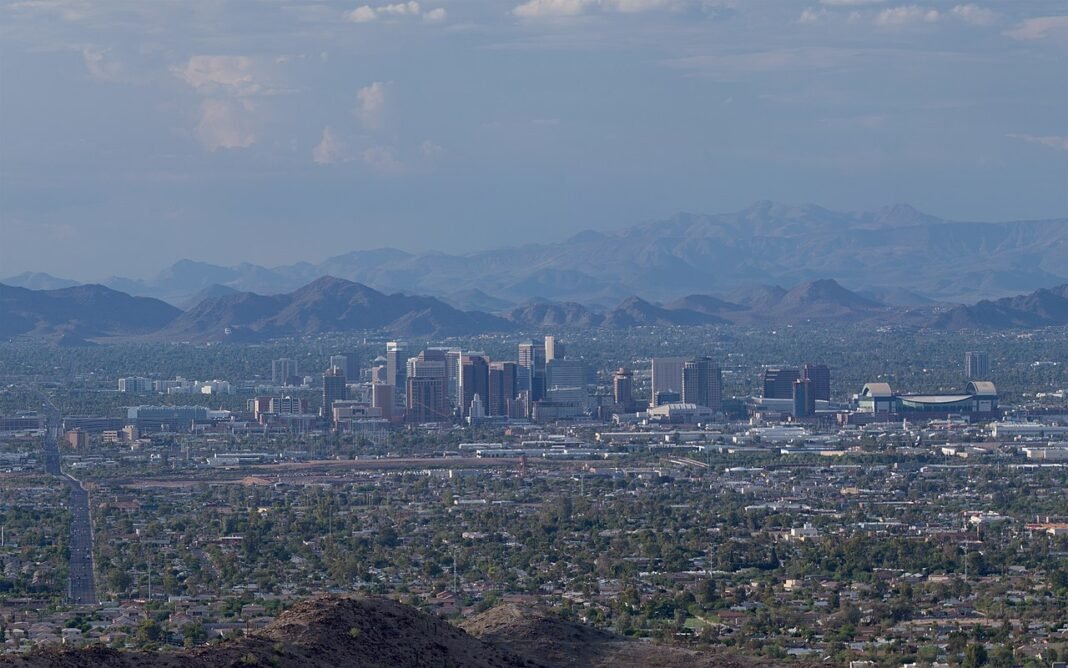
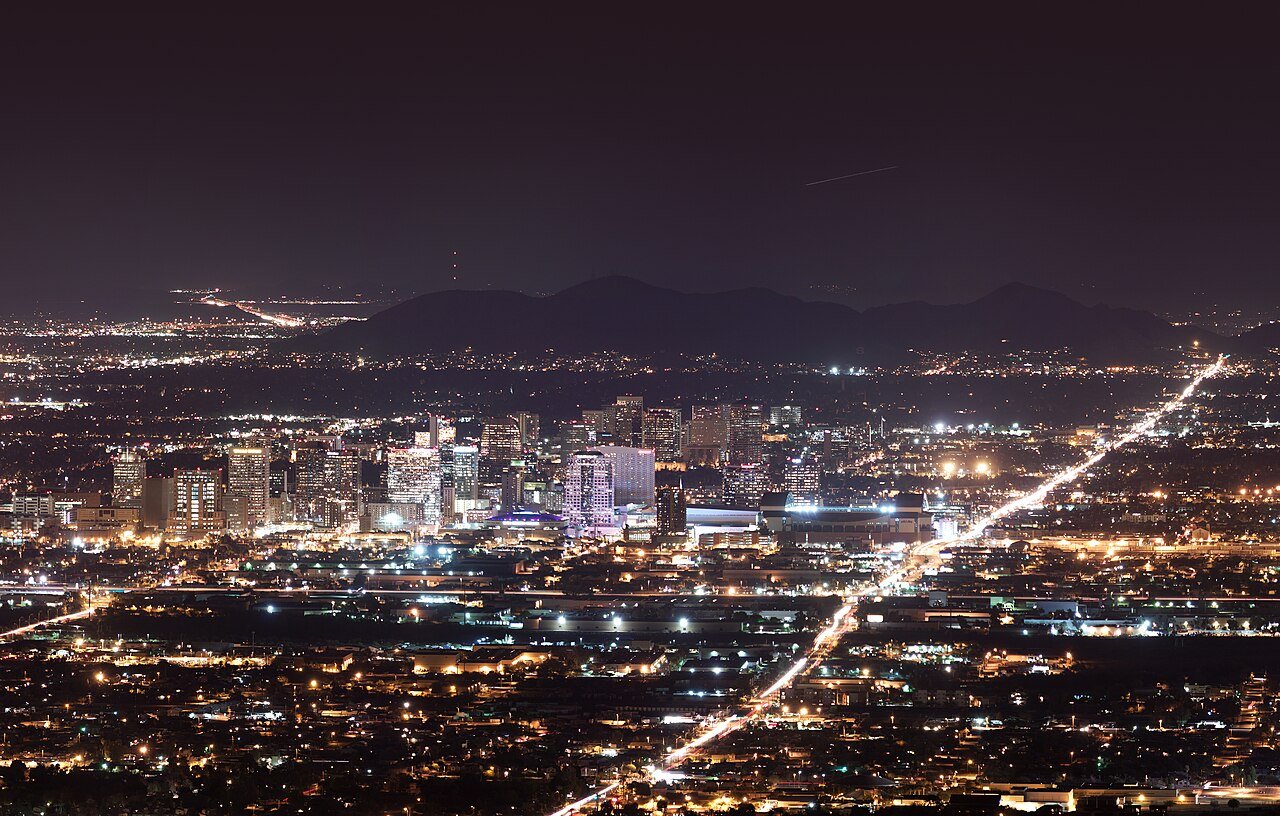
Phoenix is Arizona’s economic engine, and its job market held up well through the economic disruptions of the early 2020s. The city has moved away from its old dependence on real estate and construction, adding jobs in financial services, technology, semiconductor manufacturing, healthcare, and logistics.

Technology and semiconductors: The CHIPS Act of 2022 set off a wave of semiconductor investment in the Phoenix area. TSMC’s first U.S. fabrication plant, Fab 21 in north Phoenix, entered mass production on its N4 (4nm-class) process in early 2025, supplying chips for Apple and NVIDIA. Intel has expanded its Chandler campus, and NXP Semiconductors keeps a large presence here. The wider tech ecosystem — software, cybersecurity, cloud services — has grown alongside the hardware money, and Phoenix’s technology job market now competes for talent with second-tier tech cities like Austin, Denver, and Salt Lake City.
Healthcare: The Phoenix metro’s rapid population growth has fed steady healthcare hiring. Banner Health, Dignity Health, HonorHealth, and Mayo Clinic all run large Phoenix operations. The University of Arizona’s medical school campus in Phoenix has ramped up training of locally-grown physicians. Healthcare is the most dependable source of new jobs in the state.
Financial services: Phoenix hosts large operations for JPMorgan Chase, Bank of America, Charles Schwab (which moved its headquarters from San Francisco to Westlake, Texas, while keeping a sizable Phoenix footprint), and dozens of regional financial firms. Lower real estate costs than California, a deep talent pool, and no state estate tax have made Arizona attractive to financial-industry employers.

Practical Requirements for New Residents
Driver’s license: New Arizona residents must obtain an Arizona driver’s license within 30 days of establishing residency. The process requires a visit to an MVD (Motor Vehicle Division) office with proof of identity (passport or birth certificate plus Social Security card), proof of Arizona residency (utility bill or lease agreement), and surrender of your out-of-state license. Online appointment scheduling is essential — walk-in waits at busy MVD offices can exceed 2–3 hours.
Vehicle registration: Vehicles must be registered in Arizona within 15 days of establishing residency. Arizona charges a vehicle license tax (VLT) based on an assessed value — 60% of the manufacturer’s base retail price in the first year, then falling about 16.25% each year after. The rate is $2.80 per $100 of assessed value for a new vehicle, so a car bought at $45,000 carries a first-year VLT of roughly $756. It catches out drivers coming from states with flat registration fees.
Vehicle emissions: Maricopa and Pima counties (Phoenix and Tucson metro areas) require emissions testing every two years for gasoline-powered vehicles. Electric vehicles are exempt. The test takes about 15 minutes at certified stations and costs $17.
Voter registration: Arizona allows voter registration online, by mail, or in person. The deadline to register for an election is 29 days before that election. Arizona is one of few states to offer a permanent early voting list (PEVL) that automatically sends mail ballots to registered voters before each election.
The Heat: Understanding Arizona Summers
Heat is the single biggest source of surprise and difficulty for new Arizona residents, and no amount of preparation fully stands in for living through it. Phoenix summers are extreme in ways that photographs and temperature readings don’t capture.
Phoenix averages 110+ days above 100°F annually — the 2024 streak set a record of 113 consecutive days at or above 100°F, including 61 days above 110°F that year. The overnight low on the hottest summer nights may only fall to 90°F — meaning there is no meaningful temperature relief. The sun’s intensity at Arizona’s latitude is such that stepping outside for 15 minutes in direct midday sun in July feels qualitatively different from 100°F weather in humid climates.
Experienced Phoenix residents adapt their outdoor lives to the heat rather than fighting it: morning workouts before 7am, avoidance of outdoor activity between 10am and 6pm in summer, car window shades, steering wheel covers (steering wheels can reach 180°F in direct sun), and proactive hydration. The psychological adjustment to five months of severe heat — June through October — takes 1–2 full years for most transplants.
What People Get Wrong About Arizona Living
It’s not all desert: Arizona’s range of landscapes surprises almost everyone. Flagstaff gets more annual snowfall than Boston in a typical winter — roughly 90 inches versus Boston’s 44. The White Mountains in eastern Arizona rise above 11,000 feet and receive enough snowfall to support ski resorts. The Mogollon Rim creates a dramatic escarpment across the state’s midsection where desert transitions to pine forest within a few miles.
The cultural scene is real: Phoenix has a symphony, opera company, several theater companies, a first-rate art museum (the Phoenix Art Museum’s permanent collection is worth the trip on its own), and a restaurant scene that has drawn national attention over the past decade. Tucson punches well above its weight at the table, too, thanks to its Sonoran cuisine heritage and University of Arizona college life.
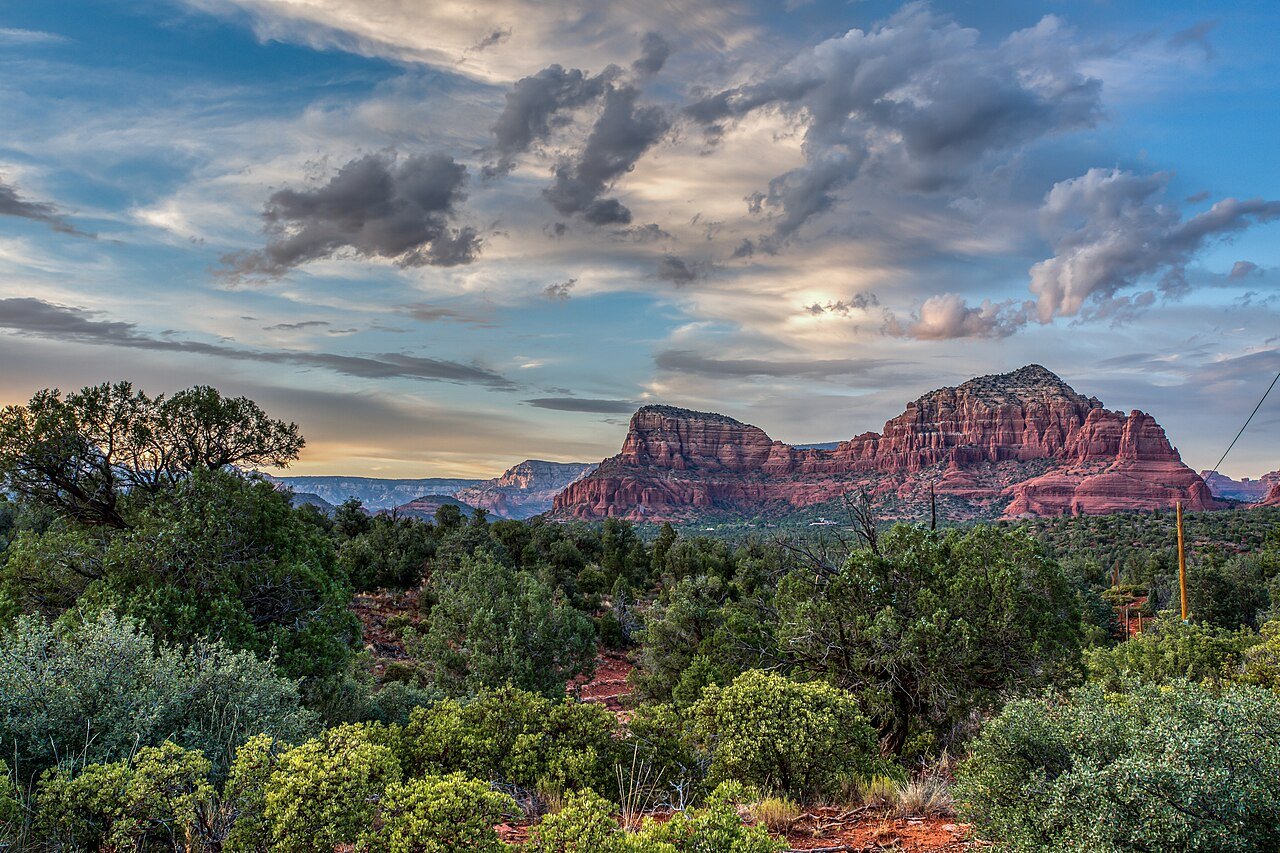
Outdoor access is extraordinary: The hiking available within 30 minutes of central Phoenix — South Mountain Park (the largest municipal park in the United States), Camelback Mountain, the McDowell Sonoran Preserve — rivals anything in the country. Three hours from Phoenix, you can be at the Grand Canyon, in the red rock country of Sedona, among the saguaros of Saguaro National Park, or at the mouth of Antelope Canyon.
Frequently Asked Questions
Why are so many people moving to Arizona?
Arizona added roughly 96,600 residents in the year ending July 2024, with net migration accounting for the vast majority — primarily arrivals from California, Washington, Oregon, Colorado, and Illinois. The core reasons are consistent: lower housing costs relative to the West Coast, a flat state income tax of 2.5%, Phoenix’s strong job market, and a lifestyle combining urban amenities with immediate outdoor access. The CHIPS Act set off a semiconductor investment wave — TSMC’s Fab 21 in north Phoenix entered mass production in early 2025, and Intel expanded in Chandler. With large healthcare employers (Banner Health, Mayo Clinic) and financial services (JPMorgan Chase, Charles Schwab) in the mix, Arizona’s professional job market now competes for talent with second-tier tech cities like Austin and Denver.
What are the practical requirements for new Arizona residents?
Driver’s license: must be obtained within 30 days of establishing residency; online appointment scheduling is essential — walk-in waits at busy MVD offices can exceed 2–3 hours. Vehicle registration: must be done within 15 days (note: shorter than the license window); Arizona charges a Vehicle License Tax (VLT) on 60% of the manufacturer’s base retail price at $2.80 per $100 of assessed value — on a $45,000 vehicle, the first-year VLT is roughly $756, which surprises residents from states with flat registration fees. Vehicles in Maricopa and Pima counties (Phoenix and Tucson metro areas) require emissions testing every two years ($17; EVs exempt). Voter registration deadline is 29 days before each election; Arizona offers a permanent early voting list (PEVL).
How hot are Arizona summers and how do residents cope?
Phoenix averages 110+ days above 100°F annually (the 2024 streak hit a record 113 consecutive days). Temperatures above 110°F occur regularly in late June and July; overnight lows on the hottest nights may only fall to 90°F — there is no meaningful temperature relief. Steering wheels can reach 180°F in direct sun. The psychological adjustment to five months of severe heat (June–October) takes 1–2 full years for most transplants. Experienced Phoenix residents adapt by: working out before 7am; avoiding outdoor activity between 10am and 6pm in summer; using car window shades and steering wheel covers; staying proactively hydrated. The trade-off is exceptional weather from November through May.
What is outdoor access like in the Phoenix area?
Better than newcomers expect, and easy to underrate if you picture Arizona as pure desert. South Mountain Park — the largest municipal park in the United States — Camelback Mountain, and the McDowell Sonoran Preserve all sit within 30 minutes of central Phoenix and offer first-rate hiking. Within three hours, you can reach the Grand Canyon, the red rock country of Sedona, Saguaro National Park, and Antelope Canyon. Flagstaff (2.5 hours north) averages about 90 inches of snow a year — more than double Boston — and operates as a ski hub. The White Mountains in eastern Arizona rise above 11,000 feet with ski resorts and summer hiking. The variety of terrain is one of the things newcomers end up liking most.
What do people get wrong about living in Arizona?
Two common misconceptions: (1) “It’s all flat desert” — Arizona has pine forests, a tall mountain range, ski resorts, and deep canyon country, with real variety in terrain and climate. (2) “There’s no cultural scene” — Phoenix has a symphony, opera, several theater companies, the nationally regarded Phoenix Art Museum, and a restaurant scene that has drawn national attention. Tucson’s food culture — rooted in its Sonoran heritage — outshines what you’d expect for its size. The honest challenge here is the summer heat, not the cultural infrastructure.