Minnesota outdoor recreation is defined by water — the 11,842 lakes (the state’s official count of lakes larger than 10 acres), the 92,000 miles of rivers and streams, the 150-mile North Shore of Lake Superior, and the one million acres of the Boundary Waters Canoe Area Wilderness that make Minnesota the premier paddling state in the lower 48. The state’s outdoor culture is genuinely four-season: the winter traditions of ice fishing, cross-country skiing, snowshoeing, and fat biking that Minnesotans have developed over generations of cold-weather living are as authentically “Minnesota outdoors” as the summer canoe trips and lake swimming that define the warm season. Understanding Minnesota’s outdoor culture means treating all four seasons as distinct outdoor opportunities rather than viewing winter as an obstacle to summer recreation.
.jpg?width=1200)
The Boundary Waters: America’s Canoe Country
The Boundary Waters Canoe Area Wilderness is the most visited wilderness area in the United States and the definitive Minnesota outdoor experience — one million acres of boreal lake country accessible only by paddle and portage, where the silence of early morning on a wilderness lake (broken only by a loon’s call and the sound of paddles) is available within a day’s drive of the Minneapolis-St. Paul metropolitan area. The BWCAW’s quota system caps the number of overnight groups that can enter at each access point on any given day — a limit that matters because this wilderness sits within a single day’s drive of most of Minnesota’s 5.7 million residents, which means the permit reservation process (released on Recreation.gov on the last Wednesday of January for the May–September quota season) requires advance planning months ahead for the most popular entry points and peak summer weekends.
The entry-point communities of Ely (the most established canoe outfitter town, with multiple outfitters who have been fitting BWCAW trips for generations) and Grand Marais (on the North Shore, with entry to the eastern BWCAW and the Gunflint Trail corridor) provide complete outfitting services — canoe and gear rental, shuttle services, guided trips, and freeze-dried food resupply — for parties at every experience level. The classic BWCAW experience is a 5–7 day trip through a chain of lakes connected by portages of varying difficulty (from short carries measured in rods to brutal portages that run well over a mile), camping on designated sites with fire rings on rock outcroppings above the lake, and fishing for walleye and smallmouth bass in waters that have no motorized boat traffic.
The neighboring Quetico Provincial Park in Ontario, accessible from Minnesota BWCAW entry points through connecting portages, provides additional paddling wilderness with even lower use levels. The combined BWCAW-Quetico canoe country is the largest contiguous canoe wilderness in North America — a fact that Minnesotans state with quiet pride that is entirely justified.
Superior Hiking Trail and North Shore Hiking
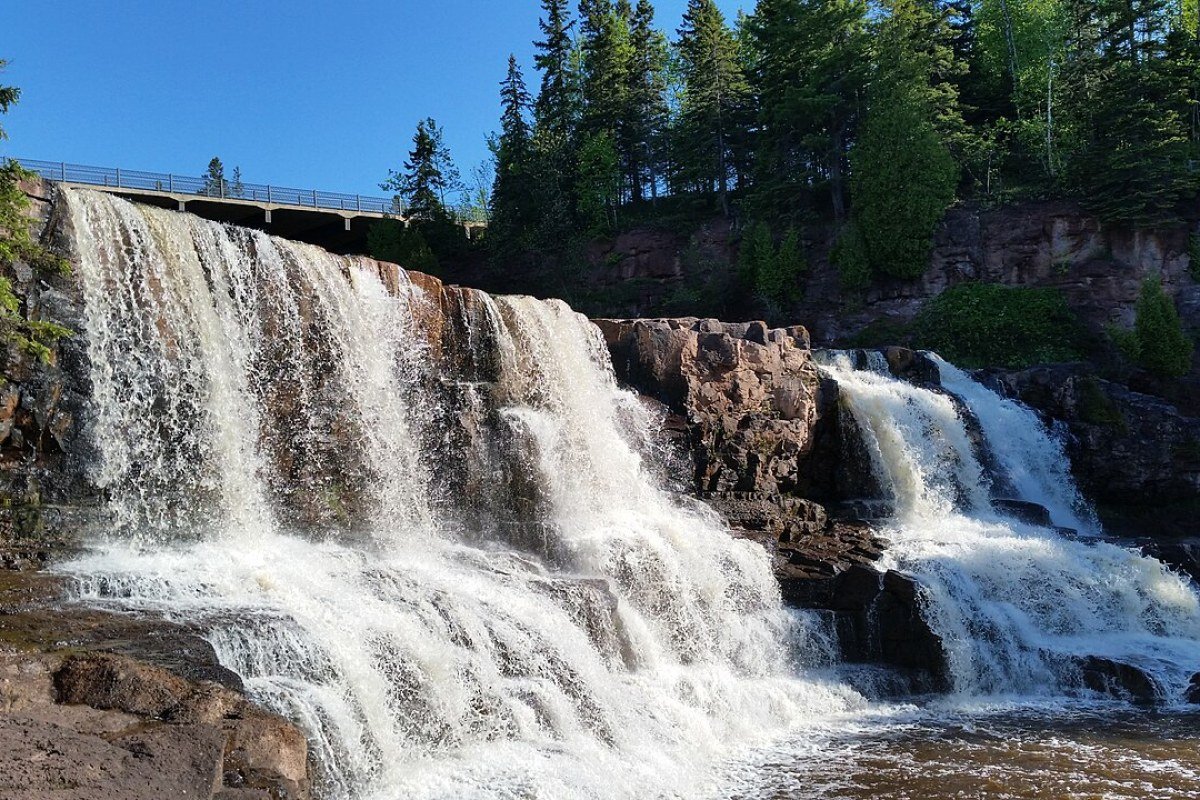
The Superior Hiking Trail runs 310 miles from the Wisconsin border near Duluth to the Canadian border along the ridgeline above Lake Superior’s Minnesota shore — a backpacking trail that provides continuous views of the lake from the Sawtooth Mountain escarpment and access to the waterfalls and river gorges that characterize the North Shore’s geological character. The trail crosses or skirts Tettegouche, Gooseberry Falls, Split Rock Lighthouse, Temperance River, and Cascade River state parks, providing a hiking route of extraordinary scenic variety that can be done in sections (trailheads every 5–15 miles allow customized day and overnight trips) or as a multi-week through-hike.
The most spectacular individual day hikes on the North Shore are concentrated in the central section. The Carlton Peak hike near Tofte (roughly 3.5 miles round trip to a quartzite summit with sweeping views of Lake Superior) is one of the most dramatic short hikes on the Shore. The Pincushion Mountain trail system above Grand Marais provides ridge-top views of the lake and the surrounding boreal forest from trails of 2–6 miles. The Cascade River State Park gorge trail follows the Cascade River through a sequence of waterfalls before the river enters Lake Superior at a rugged rocky beach — a roughly 5-mile loop that combines gorge hiking, waterfall observation, and lakeshore walking in a single outing.

Urban Outdoor Recreation: Minneapolis Parks
Minneapolis has one of the finest urban park systems in the United States — a park board established in 1883 that has protected and maintained a system of lakes, parkways, and neighborhood parks that makes Minneapolis consistently rank among the most park-accessible major American cities. The Chain of Lakes — Bde Maka Ska (formerly Lake Calhoun), Lake of the Isles, Lake Harriet, and Cedar Lake — are connected by a roughly 13-mile recreational trail that functions as the city’s outdoor living room, used by runners, cyclists, inline skaters, dog walkers, and swimmers through every season. In winter, the parkway trails are maintained for cross-country skiing, the lakes are cleared for skating, and ice fishing houses appear on the frozen surfaces.
The Mississippi River Gorge Regional Park, running through south Minneapolis from the Ford site to downtown, provides river-bluff hiking through the only true gorge in the Mississippi’s entire 2,340-mile length — a dramatic geological feature created by the waterfall recession that carved the Mississippi River’s course through the Twin Cities. The river bluff trails offer views into the gorge that are surprisingly wild for a trail system within city limits. Crosby Farm Regional Park on the St. Paul side of the river, roughly 700 acres of floodplain forest and wetland, provides birding and canoeing access that is equally surprising within a major metropolitan area.
Cross-Country Skiing and Winter Recreation
Minnesota’s cross-country skiing culture is among the most developed in the country — the state maintains an extensive network of groomed trails that reflects a tradition of Nordic skiing going back to the Scandinavian immigrant communities of the 19th century. The Birkie Trail in Wisconsin (accessible from the Twin Cities in about 2.5 hours) hosts the American Birkebeiner — the largest cross-country ski race in North America, drawing more than 10,000 skiers across its events on courses running between Cable and Hayward. Closer to home, the Elm Creek Park Reserve in Maple Grove maintains roughly 20 kilometers of groomed classic and skate ski trails in a suburban-accessible location; Theodore Wirth Regional Park in Minneapolis provides lit evening skiing on groomed trails within city limits; and Maplelag Resort in northern Minnesota offers destination cross-country skiing on dozens of kilometers of groomed trails through boreal forest.
Ice fishing is Minnesota’s most characteristically local winter outdoor activity — the practice of drilling holes through lake ice and fishing for walleye, perch, and other species from small heated shelters (called “fish houses”) that Minnesotans erect on frozen lake surfaces has evolved into a sophisticated winter recreation culture. As lakes lock up through December and January, the fish houses multiply, and weekends draw a steady stream of traffic to the lake regions of central Minnesota. The experience of fishing in a warm fish house above a frozen lake while the temperature outside is -15°F is quintessentially Minnesotan — an embrace of winter’s conditions that defines the state’s outdoor character as much as any summer canoe trip in the Boundary Waters.
Frequently Asked Questions
What makes the Boundary Waters Canoe Area Wilderness the premier paddling destination in the United States?
The Boundary Waters Canoe Area Wilderness (BWCAW) is the most visited wilderness area in the United States and the definitive Minnesota outdoor experience — one million acres of boreal lake country accessible only by paddle and portage. A quota system caps the number of overnight groups that can enter at each access point on any given day. The entry-point communities of Ely and Grand Marais provide complete outfitting services for all experience levels — canoe and gear rental, shuttle services, guided trips, and food resupply. The classic BWCAW experience is a 5–7 day trip through lake chains connected by portages (from short carries to brutal portages well over a mile long), camping on designated sites on rock outcroppings above the lake. The neighboring Quetico Provincial Park in Ontario, accessible through connecting portages, provides additional wilderness with even lower use levels — the combined BWCAW-Quetico is the largest contiguous canoe wilderness in North America. Permits are reserved through Recreation.gov, with the quota season released on the last Wednesday of January; popular entry points and peak summer weekends require advance planning.
What does the Superior Hiking Trail offer backpackers?
The Superior Hiking Trail runs 310 miles from the Wisconsin border near Duluth to the Canadian border along the ridgeline above Lake Superior’s Minnesota shore — a backpacking trail providing continuous views of the lake from the Sawtooth Mountain escarpment and access to the waterfalls and river gorges that characterize the North Shore. The trail crosses or skirts Tettegouche, Gooseberry Falls, Split Rock Lighthouse, Temperance River, and Cascade River state parks, creating a hiking route of extraordinary scenic variety accessible in sections (trailheads every 5–15 miles) or as a multi-week through-hike. The standout individual day hikes are in the central section: Carlton Peak near Tofte (about 3.5 miles round trip to a quartzite summit with sweeping views) is one of the most rewarding short hikes on the Shore. The Pincushion Mountain trail system above Grand Marais provides ridge-top views of the lake and boreal forest. The Cascade River State Park gorge trail combines waterfall observation, gorge hiking, and lakeshore walking in a roughly 5-mile loop.
What urban outdoor recreation does Minneapolis offer?
Minneapolis has one of the finest urban park systems in the United States — established in 1883, it has created a system of lakes, parkways, and neighborhood parks that makes Minneapolis one of the most park-accessible major American cities. The Chain of Lakes — Bde Maka Ska (formerly Lake Calhoun), Lake of the Isles, Lake Harriet, and Cedar Lake — are connected by a roughly 13-mile recreational trail that functions as the city’s outdoor living room, used by runners, cyclists, inline skaters, swimmers, and dog walkers through every season. In winter, the parkway trails are maintained for cross-country skiing, the lakes are cleared for skating, and ice fishing houses appear on the frozen surfaces. The Mississippi River Gorge Regional Park runs through south Minneapolis through the only true gorge in the Mississippi’s entire 2,340-mile length — a geological feature created by waterfall recession that provides surprisingly wild river bluff trails within city limits.
What cross-country skiing and winter recreation does Minnesota offer?
Minnesota’s cross-country skiing culture is among the most developed in the country, reflecting a Scandinavian immigrant tradition going back to the 19th century. The Birkie Trail in Wisconsin (about 2.5 hours from the Twin Cities) hosts the American Birkebeiner — the largest cross-country ski race in North America, drawing more than 10,000 skiers across its events on courses running between Cable and Hayward. Closer to home, the Elm Creek Park Reserve in Maple Grove maintains roughly 20 kilometers of groomed trails in a suburban-accessible location; Theodore Wirth Regional Park in Minneapolis provides lit evening skiing on groomed trails within city limits; and Maplelag Resort in northern Minnesota offers destination skiing through boreal forest. Ice fishing is Minnesota’s most characteristically local winter outdoor activity — the practice of fishing from heated “fish houses” erected on frozen lake surfaces has evolved into a sophisticated culture. As lakes freeze through December and January, fish houses multiply and weekends draw steady traffic to the lake regions of central Minnesota.
What hiking does Minnesota’s state park system offer?
Minnesota maintains roughly 75 state parks and recreation areas covering more than 235,000 acres — one of the most comprehensive state park systems in the Midwest relative to population. The North Shore parks are the most striking: Tettegouche State Park (the High Falls of the Baptism River, the highest waterfall entirely within Minnesota), Gooseberry Falls (the most visited North Shore park, with five waterfalls along its river trails), and Cascade River State Park (a deep gorge system entering Lake Superior). In the northern part of the state, Itasca State Park protects the headwaters of the Mississippi River — visitors can stand in the shallow outlet stream at Lake Itasca where the Mississippi begins its 2,340-mile journey to the Gulf of Mexico. Minnehaha Falls in Minneapolis, within a city park, is one of the most visited waterfalls in the state, a 53-foot drop accessible within the metropolitan area. The Boundary Waters-adjacent parks, including Voyageurs National Park (Minnesota’s only national park), provide additional wilderness access.