South Carolina packs a remarkable diversity of experiences into a state most visitors associate exclusively with Charleston‘s pastel antebellum architecture. Yes, the Holy City is extraordinary — one of the best-preserved colonial port cities in America, where centuries-old churches crowd cobblestone streets and the Battery’s white mansions face Fort Sumter across the harbor. But South Carolina is also Myrtle Beach’s 60-mile Grand Strand, the largest concentration of golf courses on the East Coast. It’s the ACE Basin, one of the most pristine estuarine ecosystems remaining on the Atlantic Seaboard. It’s Congaree National Park‘s old-growth bottomland forest, home to some of the tallest trees east of the Mississippi. And it’s the Blue Ridge Mountains’ southernmost foothills, where waterfalls tumble through granite gorges in Oconee and Pickens Counties.

The state’s culinary heritage — Low Country cuisine built on rice, seafood, and the West African cooking traditions of Gullah Geechee culture — gives it a food identity as singular as New Orleans, centered on shrimp and grits, she-crab soup, and the whole-hog barbecue tradition of the Midlands. South Carolina repays visitors who look beyond the obvious itinerary.
When to Visit South Carolina
- Spring (March–May): Peak Charleston season — azalea blooms, mild temperatures, the Cooper River Bridge Run
- Summer (June–August): Beach season on the Grand Strand; heat and humidity are significant factors
- Fall (September–November): Best overall weather; Hilton Head and Beaufort shoulder season value
- Winter (December–February): Charleston’s off-season with reduced crowds and hotel rates
Charleston: America’s Most Livable Historic City
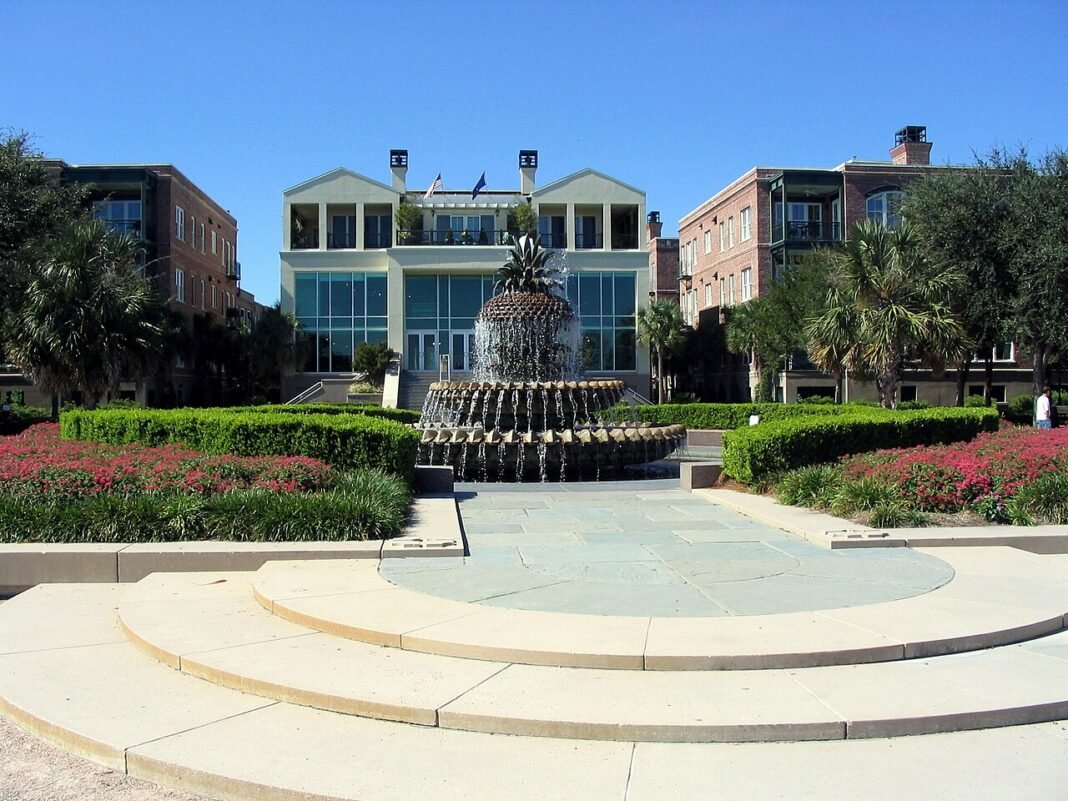
Charleston consistently ranks among the country’s most beloved cities for travel — a colonial port founded in 1670 whose architecture, food culture, and dense cluster of museums and historic sites create a destination that warrants multiple visits. The Historic District’s “single house” architecture (narrow-fronted homes with the long side and piazza facing south to catch the breeze, a design response to the subtropical climate), the Battery’s Rainbow Row of pastel Georgian townhouses, and the Old Exchange and Provost Dungeon (where captured patriots were imprisoned during the British occupation) give the city historical depth without artificiality.
The culinary scene has become nationally prominent — Husk, FIG, and Halls Chophouse have placed Charleston’s food on best-restaurant lists for the past decade, and the sheer density of James Beard-nominated chefs per capita in a city of 150,000 is genuinely remarkable. The Charleston Wine + Food Festival each March draws culinary talent from across the country to a city that treats food as culture rather than mere sustenance.

Myrtle Beach and the Grand Strand
The Grand Strand — 60 miles of Atlantic barrier beach from Little River in the north to Pawleys Island in the south — is South Carolina’s beach destination, anchored by Myrtle Beach’s boardwalk and entertainment infrastructure and mellowing southward toward the quieter communities of Murrells Inlet (the “Seafood Capital of South Carolina”), Litchfield Beach, and Pawleys Island’s laid-back hammock-and-porch character.
- Broadway at the Beach: 350-acre entertainment complex with restaurants, attractions, and nightlife
- Myrtle Beach Boardwalk: 1.2-mile oceanfront promenade with amusement parks and arcades
- Huntington Beach State Park: A standout oceanfront state park with a pristine beach and the Atalaya castle
- Brookgreen Gardens: 9,100-acre sculpture garden with 1,400 works in a Low Country wildlife setting
Hilton Head Island: Golf and Nature Reserve
Hilton Head Island, at the southern tip of South Carolina’s coast, is the most carefully planned resort community in the state — a 12-by-5-mile sea island whose development has been governed since the 1960s by strict architectural standards and tree preservation ordinances that keep it one of the most visually appealing resort towns in the American Southeast. The island holds 24 golf courses, 300 tennis courts, 50 miles of paved bike paths, and 12 miles of beach — all within a framework of maritime forest and tidal marsh that gives the place a natural character unusual for a resort of its scale. The Heritage PGA Tour event held at Harbour Town Golf Links each April ranks among the more distinctive tournament settings in professional golf.
Congaree National Park: Ancient Forest
Congaree National Park, 20 miles southeast of Columbia, protects the largest intact expanse of old-growth bottomland hardwood forest remaining in the southeastern United States — a landscape of champion trees (more state and national champion trees per square mile than any other place in North America), floodplain cypress swamps, and the Congaree River’s seasonal flooding that creates conditions for extraordinary ecological complexity. The 2.4-mile Boardwalk Loop carries visitors into the old-growth forest on an elevated wooden walkway, and kayaking the Cedar Creek wilderness opens up a water-level perspective on a forest that has been growing undisturbed for centuries.
The Upstate: Greenville and the Blue Ridge
South Carolina’s Upstate region — anchored by Greenville and Spartanburg — offers a completely different travel experience from the coast. Greenville’s downtown revival, centered on Falls Park on the Reedy (a 32-acre urban park where a waterfall tumbles under the Liberty Bridge, a pedestrian suspension span, through a downtown canyon), has produced a concentration of independent restaurants, breweries, and cultural venues that makes the city one of the most rewarding small-city destinations in the Southeast. The Blue Ridge escarpment to the north delivers serious waterfalls — Whitewater Falls straddles the North Carolina–South Carolina line, where Upper Whitewater Falls (on the North Carolina side) plunges 411 feet as the highest cascade east of the Rockies, and the South Carolina side’s Lower Whitewater Falls drops another several hundred feet — alongside the hiking and mountain scenery of Table Rock State Park and the Jocassee Gorges Wilderness.
Getting the Most Out of Your Visit
A few practical points will improve any trip to South Carolina. Book accommodation and major attractions — particularly national parks, popular hiking trails, and well-known restaurants — as far in advance as possible; the best options can fill weeks or months ahead, especially in peak season. Having a car gives you the most flexibility for exploring beyond the main centers, and many of South Carolina’s most rewarding experiences sit in places not easily reached by public transport. The sharpest local knowledge tends to surface in regional visitor centers, independent bookshops, and conversations with residents — the discoveries you remember are rarely the ones in the guidebooks. Allocate more time than you think you need: South Carolina consistently rewards travelers who slow down and explore in depth rather than trying to cover maximum ground in minimum time.
Frequently Asked Questions
What makes Charleston one of the most significant historic cities in the American South?
Charleston, founded in 1670, is one of the best-preserved colonial port cities in America — a city where centuries-old churches crowd cobblestone streets, the Battery’s white mansions face Fort Sumter across the harbor, and the historic district’s “single house” architecture (narrow-fronted homes with the long side and piazza facing south to catch the coastal breeze, a design response to the subtropical climate) creates streetscapes of extraordinary coherence. Rainbow Row on East Bay Street — a stretch of pastel Georgian townhouses built between 1740 and 1820 — is the most photographed architecture in South Carolina. The culinary scene has become nationally prominent: Husk, FIG, and Halls Chophouse have placed Charleston’s food on best-restaurant lists for years, and the density of James Beard-nominated chefs per capita in a city of 150,000 is genuinely remarkable. The Charleston Wine + Food Festival each March draws culinary talent from across the country to a city that treats food as culture.
What does Congaree National Park offer as South Carolina’s most significant natural area?
Congaree National Park, 20 miles southeast of Columbia, protects the largest intact expanse of old-growth bottomland hardwood forest remaining in the southeastern United States — a landscape of champion trees (more state and national champion trees per square mile than anywhere else in North America), floodplain cypress swamps, and the Congaree River’s seasonal flooding that creates conditions for extraordinary ecological complexity. The 2.4-mile Boardwalk Loop carries visitors into the old-growth forest on an elevated wooden walkway that keeps them above the floodplain regardless of water conditions. Kayaking Cedar Creek through the wilderness opens up a water-level perspective on a forest that has been growing undisturbed for centuries. The park is also one of the few remaining habitats of the synchronous firefly — which flashes in coordinated patterns during a brief period in late May and early June, creating one of the most extraordinary natural spectacles in the eastern United States.
What makes Hilton Head Island unique among South Carolina’s coastal resort destinations?
Hilton Head Island, at the southern tip of South Carolina’s coast, is the most carefully planned and visually coherent resort community in the state — a 12-by-5-mile sea island whose development has been governed since the 1960s by strict architectural standards and tree preservation ordinances that maintain a natural character unusual for a resort of its scale. The island holds 24 golf courses, 300 tennis courts, 50 miles of paved bike paths, and 12 miles of beach — all within a framework of maritime forest and tidal marsh. The Heritage PGA Tour event at Harbour Town Golf Links each April (the famous lighthouse hole on Calibogue Sound) ranks among the most distinctive tournament settings in professional golf. The ACE Basin — one of the largest undeveloped estuaries on the Atlantic Seaboard, stretching north of Hilton Head — offers exceptional birding and kayaking in one of the most pristine coastal ecosystems on the East Coast.
What does Greenville and the South Carolina Upstate offer beyond the coastal experience?
South Carolina’s Upstate region, anchored by Greenville and Spartanburg, offers a completely different travel experience from the coast. Greenville’s downtown revival, centered on Falls Park on the Reedy (a 32-acre urban park where a waterfall tumbles under the Liberty Bridge — a pedestrian suspension span — through a downtown canyon), has produced a concentration of independent restaurants, breweries, and cultural venues that makes the city one of the most rewarding small-city destinations in the Southeast. The Blue Ridge escarpment to the north holds some of the finest waterfalls in the eastern United States — Whitewater Falls straddles the North Carolina–South Carolina border, where Upper Whitewater Falls on the North Carolina side plunges 411 feet as the highest cascade east of the Rockies, with the South Carolina side’s Lower Whitewater Falls dropping several hundred feet more. Table Rock State Park and the Jocassee Gorges Wilderness provide hiking and wilderness access in the southernmost Blue Ridge Mountains, including Oconee Bells — a rare wildflower found in only a few locations in the world.
What is the Gullah Geechee cultural heritage and where can visitors experience it in South Carolina?
The Gullah Geechee culture — the language, foodways, and traditions of the descendants of enslaved West Africans who maintained distinct cultural practices across the coastal Sea Islands of South Carolina, Georgia, and northern Florida — is one of the most significant African American cultural traditions in the United States. The coastal South Carolina communities of Beaufort, St. Helena Island, and Daufuskie Island are the most accessible Gullah Geechee cultural sites. The Penn Center on St. Helena Island, established in 1862 as one of the first schools for freed Black Americans in the South, is now a National Historic Landmark and cultural center. The Gullah Geechee Corridor, a National Heritage Area established in 2006, encompasses 12,000 square miles along the coastal region where the culture has been sustained. Low Country cuisine — shrimp and grits, she-crab soup, okra soup, and the rice-based cooking traditions brought from West Africa — is the most accessible and delicious expression of this heritage for most visitors.